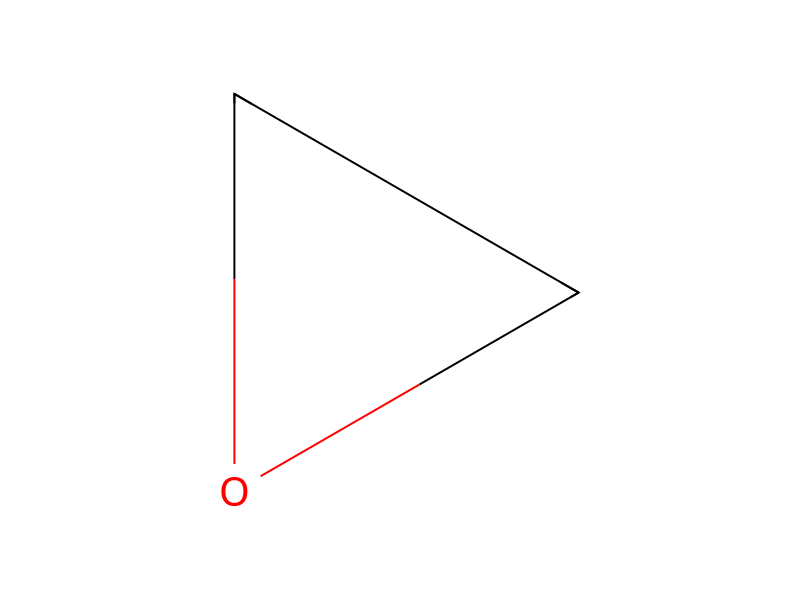
Ethylene Oxide → Hydroxyethyl carbamate
Reaction equation

[CH2:1]1[O:3][CH2:2]1.[C:4](=[O:10])([O:6][CH2:7][CH2:8][OH:9])[NH2:5].C(=O)([O-])[O-].[K+].[K+]>>[C:4](=[O:10])([O:6][CH2:7][CH2:8][OH:9])[NH2:5].[OH:3][CH2:2][CH2:1][N:5]1[CH2:8][CH2:7][O:6][C:4]1=[O:10].[O:6]1[CH2:7][CH2:8][NH:5][C:4]1=[O:10]Participants
6



Procedure
In a pressure reactor 26 g of ethylene oxide (0.59 mole) and 60 g of 2-hydroxyethyl carbamate (0.57 mole) are contacted in the presence of 1 g of potassium carbonate (0.0072 mole) at 110° C. for two hours. This resulted in an 85.3 percent conversion of 2-hydroxyethyl carbamate to products, with a selectivity to N-hydroxyethyl-2-oxazolidinone of 9.7 percent and to 2-oxazolidinone of 84.4 percent.
Sources & evidence
- ORD record
- ord-39c0da7d6811458fb91a1b04df66b0a7
- Source dataset
- uspto-grants-1985_02
- Patent number
- US04500717
Reaction notes
Loading…