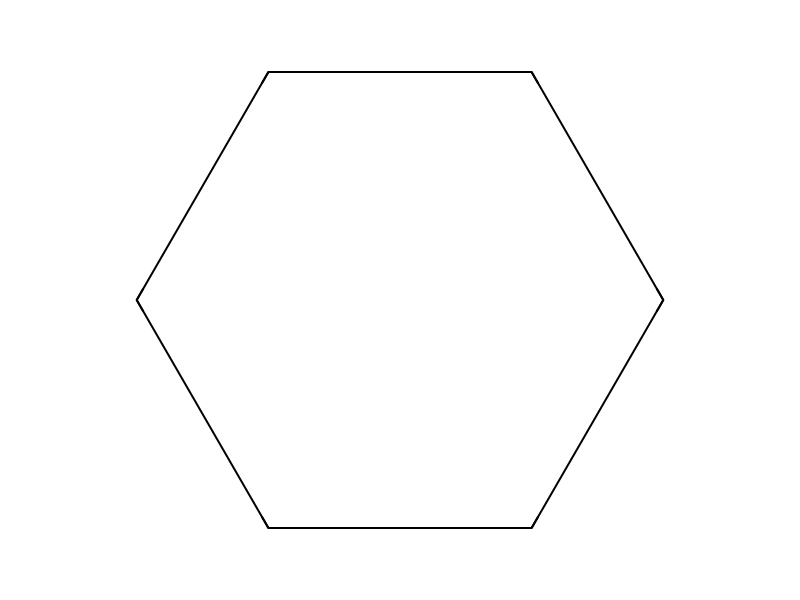
Benzene → Triphenylborane
Reaction equation

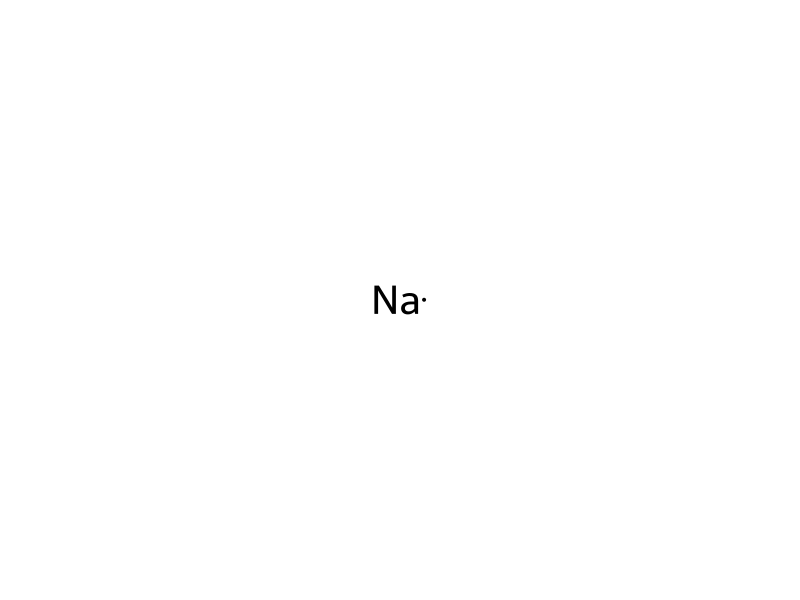
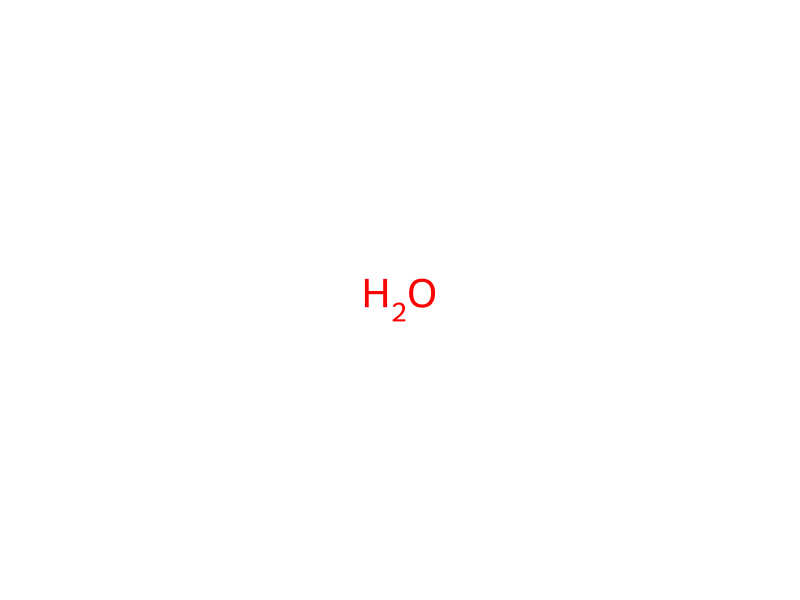
[Na].[CH:2]1[CH:7]=[CH:6][CH:5]=[CH:4][CH:3]=1.Cl[C:9]1[CH:14]=[CH:13][CH:12]=[CH:11][CH:10]=1.[B:15]([O-])([O-])OC(C)C.[CH2:22]1[CH2:27][CH2:26][CH2:25][CH2:24][CH2:23]1>O>[C:2]1([B:15]([C:22]2[CH:27]=[CH:26][CH:25]=[CH:24][CH:23]=2)[C:9]2[CH:14]=[CH:13][CH:12]=[CH:11][CH:10]=2)[CH:7]=[CH:6][CH:5]=[CH:4][CH:3]=1Participants
Reactant 5



Product 1

Reagents, catalysts & solvents 1
Conditions
- Temperature
- 80 °C
Procedure
The apparatus employed consisted of a 500 ml four-necked flask equipped with a mechanical stirrer, thermometer, addition funnel and reflux condenser with suitable provisions to maintain a nitrogen atmosphere over the reactants. Approximately 3.8 grams of sodium dispersion (particle size 1-5μ) were premixed with 40 ml of cyclohexane and 2 ml of benzene and charged to the flask. The contents of the flask were then heated to 80° C. A solution containing 9.0 grams of chlorobenzene and 4.7 grams of isopropyl orthoborate in 45 ml of cyclohexane was then added to the flask over a period of 60 minutes while the temperature of the contents were maintained at 80° C. After addition of the chlorobenzene and isopropyl orthoborate the contents of the flask were permitted to cool slowly at room temperature following which 60 ml of water were introduced into the flask. The resultant aqueous and organic phases were removed from the flask and separated. The aqueous phase which contained the sodium salt of triphenylborane was charged to a standard laboratory distillation column where the alcohol was removed by azeotropic distillation at 70°-100° C. over a period of 2 hours. The tails from the distillation were titrated at room temperature with 2.10N hydrochloric acid to a pH of 7.2 whereupon triphenylborane precipitated. The resultant slurry was filtered. The white filter cake was washed with water and vacuum dried to obtain 5.17 grams of triphenylborane (85.4% yield).
Workup
- customThe apparatus employed consisted of a 500 ml four-necked flask
- customequipped with a mechanical stirrer
- additionthermometer, addition funnel
- temperaturereflux condenser with suitable provisions
- temperatureto maintain a nitrogen atmosphere over the reactants
- additioncharged to the flask
- additionwas then added to the flask over a period of 60 minutes while the temperature of the contents
- temperaturewere maintained at 80° C
- temperatureto cool slowly at room temperature
- additionwere introduced into the flask
- customThe resultant aqueous and organic phases were removed from the flask
- customseparated
- additionwas charged to a standard laboratory distillation column where the alcohol
- customwas removed by azeotropic distillation at 70°-100° C. over a period of 2 hours
- distillationThe tails from the distillation
- customwere titrated at room temperature with 2.10N hydrochloric acid to a pH of 7.2 whereupon triphenylborane
- customprecipitated
- filtrationThe resultant slurry was filtered
- washThe white filter cake was washed with water and vacuum
- customdried
Sources & evidence
- ORD record
- ord-d930b88880b34d239e56ff3a306963e2
- Source dataset
- uspto-grants-1978_02
- Patent number
- US04076756
Reaction notes
Loading…