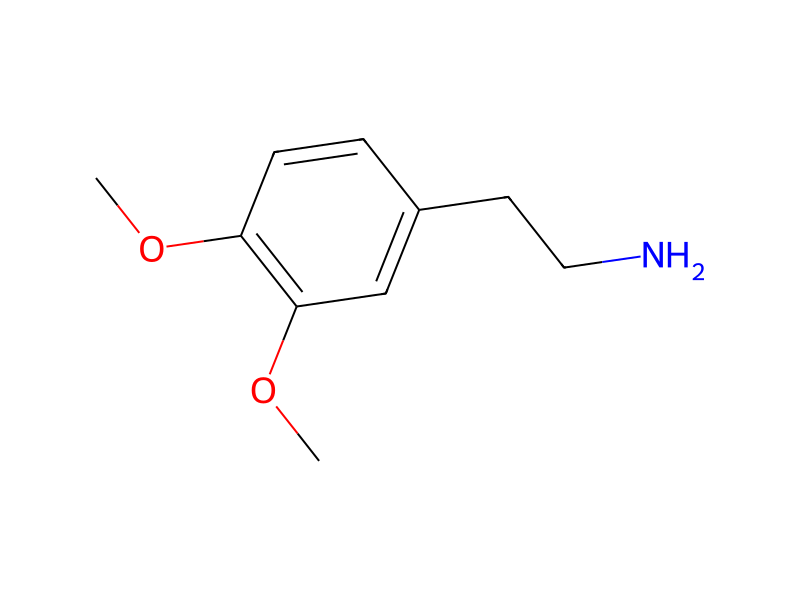
Homoveratrylamine → HCID 178490341, compound
Reaction equation

[Cl:1][C:2]1[CH:11]=[C:10]2[C:5]([C:6]([NH:12][CH:13]3[CH2:18][CH2:17][C:16](=O)[CH2:15][CH2:14]3)=[CH:7][CH:8]=[N:9]2)=[CH:4][CH:3]=1.[CH2:20]([NH2:32])[CH2:21][C:22]1[CH:31]=[CH:30][C:27]([O:28][CH3:29])=[C:24]([O:25][CH3:26])[CH:23]=1>C(O)C>[ClH:1].[ClH:1].[Cl:1][C:2]1[CH:11]=[C:10]2[C:5]([C:6]([NH:12][C@H:13]3[CH2:18][CH2:17][C@H:16]([NH:32][CH2:20][CH2:21][C:22]4[CH:31]=[CH:30][C:27]([O:28][CH3:29])=[C:24]([O:25][CH3:26])[CH:23]=4)[CH2:15][CH2:14]3)=[CH:7][CH:8]=[N:9]2)=[CH:4][CH:3]=1Participants
Reactant 2

Product 1

Reagents, catalysts & solvents 1

Procedure
275 mg 4-(7-chloroquinolin-4-ylamino)-cyclohexanone (see Example 124) and 181 mg of homoveratrylamine were boiled at reflux for 3 hours in 5 ml of ethanol in the presence of molecular sieve. The solution, which was cooled and freed from the molecular sieve, was concentrated to dryness. The residue was again taken up in 5 ml of ethanol and treated under argon at +5° C. with 37 mg of sodium borohydride. After 1 hour the mixture was concentrated and the residue was suspended in dichloromethane. The excess reducing agent was decomposed by the addition of 2 ml of 3N sodium hydroxide solution. The mixture was diluted with water and the dichloromethane was separated. The dried organic phase was concentrated. The residue was chromatographed on silica gel with dichloromethane/methanol (3:1). The free base obtained was crystallized as the dihydrochloride by treatment with 3N hydrochloric acid in methanol. Yield: 280 mg (54%) of white crystals, m.p. 210° C.
Workup
- temperatureThe solution, which was cooled
- concentrationwas concentrated to dryness
- additiontreated under argon at +5° C. with 37 mg of sodium borohydride
- concentrationAfter 1 hour the mixture was concentrated
- additionwas decomposed by the addition of 2 ml of 3N sodium hydroxide solution
- additionThe mixture was diluted with water
- customthe dichloromethane was separated
- concentrationThe dried organic phase was concentrated
- customThe residue was chromatographed on silica gel with dichloromethane/methanol (3:1)
- customThe free base obtained
- customwas crystallized as the dihydrochloride by treatment with 3N hydrochloric acid in methanol
Sources & evidence
- ORD record
- ord-cb3aac9057ac447293a08aedece09ece
- Source dataset
- uspto-grants-1999_09
- Patent number
- US05948791
Reaction notes
Loading…