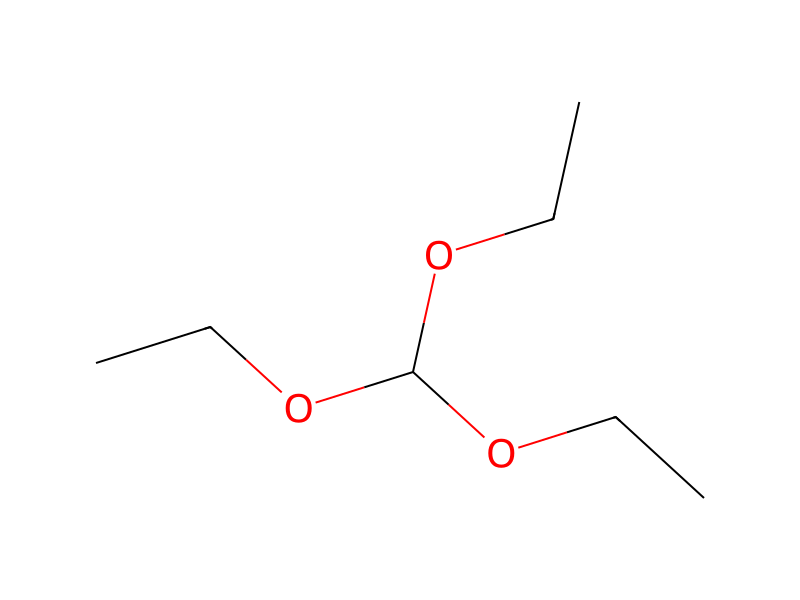
Ethyl orthoformate → 4-t-Butyldimethylsilyloxymethyl-2-ethoxy-1,3-dithiolane
Reaction equation

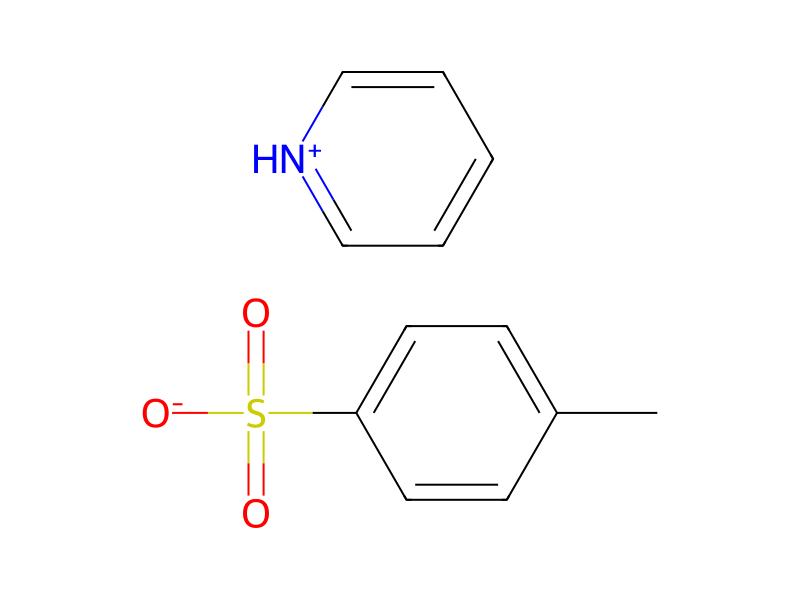
[Si:1]([O:8][CH2:9][CH:10]([SH:13])[CH2:11][SH:12])([C:4]([CH3:7])([CH3:6])[CH3:5])([CH3:3])[CH3:2].[CH2:14]([O:16][CH:17](OCC)OCC)[CH3:15].C1(C)C=CC(S([O-])(=O)=O)=CC=1.[NH+]1C=CC=CC=1>C1(C)C=CC=CC=1>[Si:1]([O:8][CH2:9][CH:10]1[CH2:11][S:12][CH:17]([O:16][CH2:14][CH3:15])[S:13]1)([C:4]([CH3:7])([CH3:6])[CH3:5])([CH3:3])[CH3:2]Participants
5
Reactant 3

Product 1

Reagents, catalysts & solvents 1

Procedure
To a solution of 1-t-butyldimethylsilyloxy-2,3-dimercaptopropane (example 47) (32.00 g, 134 mmol) in toluene (400 mL) were added triethylorthoformate (29.0 mL, 174 mmol, 1.3 eq) and pyridinium p-toluenesulfonate (200 mg). The solution was strirred at 120°-130° C. for 6 hr then was quenched at room temperature with a solution of saturated sodium bicarbonate. The aqueous phase was extracted with dichloromethane and the organic layer was dried with magnesium sulfate and evaporated under reduced pressure. The crude product was obtained in 94% yield (37.17 g) as a 1:1 mixture and was used without further purification.
Workup
- customthen was quenched at room temperature with a solution of saturated sodium bicarbonate
- extractionThe aqueous phase was extracted with dichloromethane
- dry with materialthe organic layer was dried with magnesium sulfate
- customevaporated under reduced pressure
Sources & evidence
- ORD record
- ord-1dbabac3454548b8b8dae6467eda05b1
- Source dataset
- uspto-grants-1999_09
- Patent number
- US05955610
Reaction notes
Loading…