Tetrafluoroboric acid → HCID 21247704, compound
Reaction equation

N[C:2]1[CH:7]=[CH:6][C:5]([CH:8]2[CH2:13][CH2:12][CH:11]([CH2:14][CH2:15][CH2:16][CH2:17][CH3:18])[CH2:10][O:9]2)=[CH:4][CH:3]=1.N([O-])=O.[Na+].[F:23][B-](F)(F)F.[H+]>Cl.O>[F:23][C:2]1[CH:7]=[CH:6][C:5]([CH:8]2[CH2:13][CH2:12][CH:11]([CH2:14][CH2:15][CH2:16][CH2:17][CH3:18])[CH2:10][O:9]2)=[CH:4][CH:3]=1Participants
6
Reactant 3
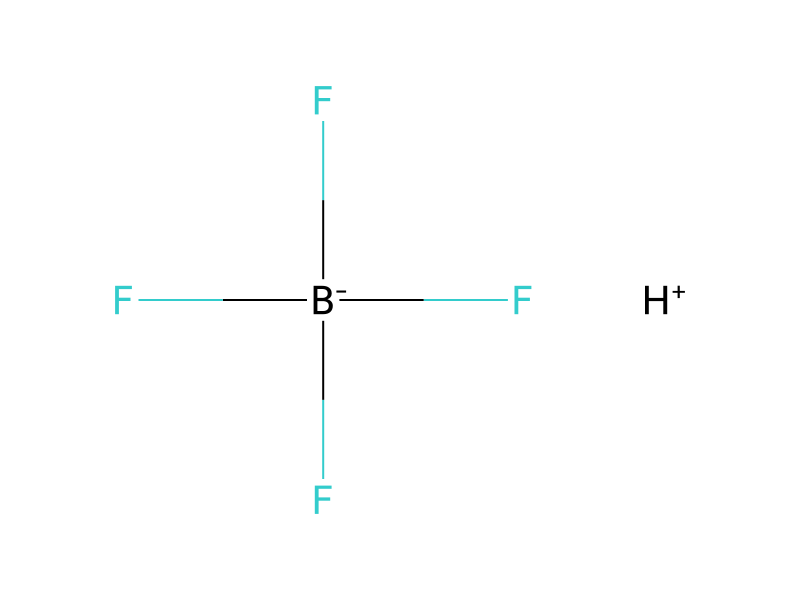


Product 1

Reagents, catalysts & solvents 2


Procedure
24.7 g of 2-p-aminophenyl-5-pentyl-tetrahydropyran are dissolved in a mixture of 25 ml of concentrated hydrochloric acid and 75 ml of water, and diazotized at 3°-6° with a solution of 8 g of NaNO2 in 15 ml of water. Then 24 g of 40% tetrafluoroboric acid are added, and the precipitated diazonium tetrafluoroborate is filtered off, washed with water and dried. The diazonium salt is heated to about 150°, and the residue is worked up as usual. 2-p-Fluorophenyl-5-pentyl-tetrahydropyran is obtained.
Workup
- filtrationthe precipitated diazonium tetrafluoroborate is filtered off
- washwashed with water
- customdried
- temperatureThe diazonium salt is heated to about 150°
Sources & evidence
- ORD record
- ord-2a9105b547cd4f398da32b7c14fb2c43
- Source dataset
- uspto-grants-1989_04
- Patent number
- US04818431
Reaction notes
Loading…