Isobutyryl chloride → HCID 21246415, compound
Reaction equation

Cl.[NH:2]=[C:3]1[CH:8]=[CH:7][N:6]([C:9]2[CH:14]=[CH:13][CH:12]=[CH:11][CH:10]=2)[N:5]=[CH:4]1.[C:15]([Cl:20])(=[O:19])[CH:16]([CH3:18])[CH3:17]>>[ClH:20].[C:15]([N:2]=[C:3]1[CH:8]=[CH:7][N:6]([C:9]2[CH:10]=[CH:11][CH:12]=[CH:13][CH:14]=2)[N:5]=[CH:4]1)(=[O:19])[CH:16]([CH3:18])[CH3:17]Participants
3
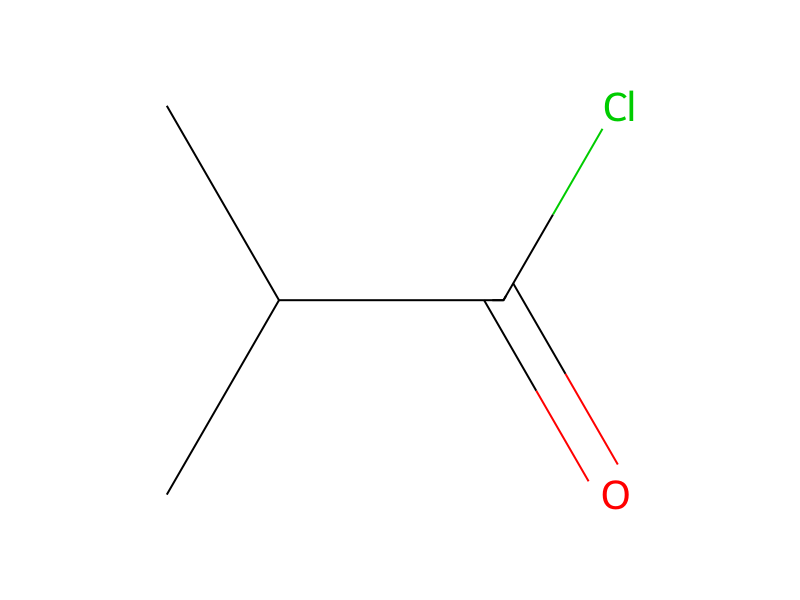


Procedure
5.0 g (21.4 millimoles) of 1,4-dihydro-4-imino-1-phenylpyridazine hydrochloride in 20 ml of isobutyryl chloride were refluxed for 20 hours, while stirring. The mixture was cooled and then filtered under suction, and the residue was washed with acetone and recrystallized from ethanol/methyl tert.-butyl ether. 4.5 g (67% of theory) of 1,4-dihydro-4-isobutyrylimino-1-phenylpyridazine hydrochloride were isolated as colorless crystals of melting point 240°-242° C.
Workup
- temperatureThe mixture was cooled
- filtrationfiltered under suction
- washthe residue was washed with acetone
- customrecrystallized from ethanol/methyl tert.-butyl ether
Sources & evidence
- ORD record
- ord-c6f333de7875409986df9cef9293d901
- Source dataset
- uspto-grants-1989_04
- Patent number
- US04820821
Reaction notes
Loading…