Phenylacetyl chloride → HCID 21246502, compound
Reaction equation

Cl.[NH:2]=[C:3]1[CH:8]=[CH:7][N:6]([C:9]2[CH:14]=[CH:13][CH:12]=[CH:11][CH:10]=2)[N:5]=[CH:4]1.[C:15]1([CH2:21][C:22]([Cl:24])=[O:23])[CH:20]=[CH:19][CH:18]=[CH:17][CH:16]=1>>[ClH:24].[C:9]1([N:6]2[CH:7]=[CH:8][C:3](=[N:2][C:22](=[O:23])[CH2:21][C:15]3[CH:20]=[CH:19][CH:18]=[CH:17][CH:16]=3)[CH:4]=[N:5]2)[CH:10]=[CH:11][CH:12]=[CH:13][CH:14]=1Participants
3
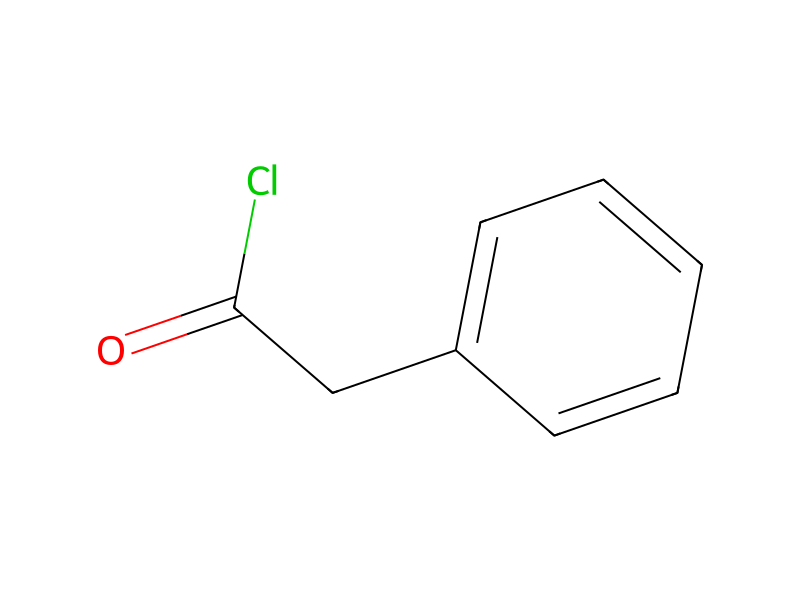


Procedure
6.0 g (28.9 millimoles) of 1,4-dihydro-4-imino-1-phenylpyridazine hydrochloride in 50 ml of phenylacetyl chloride were kept at 120° C. for 6 hours, while stirring. The mixture was cooled and then evaporated down, and the residue was treated with methanol/methyl tert.-butyl ether. The solid was filtered off under suction and recrystallized first from ethanol and then from ethanol/acetone with the addition of active charcoal. 3.9 g (41% of theory) of 1,4-dihydro-1-phenyl-4-[(phenylacetyl)-imino]-pyridazine hydrochloride were isolated as pale beige crystals of melting point 208°-210° C.
Workup
- temperatureThe mixture was cooled
- customevaporated down
- additionthe residue was treated with methanol/methyl tert.-butyl ether
- filtrationThe solid was filtered off under suction
- customrecrystallized first from ethanol
- additionfrom ethanol/acetone with the addition of active charcoal
Sources & evidence
- ORD record
- ord-a91c224a41f6428aaab35ad8240453ab
- Source dataset
- uspto-grants-1989_04
- Patent number
- US04820821
Reaction notes
Loading…