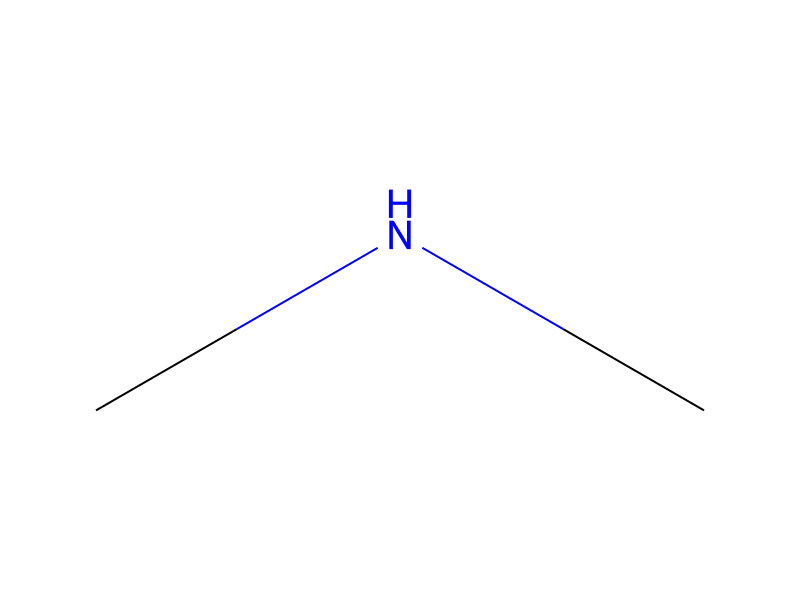
Dimethylamine → HCID 14390356, compound
Reaction equation

[Cl:1][C:2]1[CH:7]=[CH:6][C:5]([C:8]2[N:16]([CH2:17][CH2:18][C:19]([OH:21])=O)[C:11]3=[N:12][CH:13]=[CH:14][CH:15]=[C:10]3[N:9]=2)=[CH:4][CH:3]=1.[CH3:22][NH:23][CH3:24]>O1CCCC1>[ClH:1].[Cl:1][C:2]1[CH:7]=[CH:6][C:5]([C:8]2[N:16]([CH2:17][CH2:18][C:19]([N:23]([CH3:24])[CH3:22])=[O:21])[C:11]3=[N:12][CH:13]=[CH:14][CH:15]=[C:10]3[N:9]=2)=[CH:4][CH:3]=1Participants
Reactant 2

Product 1

Reagents, catalysts & solvents 1

Procedure
A suspension of 2-(4-chlorophenyl)-3H-imidazo[4,5-b]pyridine-3-propanoic acid (5.0 g, 0.0166 mole), 1,1'-carbonylidiimidazole (3.21 g, 0.0198 mo;le) and dry tetrahydrofuran (100 ml) was stirred at room temperature for one hour with nitrogen bubbling through it and then refluxed for one hour under a nitrogen atmosphere. The solution which had formed was cooled and a solution of dimethylamine in tetrahydrofuran (21.4 ml of 2.3M solution, 0.05 mole) was added. The reaction mixture was stirred at room temperature under nitrogen overnight. The solvent was removed under reduced pressure and the resulting oil was partitioned between water (100 ml) and ethyl acetate (100 ml). The layers were separated and the suspended solid was removed by filtration. The aqueous layer was extracted once more with ethyl acetate (100 ml) and the combined organic layer was washed once with a 5% potassium hydroxide solution (100 ml). The organic layer was dried over sodium sulfate, filtered, and evaporated under reduced pressure to give 6.3 g of crude product. Attempts to crystallize the pure free base failed (due to imidazole contamination and trapping of solvents by the solid). The impure product, after triturations in water to remove imidazole, was dissolved in hot isopropyl alcohol, filtered while hot and acidified with hydrogen chloride in isopropyl alcohol. Isopropyl ether was added to precipitate the solid. Filtration and drying under high vacuum gave 1.84 g of the title compound, mp. 203°-205° C.
Workup
- temperaturerefluxed for one hour under a nitrogen atmosphere
- customThe solution which had formed
- temperaturewas cooled
- stirringThe reaction mixture was stirred at room temperature under nitrogen overnight
- customThe solvent was removed under reduced pressure
- customthe resulting oil was partitioned between water (100 ml) and ethyl acetate (100 ml)
- customThe layers were separated
- customthe suspended solid was removed by filtration
- extractionThe aqueous layer was extracted once more with ethyl acetate (100 ml)
- washthe combined organic layer was washed once with a 5% potassium hydroxide solution (100 ml)
- dry with materialThe organic layer was dried over sodium sulfate
- filtrationfiltered
- customevaporated under reduced pressure
- customto give 6.3 g of crude product
- customto crystallize the pure free base
- customThe impure product, after triturations in water to remove imidazole
- dissolutionwas dissolved in hot isopropyl alcohol
- filtrationfiltered while hot and
- additionIsopropyl ether was added
- customto precipitate the solid
- filtrationFiltration
- customdrying under high vacuum
Sources & evidence
- ORD record
- ord-0550dc5106964d138c69f7024c8b2044
- Source dataset
- uspto-grants-1989_04
- Patent number
- US04824951
Reaction notes
Loading…