Acetylene → 1,1-Bis(2,4-dimethylphenyl)-2-propyn-1-ol
Reaction equation

[CH:1]#[CH:2].C(=O)=O.CO.[CH3:8][C:9]1[CH:14]=[C:13]([CH3:15])[CH:12]=[CH:11][C:10]=1[C:16]([C:18]1[CH:23]=[CH:22][C:21]([CH3:24])=[CH:20][C:19]=1[CH3:25])=[O:17]>O1CCCC1>[CH3:25][C:19]1[CH:20]=[C:21]([CH3:24])[CH:22]=[CH:23][C:18]=1[C:16]([C:10]1[CH:11]=[CH:12][C:13]([CH3:15])=[CH:14][C:9]=1[CH3:8])([OH:17])[C:1]#[CH:2]Participants
Reactant 3


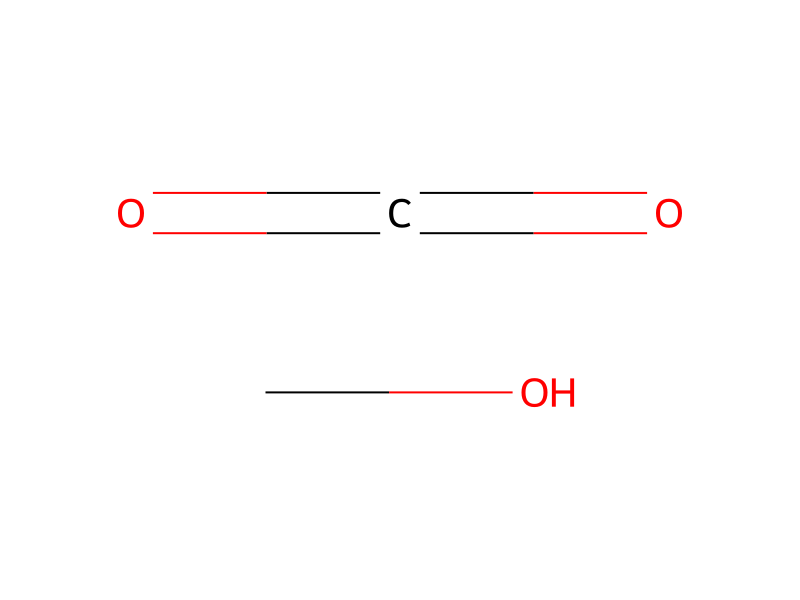
Product 1

Reagents, catalysts & solvents 1

Procedure
0.5 g of Fe(NO3)3.9H2O and 49 g of sodium are added to liquid ammonia (1.5 ) to produce sodium amide. Then acetylene gas is introduced into the reaction mixture at a temperature of -40° C. to -65° C. (whilst cooling using dry ice-methanol) for one hour while stirring. Then, an anhydrous tetrahydrofuran solution containing 476 g of di-(2,4-dimethylphenyl) ketone is added dropwise to the reaction mixture while cooling and stirring. After further stirring for 2 hours, the mixture is left at room temperature overnight. After removal of ammonia from the reaction solution by evaporation, 3N diluted HCl (300 ml) is added to the solution. After extraction with ether, the ether layer is washed with water and dried. After removal of ether by evaporation, 1,1-bis(2,4-dimethylphenyl)-2-propyn-1-ol is obtained as colourless oily product with a yield of 450 g.
Workup
- additionis added dropwise to the reaction mixture
- temperaturewhile cooling
- stirringstirring
- stirringAfter further stirring for 2 hours
- customAfter removal of ammonia from the reaction solution
- customby evaporation, 3N diluted HCl (300 ml)
- additionis added to the solution
- extractionAfter extraction with ether
- washthe ether layer is washed with water
- customdried
- customAfter removal of ether
- customby evaporation
Sources & evidence
- ORD record
- ord-2117a2f738cf463d88c9532d8264dea5
- Source dataset
- uspto-grants-1988_09
- Patent number
- US04769502
Reaction notes
Loading…