Hydrochloric Acid → HCID 11150543, compound
Reaction equation

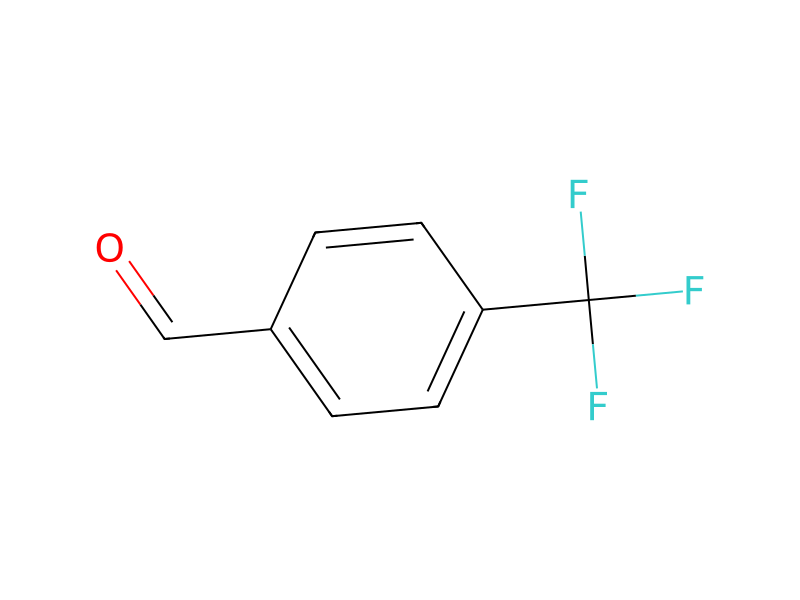
[F:1][C:2]([F:12])([F:11])[C:3]1[CH:10]=[CH:9][C:6]([CH:7]=[O:8])=[CH:5][CH:4]=1.[CH3:13]/[C:14](/[C:17]([CH3:19])=O)=[N:15]\[OH:16].[ClH:20].C(OCC)C>C(O)(=O)C>[ClH:20].[F:1][C:2]([F:11])([F:12])[C:3]1[CH:10]=[CH:9][C:6]([C:7]2[O:8][C:17]([CH3:19])=[C:14]([CH3:13])[N+:15]=2[O-:16])=[CH:5][CH:4]=1Participants
6
Reactant 4



Product 1

Reagents, catalysts & solvents 1

Procedure
34.8 g (0.20 mol) of 4-trifluoromethylbenzaldehyde and 20.2 g (0.20 mol) of 2,3-butanedione monoxime were dissolved in 100 ml of glacial acetic acid and the mixture was stirred at room temperature while passing gaseous hydrogen chloride through the mixture until a saturated solution was obtained. The mixture was stirred at room temperature overnight and then treated with an excess of anhydrous diethyl ether. The colourless crystalline precipitate was filtered off, washed free of mother liquors using fresh anhydrous diethyl ether and dried in vacuo to give 50 g (86%) of 2-(4-trifluoromethylphenyl)-4,5-dimethyloxazole N-oxide hydrochloride of melting point 175°-177° C. (decomposition).
Workup
- customwas obtained
- stirringThe mixture was stirred at room temperature overnight
- filtrationThe colourless crystalline precipitate was filtered off
- washwashed free of mother liquors
- customdried in vacuo
Sources & evidence
- ORD record
- ord-a2d22c013b804d45b447fee0ec863c6f
- Source dataset
- uspto-grants-1988_09
- Patent number
- US04774253
Reaction notes
Loading…