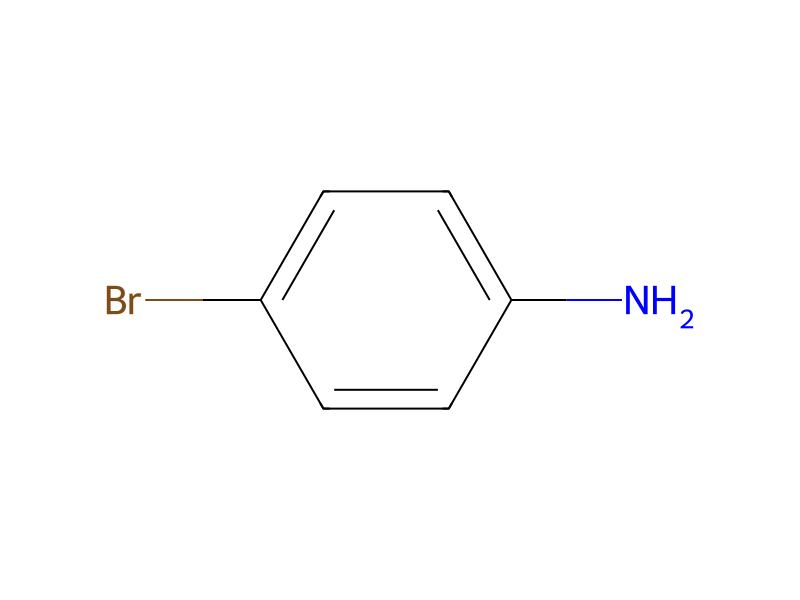
4-Bromoaniline → 3-(4-Bromoanilino)-3-oxopropanoic acid
Reaction equation

[Br:1][C:2]1[CH:8]=[CH:7][C:5]([NH2:6])=[CH:4][CH:3]=1.CC1(C)[O:15][C:14](=O)[CH2:13][C:12](=[O:17])[O:11]1>>[Br:1][C:2]1[CH:8]=[CH:7][C:5]([NH:6][C:14](=[O:15])[CH2:13][C:12]([OH:17])=[O:11])=[CH:4][CH:3]=1Participants
3


Conditions
- Temperature
- 80 °C
Procedure
According to the general method described in Synth. Commun. 2010, 40, 732, a mixture of 4-bromoaniline (10.0 g, 58.1 mmol) and 2,2-dimethyl-1,3-dioxan-4,6-dione (8.40 g, 58.1 mmol) was heated at 80° C. for 1 hour and cooled to room temperature to provide 3-((4-bromophenyl)amino)-3-oxopropanoic acid as a solid. A stream of nitrogen gas was passed over the solid product to remove liquid acetone formed as a by-product. To this solid was added Eaton's reagent (40 mL) and heated at 70° C. for 12 hours and cooled to room temperature. To the resulting mixture was added water and stirred vigorously to provide a suspension which was filtered. The solid residue was washed with water and dried in air to provide the title compound.
Workup
- temperaturecooled to room temperature
Sources & evidence
- ORD record
- ord-9c92d42135614b1fa8b1702932b5c3eb
- Source dataset
- uspto-grants-2016_04
- Patent number
- US09303015B2
Reaction notes
Loading…