Thiomorpholine-3-carboxamide → 4-(5-Cyclopropyl-6-cyclopropylmethoxy-pyridine-2-carbonyl)-thiomorpholine-3-carboxylic acid amide
Reaction equation

[CH:1]1([C:4]2[CH:5]=[CH:6][C:7]([C:15]([OH:17])=O)=[N:8][C:9]=2[O:10][CH2:11][CH:12]2[CH2:14][CH2:13]2)[CH2:3][CH2:2]1.[NH:18]1[CH2:23][CH2:22][S:21][CH2:20][CH:19]1[C:24]([NH2:26])=[O:25]>>[CH:1]1([C:4]2[CH:5]=[CH:6][C:7]([C:15]([N:18]3[CH2:23][CH2:22][S:21][CH2:20][CH:19]3[C:24]([NH2:26])=[O:25])=[O:17])=[N:8][C:9]=2[O:10][CH2:11][CH:12]2[CH2:13][CH2:14]2)[CH2:2][CH2:3]1Participants
3

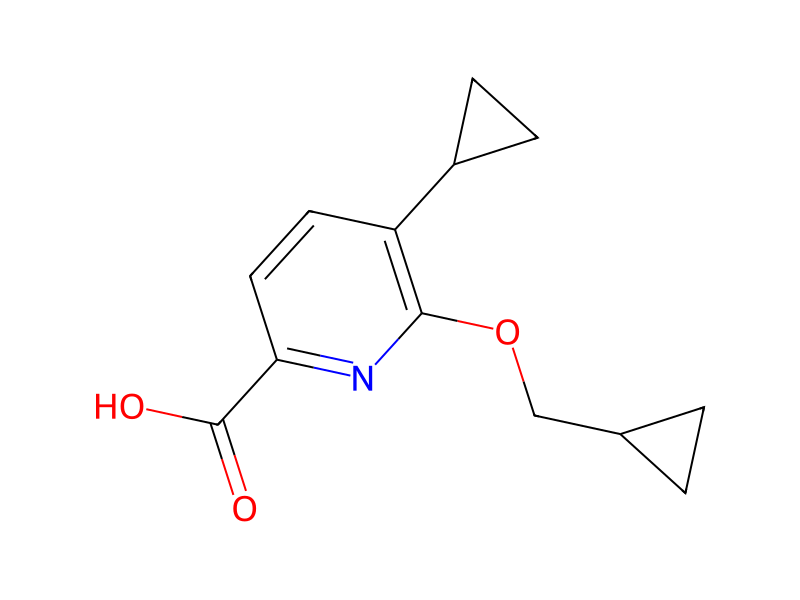

Procedure
The title compound was synthesized in analogy to Example 47 b, using 5-cyclopropyl-6-cyclopropylmethoxy-pyridine-2-carboxylic acid (Example 3 c, 100 mg, 429 μmol) and 3-thiomorpholinecarboxamide (CAN 103742-31-0, 68.9 mg, 472 μmol) as starting materials and isolated (119 mg, 77%) as white solid; LC-MS (UV peak area, ESI) 100%, 362.1540 [MH+].
Workup
- customisolated (119 mg, 77%) as white solid
Sources & evidence
- ORD record
- ord-484fb3d14ac34d3f85455aaa12b4075d
- Source dataset
- uspto-grants-2016_04
- Patent number
- US09303012B2
Reaction notes
Loading…