Indole-5-carbonitrile → 3-(4-chlorobutanoyl)-1H-indole-5-carbonitrile
Reaction equation

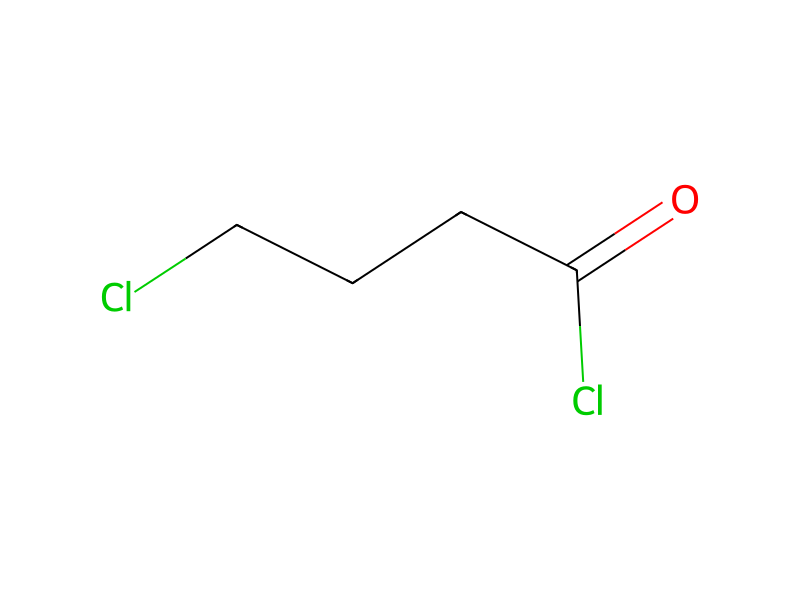
[Cl:1][CH2:2][CH2:3][CH2:4][CH2:5][C:6]1[C:14]2[C:9](=[CH:10][CH:11]=[C:12]([C:15]#[N:16])[CH:13]=2)[NH:8][CH:7]=1.C(C1C=C2C(=CC=1)NC=C2)#N.ClCCCC(Cl)=[O:33]>>[Cl:1][CH2:2][CH2:3][CH2:4][C:5]([C:6]1[C:14]2[C:9](=[CH:10][CH:11]=[C:12]([C:15]#[N:16])[CH:13]=2)[NH:8][CH:7]=1)=[O:33]Participants
4



Procedure
As per the process described in the JMC Article, 3-(4-chlorobutyl)-1H-indole-5-carbonitrile is prepared by reacting 5-cyanoindole with 4-chlorobutyryl chloride in the presence of isobutyl-AlCl2 to produce 3-(4-chlorobutyryl)-1H-indole-5-carbonitrile, which is then subjected to selective desoxygenation of the keto function with sodium bis(2-methoxyethoxy)aluminum hydride (Vitride/Red-Al) to produce the 3-(4-chlorobutyl)-1H-indole-5-carbonitrile.
Workup
- customis prepared
Sources & evidence
- ORD record
- ord-0e103180a77f4d09b66c641ff95b06b2
- Source dataset
- uspto-grants-2016_04
- Patent number
- US09315456B2
Reaction notes
Loading…