Sodium Carbonate → HCID 86620268, compound
Reaction equation

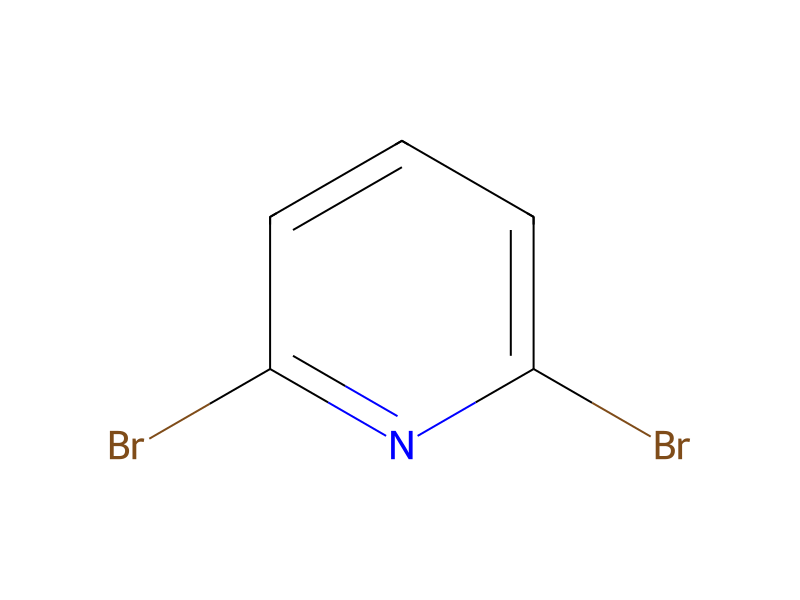
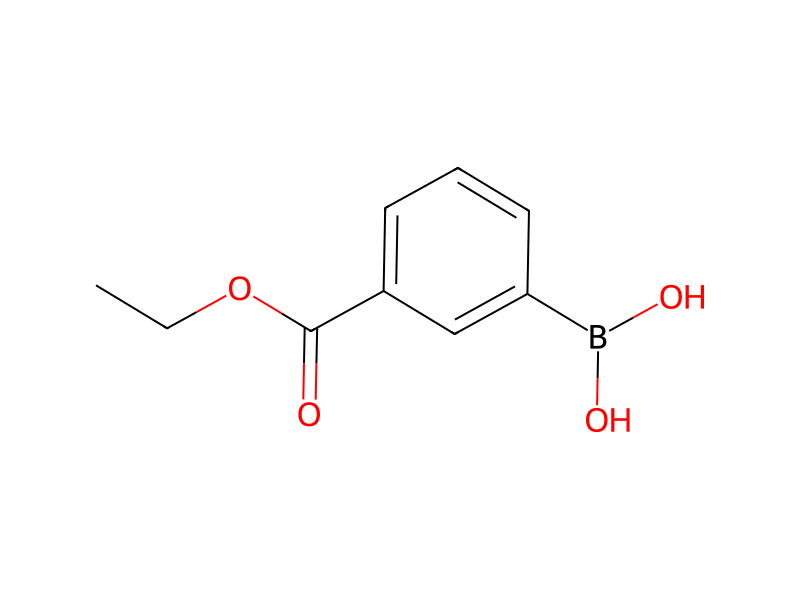
Br[C:2]1[CH:7]=[CH:6][CH:5]=[C:4]([Br:8])[N:3]=1.[C:9]([C:14]1[CH:15]=[C:16](B(O)O)[CH:17]=[CH:18][CH:19]=1)([O:11][CH2:12][CH3:13])=[O:10].C(=O)([O-])[O-].[Na+].[Na+]>C(#N)C.O>[Br:8][C:4]1[N:3]=[C:2]([C:18]2[CH:19]=[C:14]([CH:15]=[CH:16][CH:17]=2)[C:9]([O:11][CH2:12][CH3:13])=[O:10])[CH:7]=[CH:6][CH:5]=1Participants
6
Reactant 3

Product 1

Reagents, catalysts & solvents 2


Conditions
- Temperature
- 80 °C
Procedure
Part A. A solution of 2,6-dibromopyridine (6.16 g, 26 mmol) and 3-carboethoxybenzeneboronic acid (0.5 g, 2.6 mmol) in acetonitrile (20 mL) is treated with a solution of sodium carbonate (0.88 g) in water (5 mL). The mixture is degassed twice, and a catalytic amount of tetrakis(triphenylphosphine)palladium is added. The reaction mixture is heated to 80° C. and stirred for 12 h., then cooled, filtered and evaporated. The residue is partitioned between water and ethyl acetate, and the organic phase is washed with satd. aq. brine, dried over sodium sulfate, filtered and evaporated. The residual material is separated by column chromatography to give ethyl 3-(6-bromo-pyridin-2-yl)-benzoate (154 mg, 20%).
Workup
- customThe mixture is degassed twice
- additiona catalytic amount of tetrakis(triphenylphosphine)palladium is added
- temperaturecooled
- filtrationfiltered
- customevaporated
- customThe residue is partitioned between water and ethyl acetate
- washthe organic phase is washed with satd
- dry with materialaq. brine, dried over sodium sulfate
- filtrationfiltered
- customevaporated
- customThe residual material is separated by column chromatography
Sources & evidence
- ORD record
- ord-2b1e68c56a8d47b09cefcaa7fcdf6387
- Source dataset
- uspto-grants-2016_04
- Patent number
- US09315467B2
Reaction notes
Loading…