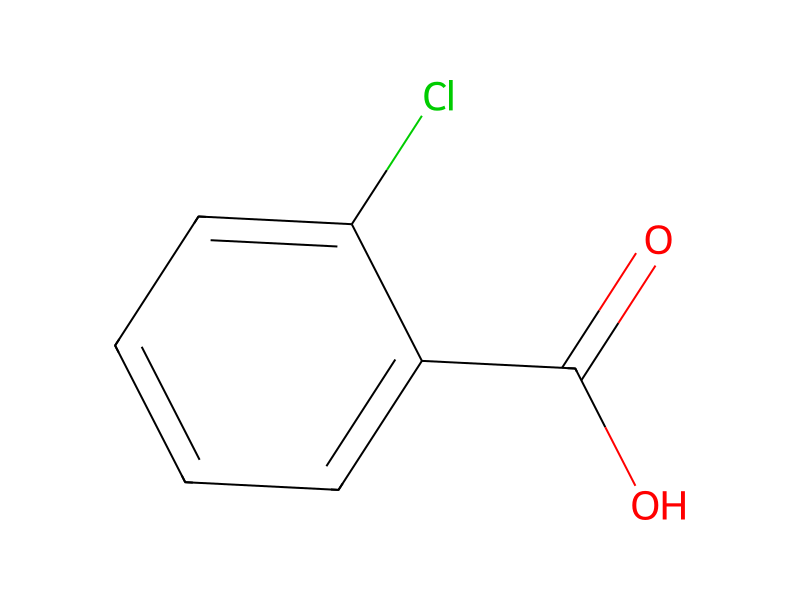
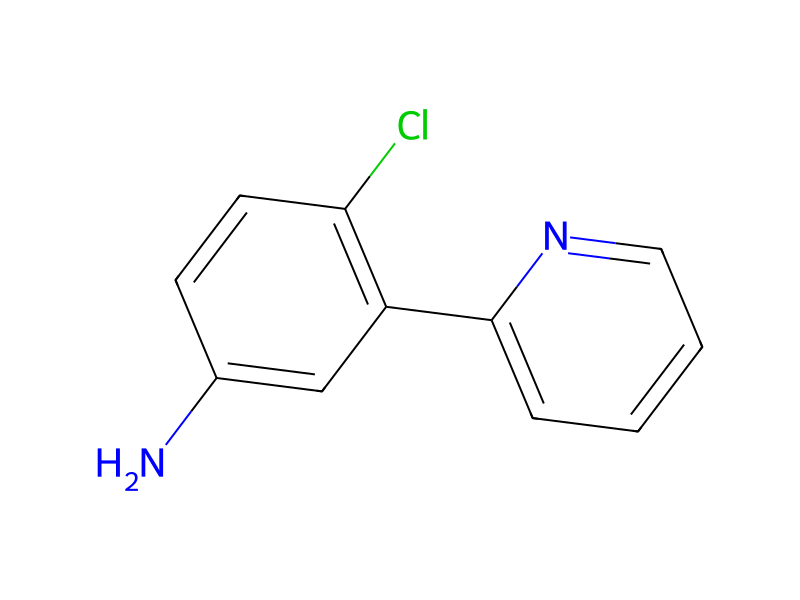
2-Chlorobenzoic Acid → 2-chloro-N-(4-chloro-3-(pyridin-2-yl)phenyl)benzamide
Reaction equation

[Cl:1][C:2]1[CH:8]=[CH:7][C:5]([NH2:6])=[CH:4][C:3]=1[C:9]1[CH:14]=[CH:13][CH:12]=[CH:11][N:10]=1.[Cl:15][C:16]1[CH:24]=[CH:23][CH:22]=[CH:21][C:17]=1[C:18](O)=[O:19]>>[Cl:15][C:16]1[CH:24]=[CH:23][CH:22]=[CH:21][C:17]=1[C:18]([NH:6][C:5]1[CH:7]=[CH:8][C:2]([Cl:1])=[C:3]([C:9]2[CH:14]=[CH:13][CH:12]=[CH:11][N:10]=2)[CH:4]=1)=[O:19]Participants
3

Procedure
Procedure G was used to couple 4-chloro-3-(pyridin-2-yl)aniline (50 mg) and 2-chlorobenzoic acid to produce 2-chloro-N-(4-chloro-3-(pyridin-2-yl)phenyl)benzamide. MS (Q1) 343.1 (M)+.
Sources & evidence
- ORD record
- ord-20bac7bf815a4c64a8c62ba668c4e469
- Source dataset
- uspto-grants-2016_04
- Patent number
- US09321761B2
Reaction notes
Loading…