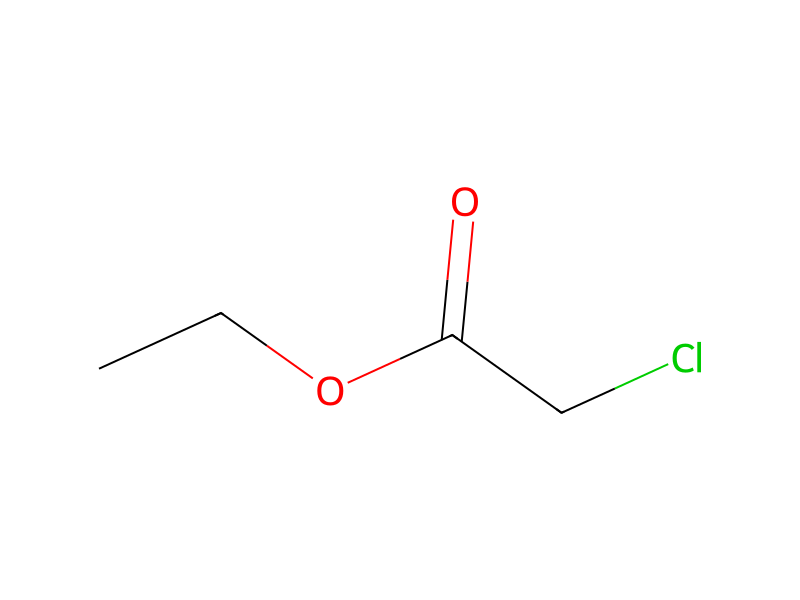
Ethyl chloroacetate → HCID 70223099, compound
Reaction equation

[C:1]([CH:5]([O:9][C:10]1[CH:15]=[CH:14][CH:13]=[CH:12][CH:11]=1)[C:6](Cl)=[O:7])([CH3:4])([CH3:3])[CH3:2].C([C:20]1C=CC=C[C:21]=1[O-:22])(C)(C)C.[Na+].ClCC(OCC)=O>>[C:1]([CH:5]([O:9][C:10]1[CH:15]=[CH:14][CH:13]=[CH:12][CH:11]=1)[C:6]([O:22][CH2:21][CH3:20])=[O:7])([CH3:4])([CH3:3])[CH3:2]Participants
4


Procedure
The synthesis of this product required the preparation of t-butylphenoxyacetyl chloride from sodium t-butylphenoxide and ethyl chloroacetate. The ethyl t-butylphenoxyacetate obtained is cleaved with potassium hydroxide in order to liberate the t-butylphenoxyacetic acid. The acid chloride is obtained by heating this acid in thionyl chloride. After removing the excess thionyl chloride, the t-butylphenoxyacetyl chloride is reacted with deoxyguanosine according to the procedure described by SCHULHOF et al. for 2-N-phenoxyacetyldeoxyguanosine [Nucleic Acids Res., 15(2), p. 397-415, (1987)].
Workup
- customThe synthesis of this product
Sources & evidence
- ORD record
- ord-f0e45b5caae2421795f409aed45a2bad
- Source dataset
- uspto-grants-2001_02
- Patent number
- US06187914B1
Reaction notes
Loading…