2-Mercaptoethanol → HCID 21255762, compound
Reaction equation

[SH:1][CH2:2][CH2:3][OH:4].N(CCO)(CCO)CCO.[C:15]1([S:25]([Cl:28])(=[O:27])=[O:26])[CH:20]=[CH:19][C:18]([S:21]([Cl:24])(=[O:23])=[O:22])=[CH:17][CH:16]=1>N(CCO)(CCO)CCO>[C:15]1([S:25]([Cl:28])(=[O:26])=[O:27])[CH:16]=[CH:17][C:18]([S:21]([Cl:24])(=[O:22])=[O:23])=[CH:19][CH:20]=1.[SH:1][CH2:2][CH2:3][OH:4]Participants
5
Reactant 3
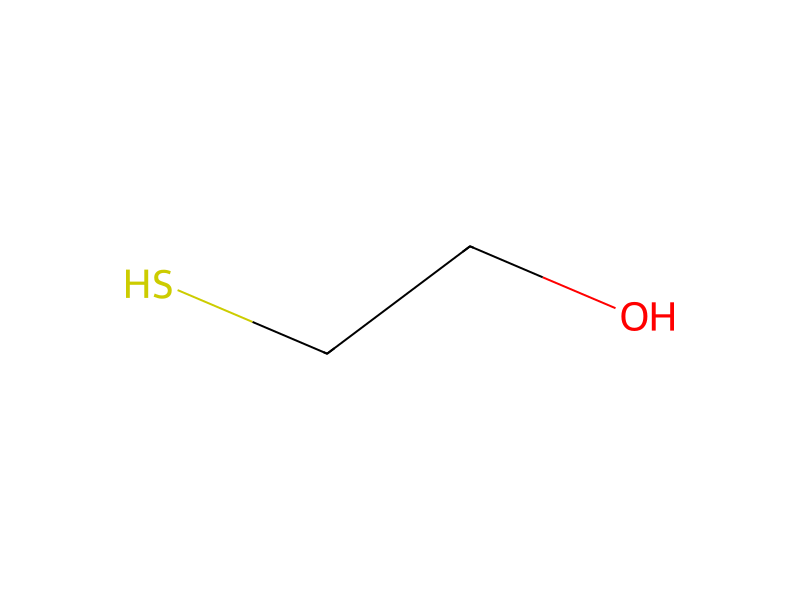


Product 1

Reagents, catalysts & solvents 1
Procedure
Next, in the mixing section 22, the mixed vapor atmosphere of 2-mercaptoethanol and triethanolamine was cooled, and the introduced base particles were exposed thereto for 10 minutes. Consequently, a polymerization reaction using triethanolamine as a catalyst took place on the surface of the base particles between 1,4-benzenedisulfonyl chloride and 2-mercaptoethanol, forming a film of 1,4-benzenedisulfonylchloride-2-mercaptoethanol co-polymer.
Workup
- customConsequently, a polymerization reaction
Sources & evidence
- ORD record
- ord-bef7a8d1d1f942d9a0733f2ed46d876c
- Source dataset
- uspto-grants-2001_02
- Patent number
- US06194487B1
Reaction notes
Loading…