Phenylhydrazine → HCID 178479605, compound
Reaction equation

[Cl:1][C:2]1[C:11]2[C:6](=[CH:7][CH:8]=[N:9][CH:10]=2)[N:5]=[CH:4][C:3]=1[C:12]([O:14]CC)=O.[C:17]1([NH:23][NH2:24])[CH:22]=[CH:21][CH:20]=[CH:19][CH:18]=1>CO>[ClH:1].[C:17]1([N:23]2[C:12](=[O:14])[C:3]3=[CH:4][NH:5][C:6]4[CH:7]=[CH:8][N:9]=[CH:10][C:11]=4[C:2]3=[N:24]2)[CH:22]=[CH:21][CH:20]=[CH:19][CH:18]=1Participants
4
Reactant 2
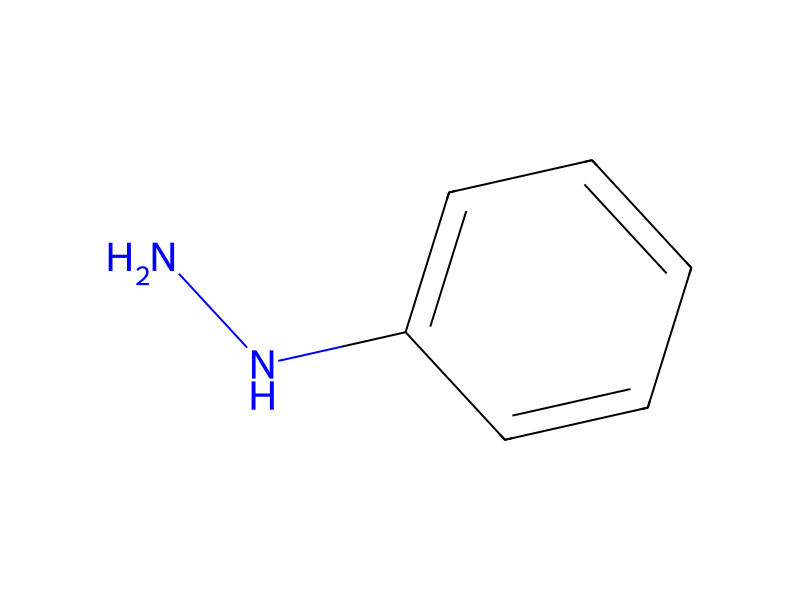

Product 1

Reagents, catalysts & solvents 1

Procedure
A solution of 2.60 g of ethyl 4-chloro-1,6-naphthyridine-3-carboxylate and 1.25 g of phenylhydrazine in 32 ml of methanol is stirred at 22° for 18 hours, then refluxed for 3 hours. The resultant slurry is allowed to cool down to room temperature and filtered, obtaining 2-phenyl-pyrazolo[4,3-c][1,6]-naphthyridin-3(5H)-one hydrochloride, mp 310°; IR (KBr) 750, 756, 777, 802, 843 cm-1. This hydrochloride salt is dissolved in 1N sodium hydroxide and filtered. Ammonium chloride (10 g) is added to the filtrate, the resulting precipitate is collected, and is crystallized from methanol to yield the free base, 2-phenyl-pyrazolo[4,3-c][1,6]naphthyridin-3(5H)-one, m.p. 334°-337°.
Workup
- temperaturerefluxed for 3 hours
- filtrationfiltered
Sources & evidence
- ORD record
- ord-23039a5e59a74579a2e883f42802197c
- Source dataset
- uspto-grants-1985_12
- Patent number
- US04560689
Reaction notes
Loading…