Sulfuric Acid → HCID 12674764, compound
Reaction equation

[OH:1][CH2:2][CH2:3][N:4]1[CH:8]=[CH:7][CH:6]=[CH:5]1.S(=O)(=O)(O)O.N1C=CC=C1.[C:19](Cl)(=[O:21])[CH3:20].C(OC(=O)C)(=O)C>C(O)(=O)C>[C:19]([O:1][CH2:2][CH2:3][N:4]1[CH:8]=[CH:7][CH:6]=[CH:5]1)(=[O:21])[CH3:20]Participants
Reactant 5



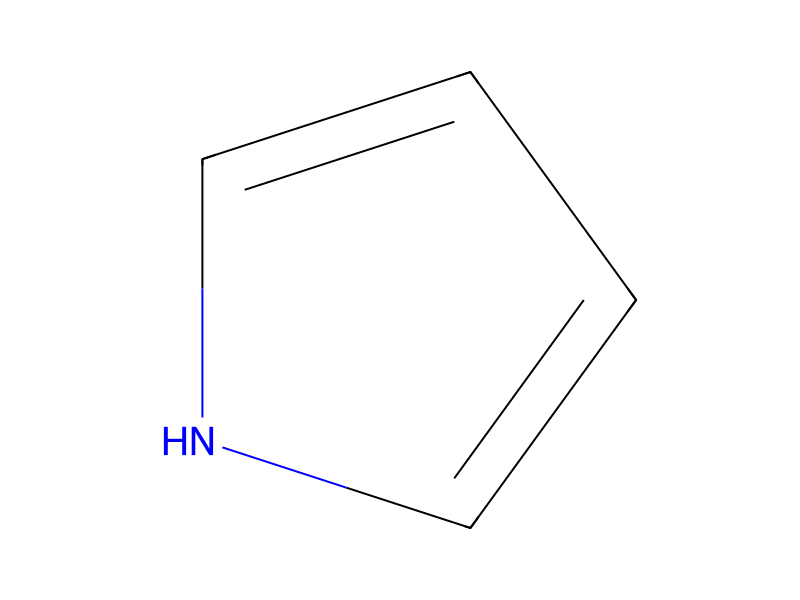

Product 1

Reagents, catalysts & solvents 1

Procedure
Once the 1-(2-hydroxyethyl)pyrrole is obtained, it is esterified by any suitable means known in the art. For example, acetic acid is reacted with the 1-(2-hydroxyethyl)pyrrole in the presence of a strong acid such as sulfuric acid, and the reaction mixture is heated sufficiently to distill off the water that is formed as a result of the reaction. Preferably however, the pyrrole is reacted with acetyl chloride or acetic anhydride in a suitable solvent wherein there is a molar excess of the acetyl chloride or acetic anhydride. This reaction takes place at room temperature and will be completed in a relatively short period of time, with only an hour or two at the most being required for the reaction to reach completion. The 1-(2-acetoxyethyl)pyrrole is then isolated and purified by any means known in the art, such as extraction with a suitable organic solvent and removal of the solvent, to yield the desired compound represented by Formula (3).
Workup
- temperaturethe reaction mixture is heated sufficiently
- distillationto distill off the water that
- customis formed as
- customa result of the reaction
- customat room temperature
- waitwill be completed in a relatively short period of time, with only an hour
- customtwo at the most being required for the reaction
Sources & evidence
- ORD record
- ord-4e2442e08a1341dd8bb8aee103845cde
- Source dataset
- uspto-grants-1985_12
- Patent number
- US04560699
Reaction notes
Loading…