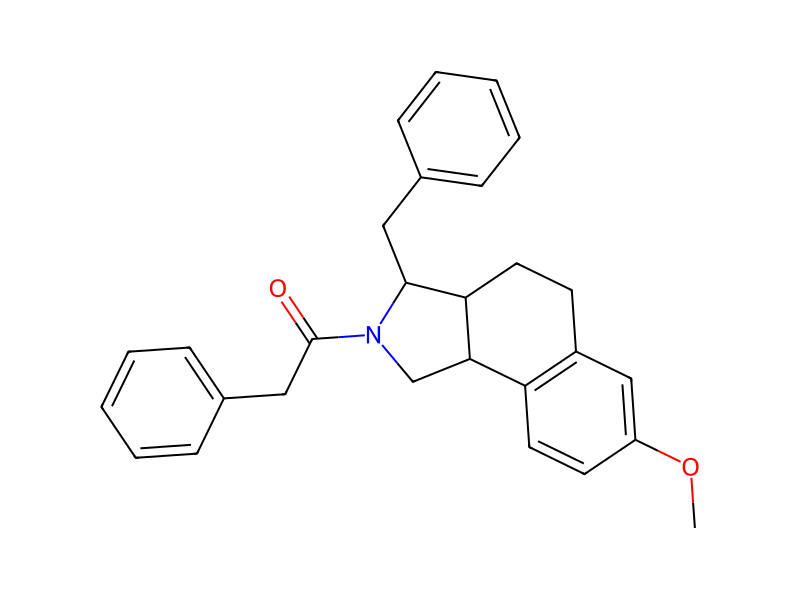
Hydrochloric Acid → 2,3,3a,4,5,9b-hexahydro-7-methoxy-2-phenylmethylcarbonyl-3-phenylmethyl-1H-benz[e]isoindole
Reaction equation
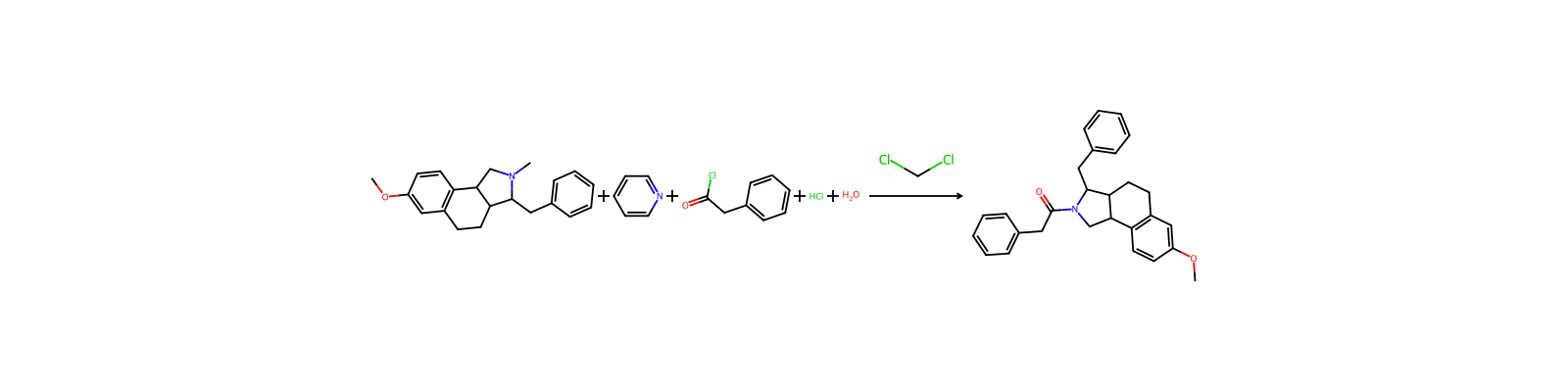
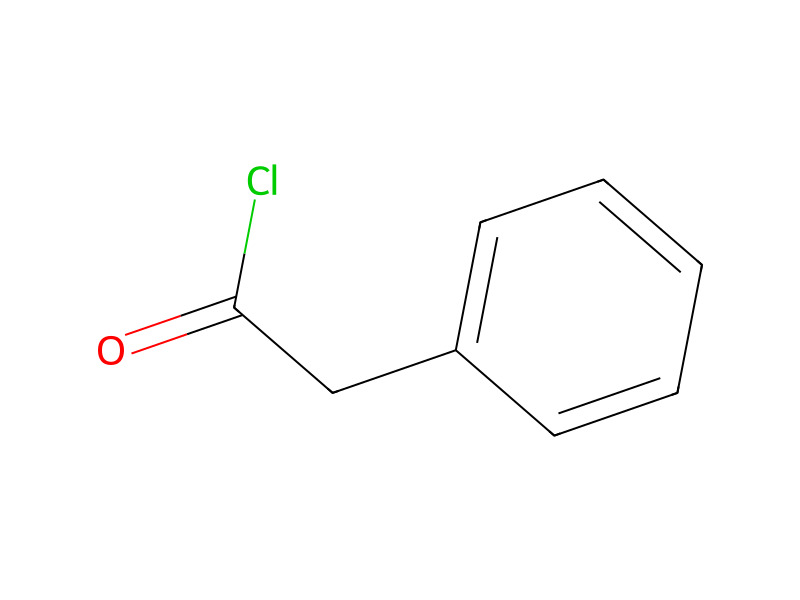
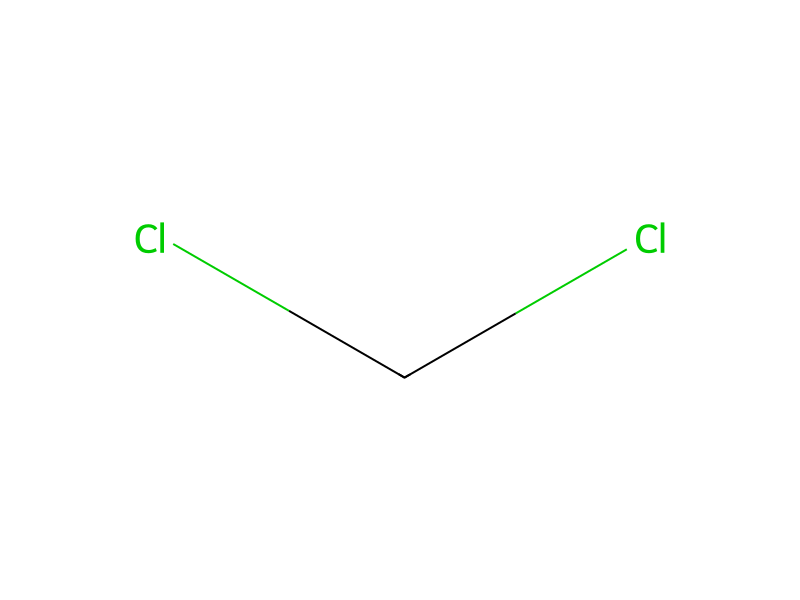
[CH3:1][O:2][C:3]1[CH:23]=[CH:22][C:6]2[CH:7]3[CH:11]([CH2:12][CH2:13][C:5]=2[CH:4]=1)[CH:10]([CH2:14][C:15]1[CH:20]=[CH:19][CH:18]=[CH:17][CH:16]=1)[N:9]([CH3:21])[CH2:8]3.N1C=CC=CC=1.[C:30]1([CH2:36]C(Cl)=O)[CH:35]=[CH:34][CH:33]=[CH:32][CH:31]=1.Cl.[OH2:41]>C(Cl)Cl>[CH3:1][O:2][C:3]1[CH:23]=[CH:22][C:6]2[CH:7]3[CH:11]([CH2:12][CH2:13][C:5]=2[CH:4]=1)[CH:10]([CH2:14][C:15]1[CH:16]=[CH:17][CH:18]=[CH:19][CH:20]=1)[N:9]([C:21]([CH2:36][C:30]1[CH:35]=[CH:34][CH:33]=[CH:32][CH:31]=1)=[O:41])[CH2:8]3Participants
Reactant 5
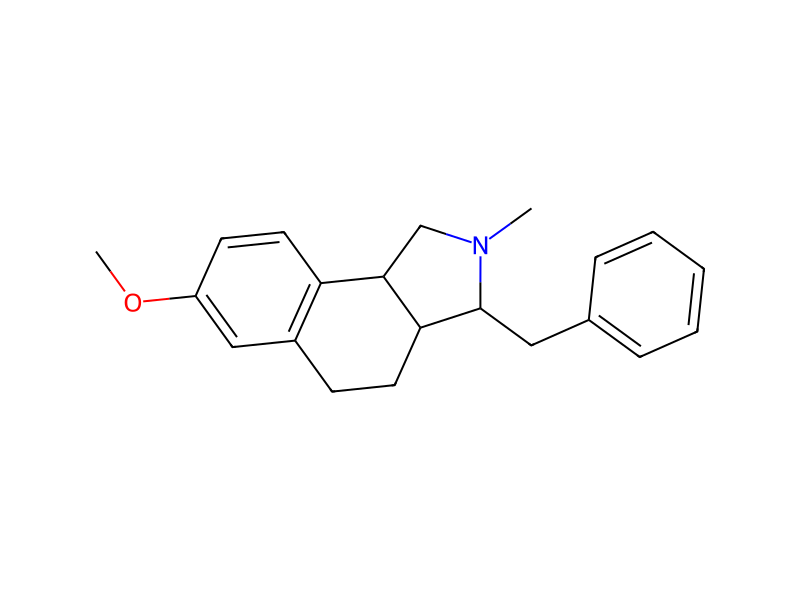
Product 1
Reagents, catalysts & solvents 1
Conditions
- Temperature
- 0 °C
Procedure
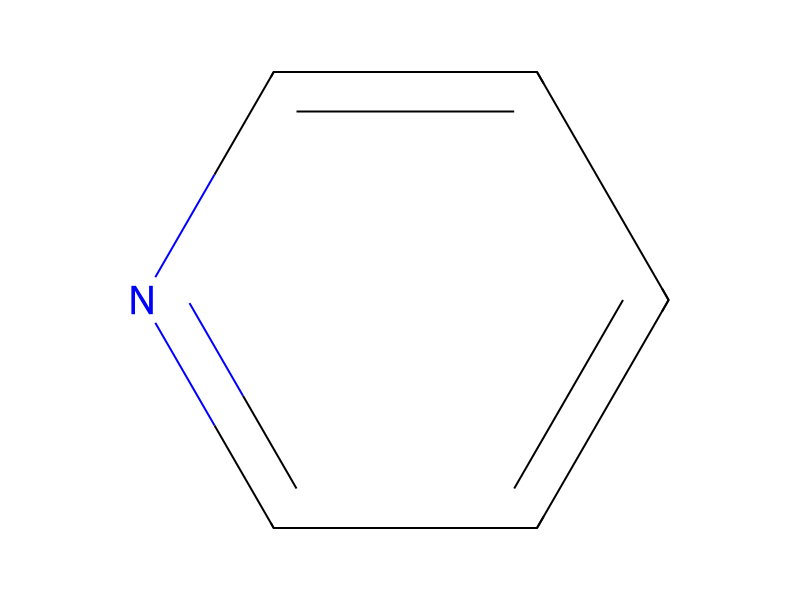
2,3,3a,4,5,9b-Hexahydro-7-methoxy-2-methyl-3-phenylmethyl-1H-benz[e]isoindole (0.80 g, 2.73 mmol), the product of Example 1, was dissolved in 10 mL of methylene chloride and approximately 5 mL of pyridine was added to the resultant solution. The solution was cooled to 0° C. and approximately 2.5 mL of phenylacetyl chloride was added, dropwise, over a 3 minute period and the reaction mixture was stirred for 45 minutes at ambient temperature. Water (20 mL) was added to the reaction mixture to quench the reaction and the resultant mixture was stirred at ambient temperature for 0.5 h. the mixture was transferred to a separatory funnel and 1N aqueous hydrochloric acid solution and 4 mL of methylene chloride were added. The layers were separated and the aqueous layer was extracted with two portions of methylene chloride. The combined organic layers were washed with 1N aqueous hydrochloric acid solution and 1N dilute aqueous sodium hydroxide solution, dried over anhydrous magnesium sulfate, filtered and concentrated in vacuo. The residue was purified on silica gel eluted with hexane:ethyl acetate (5:2 v/v) to give the intermediate amide, 2,3,3a,4,5,9b-hexahydro-7-methoxy-2-phenylmethylcarbonyl-3-phenylmethyl-1H-benz[e]isoindole, which was dissolved in 10 mL of anhydrous THF. Borane (4 mL of a 1.0M solution in THF, 4 mmol) was added to the solution of the amide and the reaction mixture was heated at reflux for 1 h. The solvent was removed in vacuo and the residue was dissolved in methanol. Methanol saturated with anhydrous hydrogen chloride was added and the solution was heated at reflux for 16 h. The methanol was removed under reduced pressure and the residue was partitioned between 1N aqueous sodium hydroxide solution and methylene chloride (1:4, v/v). The aqueous layer was extracted with two portions of methylene chloride and the combined organic layers were dried over anhydrous magnesium sulfate and filtered. Silica gel was suspended in the filtrate and the solvent was evaporated from the suspension to give a powder which was loaded onto a silica gel column. The column was eluted with a 5:1 mixture of hexane and diethyl ether saturated with ammonia to give 530 mg (49% yield) of the free amine product. The methanesulfonate salt (the title compound) was formed by dissolving the free amine product in a diethyl ether solution of methanesulfonic acid, m.p. 179°-180° C.; MS DCl--NH3M/Z: 398 (M+H)+ ; 1H NMR of methanesulfonic acid salt (CDCl3) δ1.94-2.1 (2H, m), 2.4-2.77 (2H, m), 2.83 (3H, s), 2.83-3.1 (3H, m), 3.2-3.55 (6H, m), 3.7-3.8 (1H, m), 3.78 (3H, s), 3.83, 3.93 (1H, dd, J=15 Hz, 9 Hz), 6.64 (1H, d, J=3 Hz), 6.69 (1H, dd, J=3 Hz, J=9 Hz), 6.89 (1H, d, J=9 Hz), 7.07-7.42 (10H, m). Analysis calculated for C29H35NO4S: C, 70.56; H, 7.15; N, 2.84. Found: C, 70.19; H, 7.19; N, 2.80.
Workup
- customto quench
- customthe reaction
- customwas transferred to a separatory funnel
- customThe layers were separated
- extractionthe aqueous layer was extracted with two portions of methylene chloride
- washThe combined organic layers were washed with 1N aqueous hydrochloric acid solution and 1N dilute aqueous sodium hydroxide solution
- dry with materialdried over anhydrous magnesium sulfate
- filtrationfiltered
- concentrationconcentrated in vacuo
- customThe residue was purified on silica gel
- washeluted with hexane:ethyl acetate (5:2 v/v)
Sources & evidence
- ORD record
- ord-f0032e6d5bdc4d0cbe0c7fbec8b6a737
- Source dataset
- uspto-grants-1993_09
- Patent number
- US05248677
Reaction notes
Loading…