4-Hydroxybenzaldehyde → alpha-p-Nitrophenyl-p-acetoxycinnamic Acid
Reaction equation

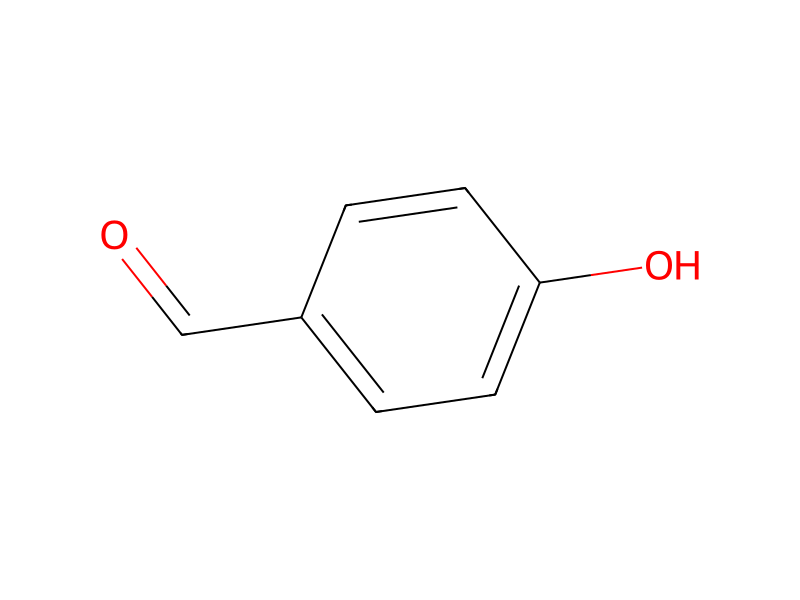
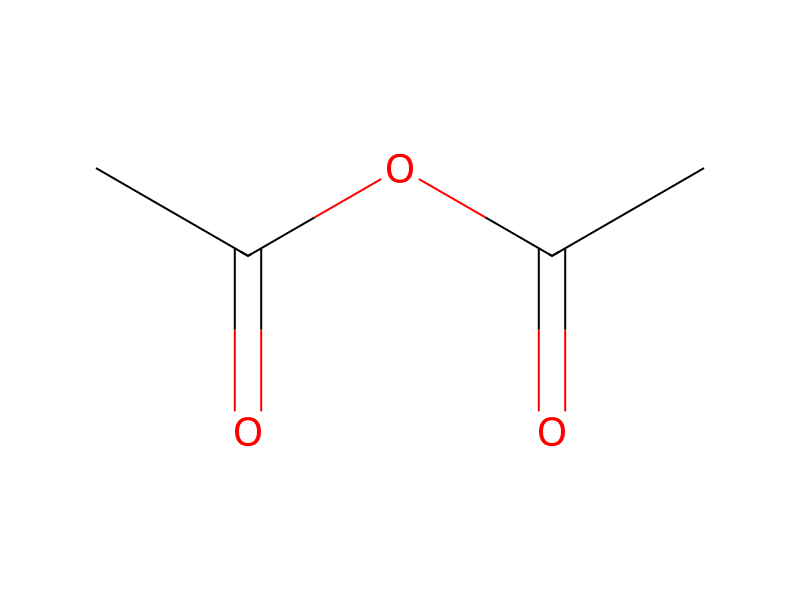
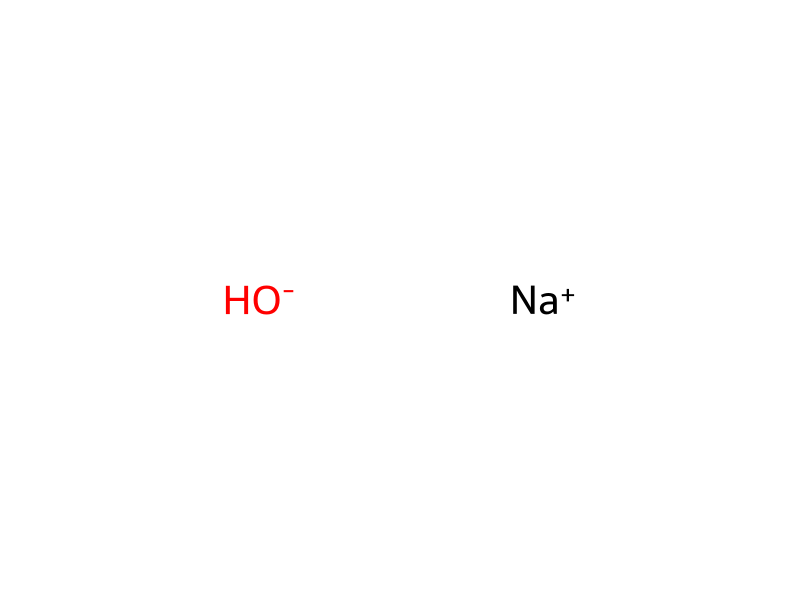
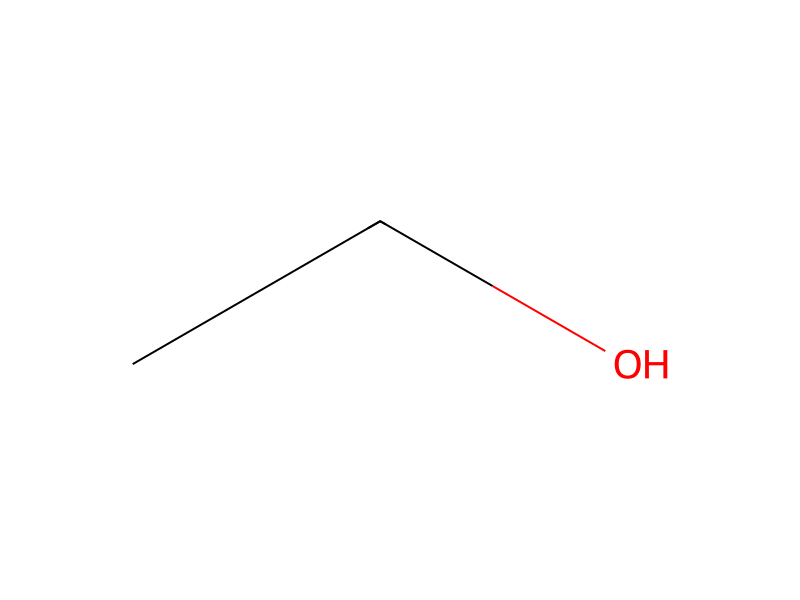
[N+:1]([C:4]1[CH:9]=[CH:8][C:7]([CH2:10][C:11]([OH:13])=[O:12])=[CH:6][CH:5]=1)([O-:3])=[O:2].[OH-].[Na+].[OH:16][C:17]1[CH:24]=[CH:23][C:20]([CH:21]=O)=[CH:19][CH:18]=1.[C:25](OC(=O)C)(=[O:27])[CH3:26]>O.C(O)C>[N+:1]([C:4]1[CH:5]=[CH:6][C:7]([C:10](=[CH:21][C:20]2[CH:23]=[CH:24][C:17]([O:16][C:25](=[O:27])[CH3:26])=[CH:18][CH:19]=2)[C:11]([OH:13])=[O:12])=[CH:8][CH:9]=1)([O-:3])=[O:2]Participants


Conditions
- Temperature
- 60 °C
Procedure
p-Nitrophenylacetic acid (94.02 grams, 0.519 mole) and 1.038 N sodium hydroxide solution (500 mL) are added to a 1,000 mL beaker and heated with stirring to 60° C. The resultant solution is rotary evaporated under vacuum until final conditions of 110° C. and 1 mm Hg are achieved and maintained for 30 minutes. A portion (101.6 grams, 0.50 mole) of the resultant dry white carboxylic acid sodium salt, p-hydroxybenzaldehyde (61.06 grams, 0.50 mole) and acetic anhydride (250 grams) are added to a reactor equipped with a reflux condenser and stirred under a nitrogen atmosphere at a 147° C. reflux. Refluxing continued over the next twenty hours at which time the temperature has increased to 159° C. At this time, the reactor is cooled to 100° C. and ethanol (300 mL) and water (50 mL) are added. The resultant slurry is boiled at 89° C. for one hour followed by cooling to 50 ° C. and filtration. The filtrate is added to deionized water (1500 mL) and the resultant precipitate recovered by filtration. The precipitate is exhaustively extracted with deionized water saturated with sodium carbonate. The combined extracts are filtered then neutralized with concentrated hydrochloric acid inducing formation of a precipitate. The precipitate is recovered by filtration then dried at 50° C. in a forced air convection type oven. The dry powder is added to a beaker along with carbon tetrachloride (200 mL) then stirred with heating to a boil. Acetic acid (40 mL) is added to the boiling slurry then heating back to a boil resumed. After boiling is achieved, the slurry is maintained at 4° C. for 15 hours. The precipitate is recovered by filtration and dried at 70° C. under a vacuum of 5 mm Hg to a constant weight of 38.55 grams of brilliant light yellow colored crystalline powder.
Workup
- temperatureheated
- customThe resultant solution is rotary evaporated under vacuum until final conditions of 110° C. and 1 mm Hg
- temperaturemaintained for 30 minutes
- additionare added to a reactor
- customequipped with a reflux condenser
- stirringstirred under a nitrogen atmosphere at a 147° C.
- temperaturereflux
- temperatureRefluxing
- customcontinued over the next twenty hours at which time
- temperaturehas increased to 159° C
- temperatureAt this time, the reactor is cooled to 100° C.
- customfor one hour
- temperatureby cooling to 50 ° C.
- filtrationfiltration
- additionThe filtrate is added to deionized water (1500 mL)
- filtrationthe resultant precipitate recovered by filtration
- extractionThe precipitate is exhaustively extracted with deionized water saturated with sodium carbonate
- filtrationThe combined extracts are filtered
- filtrationThe precipitate is recovered by filtration
- customthen dried at 50° C. in a forced air convection type oven
- additionThe dry powder is added to a beaker along with carbon tetrachloride (200 mL)
- stirringthen stirred
- temperaturewith heating to a boil
- additionAcetic acid (40 mL) is added to the boiling slurry
- temperaturethen heating back to a boil
- temperaturethe slurry is maintained at 4° C. for 15 hours
- filtrationThe precipitate is recovered by filtration
- dry with materialdried at 70° C. under a vacuum of 5 mm Hg to a constant weight of 38.55 grams of brilliant light yellow colored crystalline powder
Sources & evidence
- ORD record
- ord-b470b03ef0a74e3ea56e7f31c8f25984
- Source dataset
- uspto-grants-1993_09
- Patent number
- US05248757
Reaction notes
Loading…