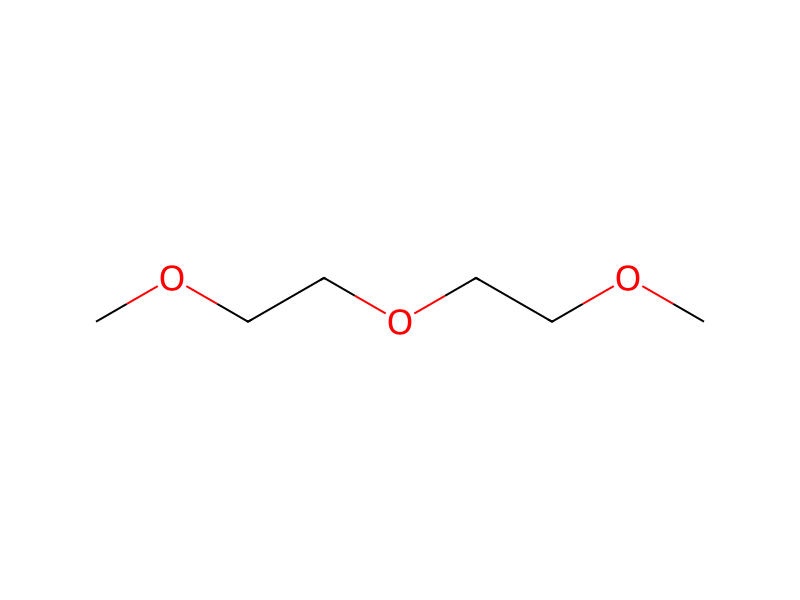
Diglyme → 1-(2,2,2-Trifluoro-1-trifluoromethyl-ethyl)-4-vinyl-benzene
Reaction equation

Br[C:2]1[CH:7]=[CH:6][C:5]([CH:8]([C:13]([F:16])([F:15])[F:14])[C:9]([F:12])([F:11])[F:10])=[CH:4][CH:3]=1.CO[CH2:19][CH2:20]OCCOC.[Li+].[Cl-].C(C([Sn])=C(CCCC)CCCC)CCC>C1(C)C=CC=CC=1>[F:10][C:9]([F:12])([F:11])[CH:8]([C:5]1[CH:6]=[CH:7][C:2]([CH:19]=[CH2:20])=[CH:3][CH:4]=1)[C:13]([F:16])([F:15])[F:14]Participants




Conditions
- Temperature
- 80 °C
Procedure
Crude 1-bromo-4-(2,2,2-trifluoro-1-trifluoromethyl-ethyl)-benzene, (approximately 100 mg of starting material, contaminated with diglyme) was dissolved in toluene (3 ml) in a sealed tub under a nitrogen atmosphere. Tetrakispalladium (15 mg, 0.013 mmol) and LiCl (42 mg, 1 mmol) were added, followed by the addition of tributylvinyltin (155 mg, 0.49 mmol).The reaction mixture was heated to 80° C. for 18 h, and then purified by silica gel column chromatography (100% hexane -2% ethyl acetate/hexane) to yield the title product, whose volatility made yield calculations impossible. 1H NMR (CDCl3) δ=7.49 (d, J=8.4 Hz, 2H), 7.40 (d, J=8.4 Hz, 2H), 6.71 (dd, J=10.9, 17.6 Hz, 1H), 5.82 (d, J=17.7, 1H), 5.33 (d, J=10.9 Hz, 1H), 4.06 (septet, JH,F=8.3 Hz,1H).
Workup
- custompurified by silica gel column chromatography (100% hexane -2% ethyl acetate/hexane)
Sources & evidence
- ORD record
- ord-465f62a82fee4a76ace298c902222b88
- Source dataset
- uspto-grants-2010_04
- Patent number
- US07696210B2
Reaction notes
Loading…