Acetic Anhydride → 3-Acetamido-6-nitrochromen-2-one
Reaction equation

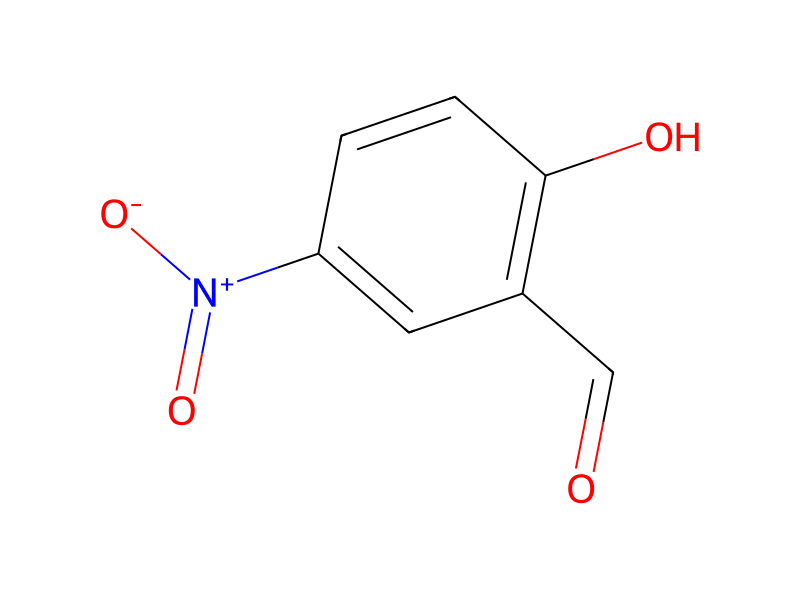
[OH:1][C:2]1[CH:9]=[CH:8][C:7]([N+:10]([O-:12])=[O:11])=[CH:6][C:3]=1[CH:4]=O.[C:13]([NH:16][CH2:17][C:18](O)=[O:19])(=[O:15])[CH3:14].C(OC(=O)C)(=O)C.[H-].[Na+]>>[C:13]([NH:16][C:17]1[C:18](=[O:19])[O:1][C:2]2[C:3]([CH:4]=1)=[CH:6][C:7]([N+:10]([O-:12])=[O:11])=[CH:8][CH:9]=2)(=[O:15])[CH3:14]Participants




Conditions
- Temperature
- 4 °C
Procedure
A dry 100-mL round bottomed flask was charged with 7.11 g (42.5 mmol) of 2-hydroxy-5-nitrobenzaldehyde. To this flask were then added N-acetylglycine (4.98 g, 42.5 mmol) and acetic anhydride (40.1 mL, 0.43 mol). In small aliquots, 1.71 g (42.5 mmol) of sodium hydride (60% dispersion in mineral oil) was added to the flask. Reactants were observed to dissolve and after 2-5 minutes, precipitation occurred. The reaction mixture was stirred for 20 h and 7.11 mL of water were added. Following the addition of 43 mL acetic acid, the mixture was cooled to 4° C. for 4 h. The resulting precipitate was filtered and washed liberally with cold glacial acetic acid. The acetic acid was then removed as an azeotrope upon addition of 250 mL toluene and rotary evaporation to dryness, three times. The final residue was dried under vacuum to give product 1 as a beige powder (6.40 g, 25.8 mmol) in a yield of 61%. mp 277-279° C. (lit: 278° C.) FTIR (KBr) (cm−1) 3350, 3050, 1710, 1680, 1600, 1500, 1420, and 1335. 1H-NMR (DMSO-d6): δ (ppm) 9.93 (s, 1H), 8.76 (s, 1H), 8.73 (d, J=2.5 Hz, 1H), 8.28 (dd, J=2.8 Hz, J=9.1 Hz, 1H), 7.60 (d, J=9.1 Hz, 1H), 2.19 (s, 3H). 13C-NMR (DMSO-d6): δ (ppm) 171.47, 157.69, 145.07, 127.11, 124.96, 124.52, 122.79, 121.52, 118.26, 25.00. HRMS expected: 249.05240; found: 249.05339. Elemental analysis for C11H8N2O5, expected: C, 53.23; H, 3.25; N, 11.27; found: C, 53.19; H, 3.34; N, 11.06.
Workup
- customTo this flask were
- dissolutionto dissolve and after 2-5 minutes
- customprecipitation
- addition7.11 mL of water were added
- additionthe addition of 43 mL acetic acid
- filtrationThe resulting precipitate was filtered
- washwashed liberally with cold glacial acetic acid
- customThe acetic acid was then removed as an azeotrope upon addition of 250 mL toluene and rotary evaporation to dryness, three times
- dry with materialThe final residue was dried under vacuum
Sources & evidence
- ORD record
- ord-5c41a1cde5c3411593136449b13484f4
- Source dataset
- uspto-grants-2010_04
- Patent number
- US07700375B2
Reaction notes
Loading…