Propylamine → N-{2-[2,6-dichloro-4-(2,2,2-trifluoroethylthio)-phenoxy]-ethyl}-N-(propyl)-amine
Reaction equation

[CH2:1]([NH2:4])[CH2:2][CH3:3].[Cl:5][C:6]1[CH:15]=[C:14]([S:16][CH2:17][C:18]([F:21])([F:20])[F:19])[CH:13]=[C:12]([Cl:22])[C:7]=1[O:8][CH2:9][CH2:10]Br>>[Cl:22][C:12]1[CH:13]=[C:14]([S:16][CH2:17][C:18]([F:20])([F:21])[F:19])[CH:15]=[C:6]([Cl:5])[C:7]=1[O:8][CH2:9][CH2:10][NH:4][CH2:1][CH2:2][CH3:3]Participants
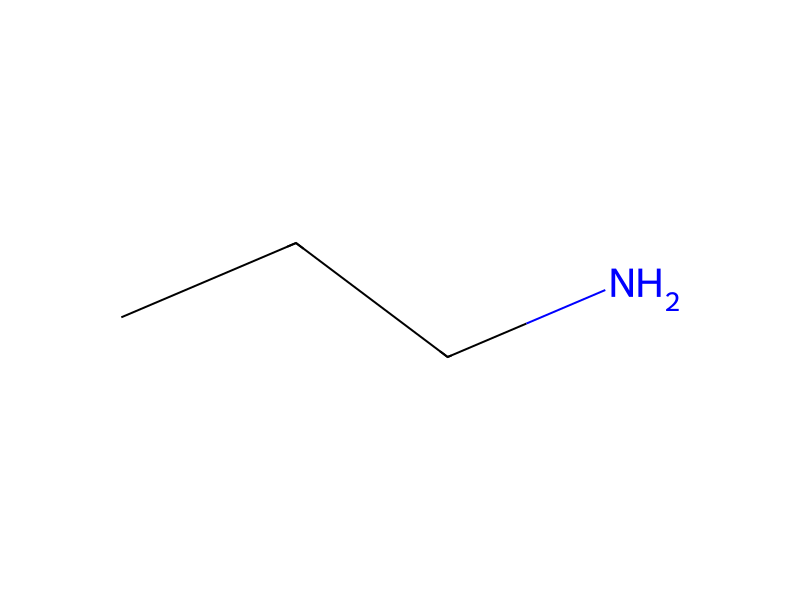


Procedure
5 g of n-Propylamine were added to 2.38 g of 2-[2,6-dichoro-4-(2,2,2-trifluoroethylthio)-phenoxy]-ethyl bromide, and the mixture was stirred at room temperature for 8 hours and then under reflux for 3 hours. The excess of n-propylamine was evaporated. To the residue were added 20 ml of water, 20 ml of a 5% aqueous solution of potassium hydroxide and 100 ml of toluene. The mixture was stirred, and the organic layer was separated, washed with water and dried over anhydrous sodium sulfate. Low-boiling compounds were evaporated under reduced pressure. There were obtained 2.16 g of crude N-{2-[2,6-dichloro-4-(2,2,2-trifluoroethylthio)-phenoxy]-ethyl}-N-(propyl)amine having a refractive indes of nD2O=1.5210, which were used without further purification) for the preparation of compound No. 1 shown above.
Workup
- temperatureunder reflux for 3 hours
- customThe excess of n-propylamine was evaporated
- additionTo the residue were added 20 ml of water, 20 ml of a 5% aqueous solution of potassium hydroxide and 100 ml of toluene
- stirringThe mixture was stirred
- customthe organic layer was separated
- washwashed with water
- dry with materialdried over anhydrous sodium sulfate
- customwere evaporated under reduced pressure
Sources & evidence
- ORD record
- ord-6c0bf70fcbd34c16af95c397016d47be
- Source dataset
- uspto-grants-1986_09
- Patent number
- US04609669
Reaction notes
Loading…