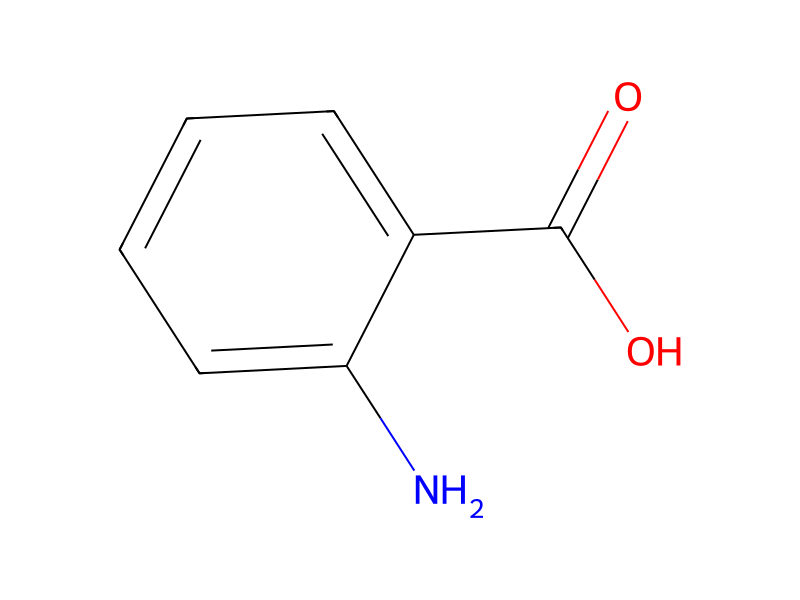
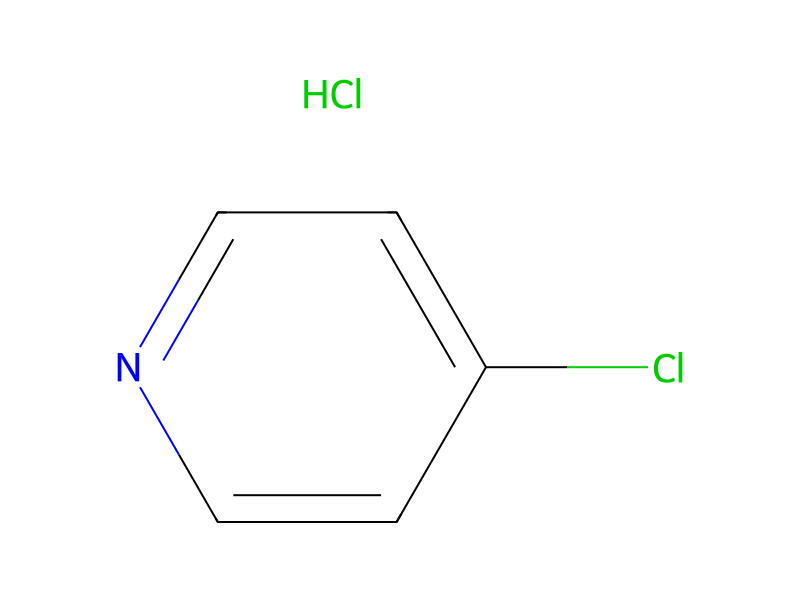
Anthranilic Acid → 2-(4-Pyridylamino)benzoic acid
Reaction equation

[C:1]([OH:10])(=[O:9])[C:2]1[C:3](=[CH:5][CH:6]=[CH:7][CH:8]=1)[NH2:4].Cl.Cl[C:13]1[CH:18]=[CH:17][N:16]=[CH:15][CH:14]=1.C([O-])(=O)C.[Na+]>C(O)(=O)C>[N:16]1[CH:17]=[CH:18][C:13]([NH:4][C:3]2[CH:5]=[CH:6][CH:7]=[CH:8][C:2]=2[C:1]([OH:10])=[O:9])=[CH:14][CH:15]=1Participants
5
Reactant 3

Product 1

Reagents, catalysts & solvents 1

Procedure
A suspension of 274.5 g (2.0 moles) of anthranilic acid, 300 g (2.0 moles) of 4-chloropyridine hydrochloride and 180 g (2.19 moles) of anhydrous sodium acetate in 855 ml of glacial acetic acid was stirred at reflux for three hours. The mixture was cooled to room temperature and the precipitated solid was filtered. The product was washed with a small amount of cold acetic acid followed by cold ether. It was dried at 75° C., in vacuo to give 428 g (85.6%) of 2-(4-pyridinylamino)benzoic acid as the hydrochloride salt, m.p. 275°-280° C.(decompn.).
Workup
- temperatureat reflux for three hours
- filtrationthe precipitated solid was filtered
- washThe product was washed with a small amount of cold acetic acid
- customIt was dried at 75° C., in vacuo
Sources & evidence
- ORD record
- ord-9ab274559aec4721905c12d34dea2966
- Source dataset
- uspto-grants-1986_09
- Patent number
- US04610991
Reaction notes
Loading…