Ethanol → 1,4-Dihydroxy-2-methylanthraquinone
Reaction equation

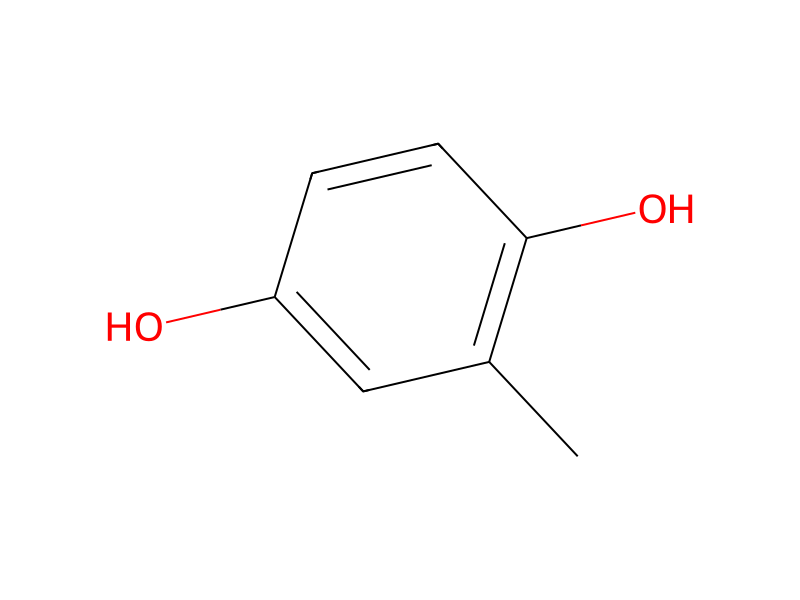
[CH3:1][C:2]1[CH:8]=C(O)C=[CH:5][C:3]=1[OH:4].[C:10](Cl)(=[O:20])[C:11]1[C:12](=[CH:16][CH:17]=[CH:18][CH:19]=1)[C:13](Cl)=[O:14].[CH3:22][CH2:23][OH:24]>>[CH3:8][C:2]1[CH:1]=[C:23]([OH:24])[C:22]2[C:13](=[O:14])[C:12]3[C:11](=[CH:19][CH:18]=[CH:17][CH:16]=3)[C:10](=[O:20])[C:5]=2[C:3]=1[OH:4]Participants
4



Procedure
The method was the same as in Example 1 but using 12.4 g (0.1 mols) of 2-methyl hydroquinone and 20.2 g (0.1 mols) of phthalic acid dichloride. The product was 15.7 g (62% yield) of 2-methyl-1,4-dihydroxy-9,10-anthraquinone (3), m.p.=177°-178° C. (literature 178°-179° C. EtOH).
Sources & evidence
- ORD record
- ord-fad47952a116462da34561e174d27328
- Source dataset
- uspto-grants-1988_04
- Patent number
- US04739062
Reaction notes
Loading…