Water → Ethyl 2-(5-fluoro-2-nitroanilino)benzo[b]thiophene-3-carboxylate
Reaction equation

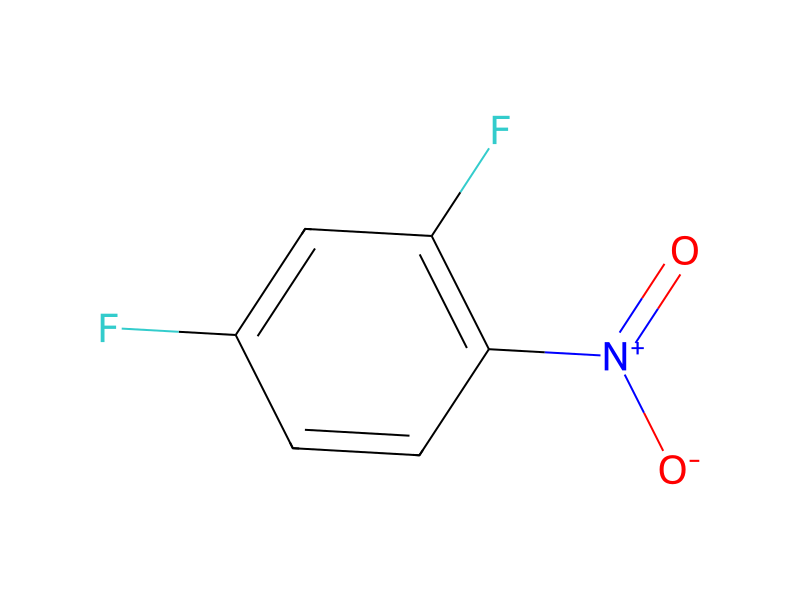
[NH2:1][C:2]1[S:6][C:5]2[CH:7]=[CH:8][CH:9]=[CH:10][C:4]=2[C:3]=1[C:11]([O:13][CH2:14][CH3:15])=[O:12].F[C:17]1[CH:22]=[C:21]([F:23])[CH:20]=[CH:19][C:18]=1[N+:24]([O-:26])=[O:25].C(=O)([O-])[O-].[K+].[K+].O>CS(C)=O>[F:23][C:21]1[CH:20]=[CH:19][C:18]([N+:24]([O-:26])=[O:25])=[C:17]([CH:22]=1)[NH:1][C:2]1[S:6][C:5]2[CH:7]=[CH:8][CH:9]=[CH:10][C:4]=2[C:3]=1[C:11]([O:13][CH2:14][CH3:15])=[O:12]Participants
6
Reactant 4



Product 1

Reagents, catalysts & solvents 1

Conditions
- Temperature
- 50 °C
Procedure
Ethyl 2-aminobenzo[b]thiophene-3-carboxylate (69.3 g) and 2,4-difluoronitrobenzene (50 g) were dissolved in dimethyl sulfoxide (550 ml) and heated to 50° C. Thereto was added potassium carbonate (63 g) and the mixture was stirred at 100° C. for 70 min. After cooling, the reaction mixture was allowed to cool to 70° C. and poured into water (2.5 L). The reaction mixture was allowed to stand still, and filtered. The filtrated orange crystals were washed with ethyl acetate to give ethyl 2-(5-fluoro-2-nitroanilino)benzo[b]thiophene-3-carboxylate (50.7 g).
Workup
- temperatureAfter cooling
- temperatureto cool to 70° C.
- filtrationfiltered
- washThe filtrated orange crystals were washed with ethyl acetate
Sources & evidence
- ORD record
- ord-81c6691c52ce497596d581f65bc3fe64
- Source dataset
- uspto-grants-2001_08
- Patent number
- US06271225B1
Reaction notes
Loading…