Tetrahydrofuran → tert-butyl (2R)-2-ethynylpyrrolidine-1-carboxylate
Reaction equation

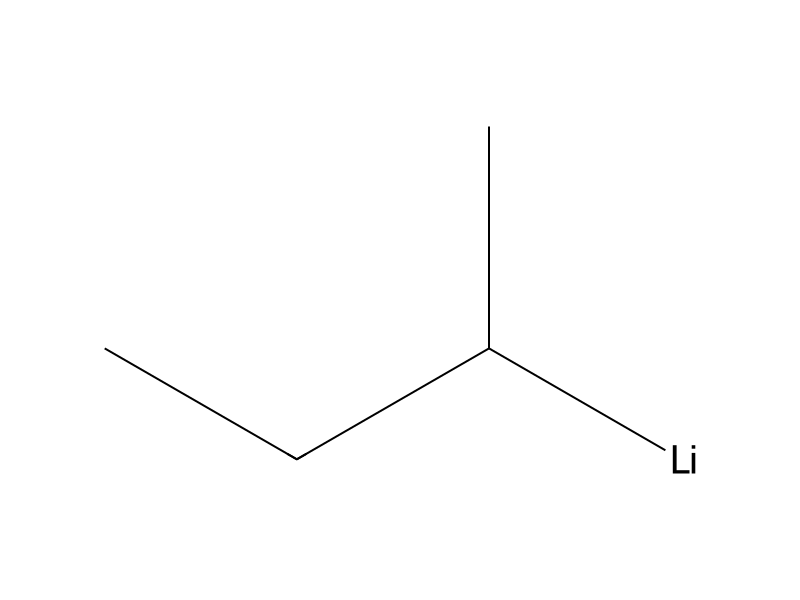
Br[C:2](Br)=[CH:3][C@H:4]1[CH2:8][CH2:7][CH2:6][N:5]1[C:9]([O:11][C:12]([CH3:15])([CH3:14])[CH3:13])=[O:10].O1CCCC1.C([Li])(CC)C>CCOCC>[C:3]([C@H:4]1[CH2:8][CH2:7][CH2:6][N:5]1[C:9]([O:11][C:12]([CH3:15])([CH3:14])[CH3:13])=[O:10])#[CH:2]Participants




Procedure
In according with Scheme I, N-α-BOC-D-proline 2a is reacted in an ether solvent such as tetrahydrofuran at a temperature ranging from -2° C. to the reflux temperature of the solvent with 10M boran-methyl sulfide complex to produce (R)-2-(hydroxymethyl)-1-pyrrolidinecarboxylic acid, 1,1-dimethylethyl ester 3a. Compound 3a in a chlorinated hydrocarbon solvent such as methylene chloride is treated with an oxidizing agent such as pyridinium chlorochromate, 4 Å molecular sieves and glacial acetic acid to give (R)-2-formyl-1-pyrrolidinecarboxylic acid 1,1-dimethylethyl ester 4a. Compound 4a in methylene chloride is treated with a methylene chloride solution of triphenylphosphine and carbon tetrabromide to produce (R)-2-(2,2-dibromoethenyl)-1-pyrrolidinecarboxylic acid, 1,1-dimethylethyl ester 5a. The dibromo compound 5a in an ether solvent such as tetrahydrofuran is reacted at -78° C. with an alkyl lithium reagent such as sec-butyllithium to give (R)-2-ethynyl-1-pyrrolidinecarboxylic acid, 1,1-dimethylethyl ester 6a.
Sources & evidence
- ORD record
- ord-6c0451ba3c7b4c5daad2ab5cecf4dc34
- Source dataset
- uspto-grants-1992_07
- Patent number
- US05128483
Reaction notes
Loading…