Acetic Acid → 1-Aminoanthraquinone
Reaction equation

C[N:2]1[CH2:6][CH2:5][CH2:4][C:3]1=[O:7].N1[C:17]2[C:12](=[CH:13][CH:14]=[CH:15][CH:16]=2)[CH:11]=CC=1.C(O)(=[O:20])C.N1C=C[CH:25]=[CH:24][CH:23]=1>[Cu]>[NH2:2][C:6]1[C:5]2[C:11](=[O:20])[C:12]3[C:13](=[CH:14][CH:15]=[CH:16][CH:17]=3)[C:3](=[O:7])[C:4]=2[CH:25]=[CH:24][CH:23]=1Participants
6
Reactant 4


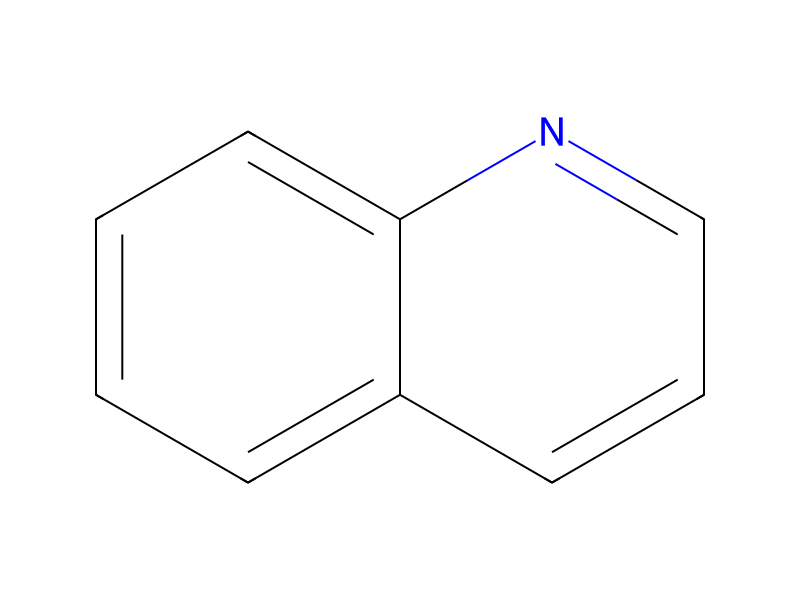

Product 1

Reagents, catalysts & solvents 1

Procedure
Process conditions and product yields are shown in Table III. The decarboxylation of 1-AAQCA was carried out in several solvents, e.g., N-methylpyrrolidone, pyridine, quinoline and acetic acid. The best results were obtained in pyridine. When decarboxylation of 1-AAQCA was carried out with 5 mol % of copper powder in pyridine at 260° C. for 2.5 hours, complete conversion was observed. Distillation of the crude product afforded 1-AAQ in 64% yield. We were unable to decarboxylate 1-AAQCA in pyridine alone, without a copper catalyst. Decarboxylation of 1-AAQCA in quinoline using 5 mol % of copper powder gave 1-aminoanthraquinone (1-AAQ) in 65% yield.
Workup
- customProcess conditions and product yields
- customThe best results
- distillationDistillation of the crude product
Sources & evidence
- ORD record
- ord-db2cd74cb0684aaebee264246015bd0e
- Source dataset
- uspto-grants-1992_07
- Patent number
- US05130448
Reaction notes
Loading…