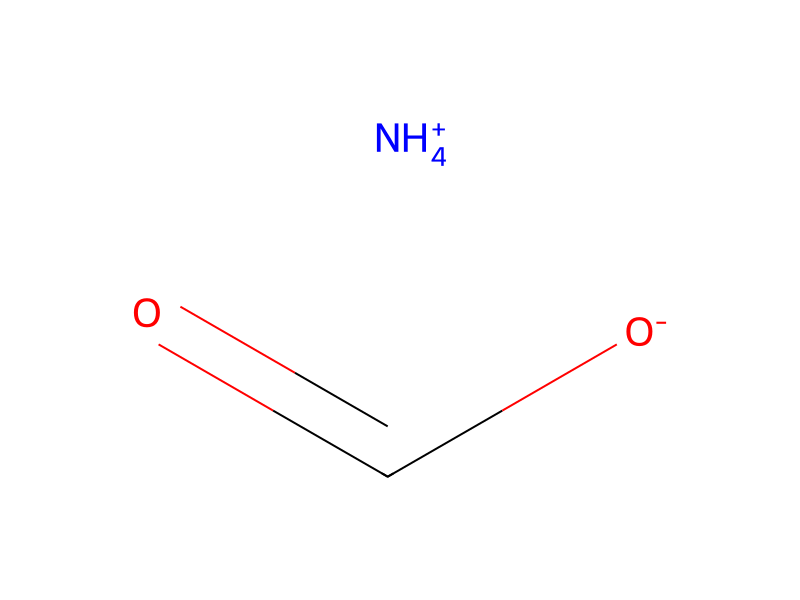
Ammonium formate → 3-(4-cyanophenyl)-2,6-dimethyl-4-(1H)-pyridone
Reaction equation

[C:1]([C:3]1[CH:8]=[CH:7][C:6]([C:9]2[C:10]([CH3:24])=[N:11][C:12]([CH3:23])=[CH:13][C:14]=2[O:15]CC2C=CC=CC=2)=[CH:5][CH:4]=1)#[N:2].C([O-])=O.[NH4+]>[Pd].CO>[C:1]([C:3]1[CH:8]=[CH:7][C:6]([C:9]2[C:14](=[O:15])[CH:13]=[C:12]([CH3:23])[NH:11][C:10]=2[CH3:24])=[CH:5][CH:4]=1)#[N:2]Participants
5




Procedure
A mixture of compound D (240 mg), ammonium formate (120 mg) and 10% palladium on charcoal catalyst (40 mg) in methanol (5 ml) was stirred for 2 hours. The catalyst was removed by filtration and the filtrate was concentrated. The residue was partitioned between dichloromethane (10 ml) and water (10 ml). The aqueous phase was separated and further extracted with dichloromethane (3×10 ml). The combined extracts were dried and the solvent was removed by evaporation. The residue was triturated with ether to give 3-(4-cyanophenyl)-2,6-dimethyl-4-(1H)-pyridone (E) (65 mg), as a non-crystalline solid; NMR (CDCl3): 2.1(s,3H), 2.25(s,3H), 6.2(s,1H), 7.4(d,2H), 7.7(d,2H), 11.2(br s, 1H).
Workup
- customThe catalyst was removed by filtration
- concentrationthe filtrate was concentrated
- customThe residue was partitioned between dichloromethane (10 ml) and water (10 ml)
- customThe aqueous phase was separated
- extractionfurther extracted with dichloromethane (3×10 ml)
- customThe combined extracts were dried
- customthe solvent was removed by evaporation
- customThe residue was triturated with ether
Sources & evidence
- ORD record
- ord-33132c1977384443aa8bfd267174e0fe
- Source dataset
- uspto-grants-1992_07
- Patent number
- US05130318
Reaction notes
Loading…