Hydrogen Bromide → alpha-Phenoxy propionaldehyde oxime
Reaction equation

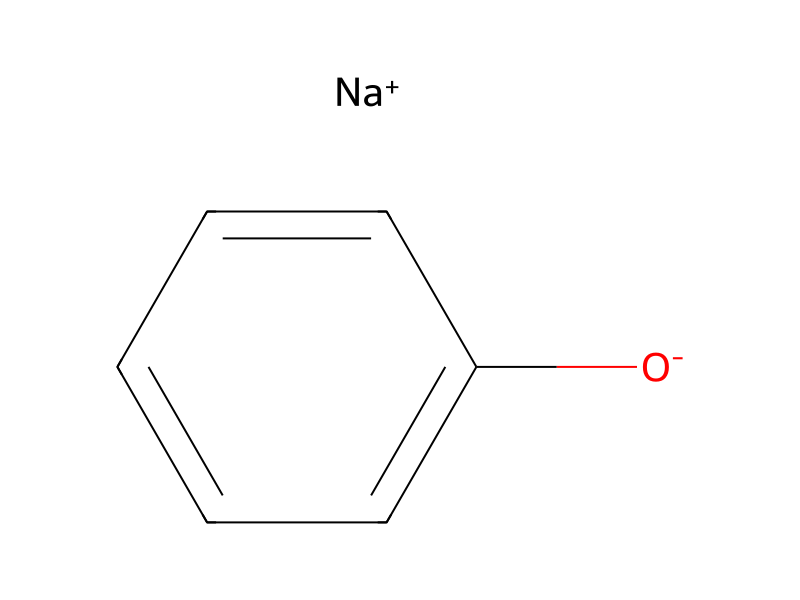
[CH:1](=[N:4][OH:5])[CH2:2][CH3:3].BrBr.BrC(=NO)CC.[O-:14][C:15]1[CH:20]=[CH:19][CH:18]=[CH:17][CH:16]=1.[Na+].Br>C(Cl)(Cl)(Cl)Cl>[O:14]([CH:2]([CH3:3])[CH:1]=[N:4][OH:5])[C:15]1[CH:20]=[CH:19][CH:18]=[CH:17][CH:16]=1Participants
7






Procedure
Using the procedure of Example I, propionaldehyde oxime in carbon tetrachloride is brominated with bromine introduced at -5° to 0° C. To the resulting solution of 1-bromo-propionaldehyde oxime is added dropwise with stirring a suspension of sodium phenoxide in carbon tetrachloride. The reaction is allowed to go to completion and any residual sodium phenoxide is neutralized with hydrogen bromide gas. The precipitated sodium bromide is collected by filtration, and the filtrate concentrated under reduced pressure to provide the desired α-phenoxy propionaldehyde oxime.
Workup
- additionintroduced at -5° to 0° C
- filtrationThe precipitated sodium bromide is collected by filtration
- concentrationthe filtrate concentrated under reduced pressure
Sources & evidence
- ORD record
- ord-cac7a746ad3b4282b052d07942965292
- Source dataset
- uspto-grants-1986_09
- Patent number
- US04614813
Reaction notes
Loading…