Potassium Carbonate → 3-Chloro-6-(1-methyl-1H-pyrazol-4-yl)pyridazine
Reaction equation

[Cl:1][C:2]1[N:3]=[N:4][C:5](Cl)=[CH:6][CH:7]=1.[CH3:9][N:10]1[CH:14]=[C:13](B2OC(C)(C)C(C)(C)O2)[CH:12]=[N:11]1.C(=O)([O-])[O-].[K+].[K+]>O1CCOCC1.O.Cl[Pd](Cl)([P](C1C=CC=CC=1)(C1C=CC=CC=1)C1C=CC=CC=1)[P](C1C=CC=CC=1)(C1C=CC=CC=1)C1C=CC=CC=1>[Cl:1][C:2]1[N:3]=[N:4][C:5]([C:13]2[CH:12]=[N:11][N:10]([CH3:9])[CH:14]=2)=[CH:6][CH:7]=1Participants
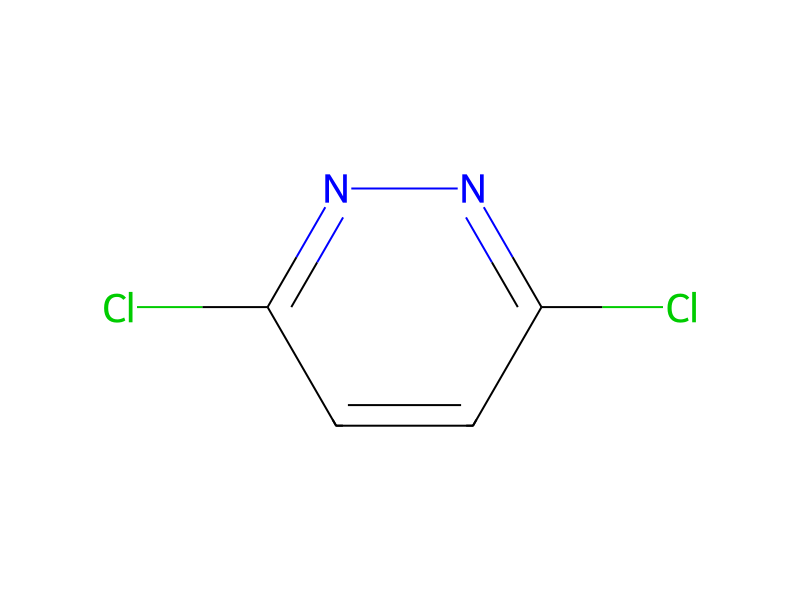
Reactant 3


Product 1

Reagents, catalysts & solvents 3



Conditions
- Temperature
- 90 °C
Procedure
A mixture of 3,6-dichloropyridazine (20.1 g, 135 mmol), 1-methyl-4-pyrazoleboronic acid pinacol ester (25.46 g, 122 mmol) and potassium carbonate (50.7 g, 367 mmol) in 1,4-dioxane (500 mL) and water (200 mL) under nitrogen was degassed by bubbling in nitrogen for 15 min. Dichlorobis(triphenylphosphine)palladium (II) (1.2%, 1 g, 1.4 mmol) was than added and nitrogen was bubbled in the mixture for another 10 min. The reaction mixture was stirred at 90° C. for 3 h, then cooled to room temperature and concentrated in vacuo to remove the majority of the 1,4-dioxane. The residue was partitioned between 1 N aqueous potassium carbonate (400 mL) and ethyl acetate (400 mL) and the phases separated. The aqueous layer was extracted with ethyl acetate (2×300 mL) and dichloromethane (300 mL). The combined organic layers were washed with brine, dried over sodium sulfate, filtered and concentrated in-vacuo. The residue was stirred in diethyl ether (150 mL) and the orange precipitate was filtered and dried to return the title compound (12.76 g, 65.6 mmol, 54% yield). The filtrate was concentrated onto silica gel and purified by flash chromatography on silica gel using a gradient of 0-50% ethyl acetate/hexane to return starting 3,6-dichloropyridazine as a white solid (9.9 g, 66.4 mmol, 49% yield).
Workup
- customwas degassed
- customby bubbling in nitrogen for 15 min
- additionthan added
- customnitrogen was bubbled in the mixture for another 10 min
- temperaturecooled to room temperature
- concentrationconcentrated in vacuo
- customto remove the majority of the 1,4-dioxane
- customThe residue was partitioned between 1 N aqueous potassium carbonate (400 mL) and ethyl acetate (400 mL)
- customthe phases separated
- extractionThe aqueous layer was extracted with ethyl acetate (2×300 mL) and dichloromethane (300 mL)
- washThe combined organic layers were washed with brine
- dry with materialdried over sodium sulfate
- filtrationfiltered
- concentrationconcentrated in-vacuo
- stirringThe residue was stirred in diethyl ether (150 mL)
- filtrationthe orange precipitate was filtered
- customdried
Sources & evidence
- ORD record
- ord-8313552576a046709942796d535dcd6b
- Source dataset
- uspto-grants-2011_12
- Patent number
- US08071581B2
Reaction notes
Loading…