Potassium Carbonate → 3-(6-chloropyridazin-3-yl)benzonitrile
Reaction equation

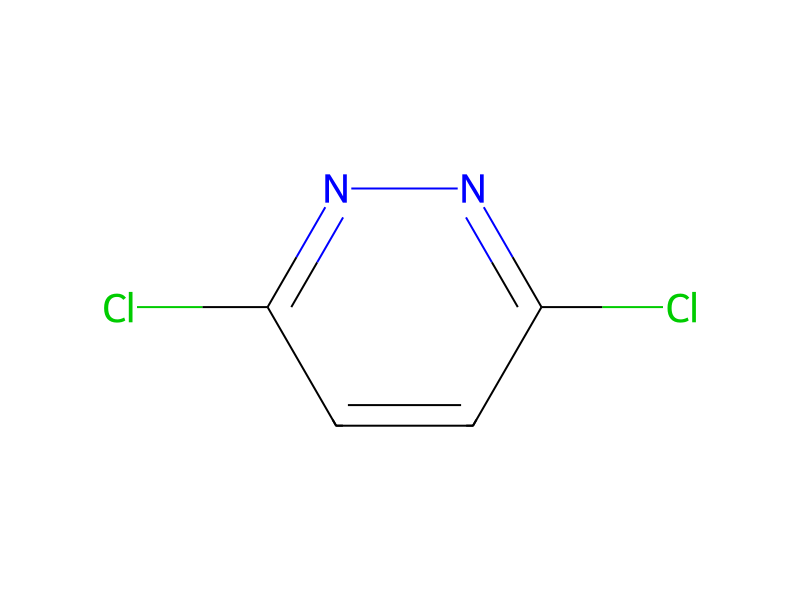
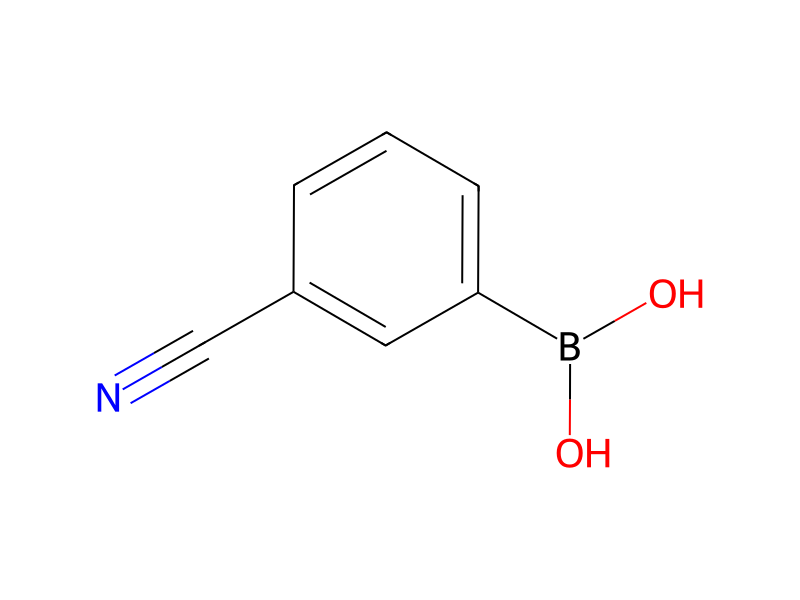
[C:1]([C:3]1[CH:4]=[C:5](B(O)O)[CH:6]=[CH:7][CH:8]=1)#[N:2].[Cl:12][C:13]1[N:14]=[N:15][C:16](Cl)=[CH:17][CH:18]=1.C(=O)([O-])[O-].[K+].[K+]>O1CCOCC1.O.C1C=CC([PH+]([C]2[CH][CH][CH][CH]2)C2C=CC=CC=2)=CC=1.C1C=CC([PH+]([C]2[CH][CH][CH][CH]2)C2C=CC=CC=2)=CC=1.C(Cl)Cl.Cl[Pd]Cl.[Fe]>[Cl:12][C:13]1[N:14]=[N:15][C:16]([C:7]2[CH:8]=[C:3]([CH:4]=[CH:5][CH:6]=2)[C:1]#[N:2])=[CH:17][CH:18]=1Participants





Conditions
- Temperature
- 90 °C
Procedure
Nitrogen gas was bubbled through a mixture of 3-cyanophenyl boronic acid (90.0 g, 612 mmol), 3,6-dichloropyridazine (1.2 eq, 109.4 g, 735 mmol), potassium carbonate (3.0 eq, 253.5 g, 1.836 mol) in 1,4-dioxane (900 mL) and water (360 mL) for 15 minutes. After such time dichloro[1,1′-bis(diphenylphosphino)ferrocene]palladium(II) dichloromethane adduct (0.06 eq, 26.8 g, 36.7 mmol) was added. Nitrogen bubbled through for further 10 mins then the mixture was heated to 90° C. for 3 hours. The reaction was cooled and the most of the 1,4-dioxane was removed under vacuo. The mixture taken up in dichloromethane and washed with water three times. The organic layer was concentrated and the residue was purified by column chromatography to return the title compound (60 g, 45.5% yield) as a white solid. 1H NMR (300 MHz, DMSO-d6): δ 8.58˜8.59 (m, 1H), 8.44˜8.52 (m, 2H), 8.09˜8.12 (d, 1H), 8.02˜8.05 (d, 1H), 7.76˜7.81 (m, 1H); MS (m/z) 216.1 (M++1).
Workup
- customNitrogen bubbled through for further 10 mins
- temperatureThe reaction was cooled
- customthe most of the 1,4-dioxane was removed under vacuo
- washwashed with water three times
- concentrationThe organic layer was concentrated
- customthe residue was purified by column chromatography
Sources & evidence
- ORD record
- ord-192a4bf1cc084744a5a4009a673de231
- Source dataset
- uspto-grants-2011_12
- Patent number
- US08071581B2
Reaction notes
Loading…