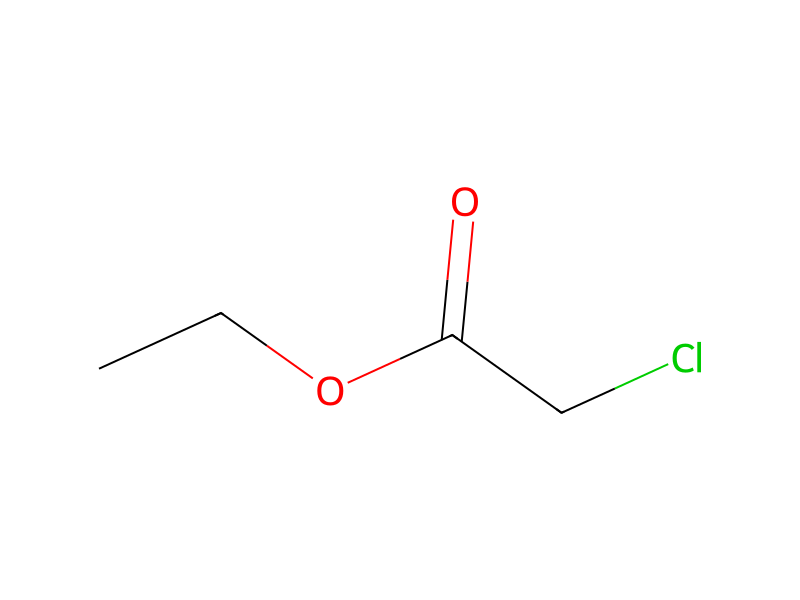
Ethyl chloroacetate → Ethyl [4-(4-bromophenyl)-3-cyclopropyl-2-oxo-2,3-dihydro-1H-imidazol-1-yl]-acetate
Reaction equation

[Br:1][C:2]1[CH:7]=[CH:6][C:5]([C:8]2[N:12]([CH:13]3[CH2:15][CH2:14]3)[C:11](=[O:16])[NH:10][CH:9]=2)=[CH:4][CH:3]=1.Cl[CH2:18][C:19]([O:21][CH2:22][CH3:23])=[O:20].C(=O)([O-])[O-].[K+].[K+]>C(#N)C>[CH2:22]([O:21][C:19](=[O:20])[CH2:18][N:10]1[CH:9]=[C:8]([C:5]2[CH:4]=[CH:3][C:2]([Br:1])=[CH:7][CH:6]=2)[N:12]([CH:13]2[CH2:14][CH2:15]2)[C:11]1=[O:16])[CH3:23]Participants
5
Reactant 3


Product 1

Reagents, catalysts & solvents 1

Procedure
392 mg (1.40 mmol) of 5-(4-bromophenyl)-1-cyclopropyl-1,3-dihydro-2H-imidazol-2-one from Example 120A are dissolved in 7.7 ml acetonitrile, treated with 172 mg (1.40 mmol) of ethyl chloroacetate and 388 mg (2.81 mmol) of potassium carbonate and heated under reflux for two hours. After cooling, this is filtered, the filtrate evaporated, and the residue partitioned between ethyl acetate and water, the organic phase is separated, dried over sodium sulphate and again concentrated. 502 mg (98% of theory) of the target compound, which is reacted without further purification, are thus obtained.
Workup
- temperatureheated
- temperatureunder reflux for two hours
- temperatureAfter cooling
- filtrationthis is filtered
- customthe filtrate evaporated
- customthe residue partitioned between ethyl acetate and water
- customthe organic phase is separated
- dry with materialdried over sodium sulphate
- concentrationagain concentrated
- custom502 mg (98% of theory) of the target compound, which is reacted without further purification
- customare thus obtained
Sources & evidence
- ORD record
- ord-2b949631f1144e4081fce5fccb51ea91
- Source dataset
- uspto-grants-2011_12
- Patent number
- US08084481B2
Reaction notes
Loading…