Triphenylphosphine → [(3-Bromophenyl)methyl](triphenyl)phosphanium bromide
Reaction equation

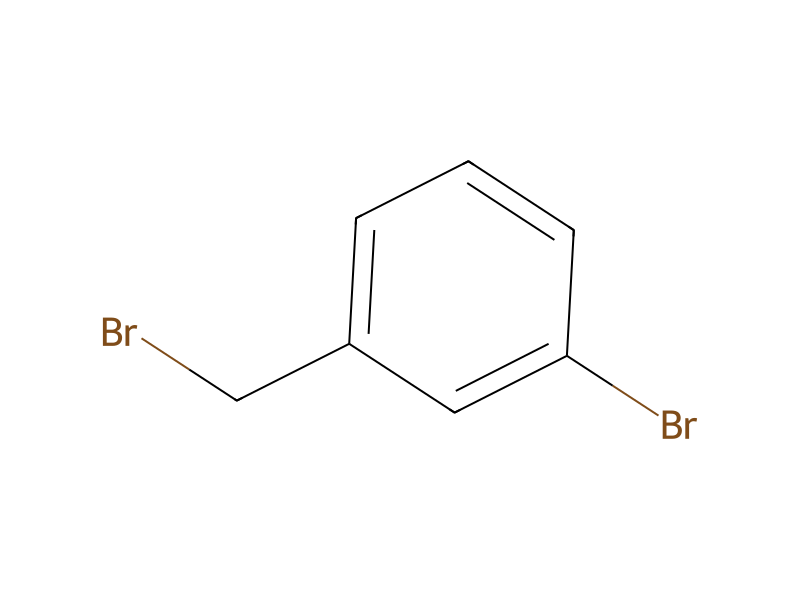
[C:1]1([P:7]([C:14]2[CH:19]=[CH:18][CH:17]=[CH:16][CH:15]=2)[C:8]2[CH:13]=[CH:12][CH:11]=[CH:10][CH:9]=2)[CH:6]=[CH:5][CH:4]=[CH:3][CH:2]=1.[Br:20][C:21]1[CH:26]=[CH:25][CH:24]=[C:23]([CH2:27]Br)[CH:22]=1>C1(C)C=CC=CC=1>[Br-:20].[Br:20][C:21]1[CH:22]=[C:23]([CH2:27][P+:7]([C:1]2[CH:2]=[CH:3][CH:4]=[CH:5][CH:6]=2)([C:8]2[CH:13]=[CH:12][CH:11]=[CH:10][CH:9]=2)[C:14]2[CH:15]=[CH:16][CH:17]=[CH:18][CH:19]=2)[CH:24]=[CH:25][CH:26]=1Participants
4
Reactant 2

Product 1

Reagents, catalysts & solvents 1

Conditions
- Temperature
- 100 °C
Procedure
Triphenylphosphane (2.62 g, 10.0 mmol) was added to 1-bromo-3-(bromomethyl)benzene (2.5 g, 10.0 mmol) in toluene (15 mL) and the mixture heated in a microwave at 100° C. for about 1 h. The mixture was filtered to afford the title compound (4.55 g, 89%). LC-MS m/z 431 (cationic part)+.
Workup
- filtrationThe mixture was filtered
Sources & evidence
- ORD record
- ord-059677446ac14d24bd7d1dd241429ecb
- Source dataset
- uspto-grants-2011_12
- Patent number
- US08084449B2
Reaction notes
Loading…