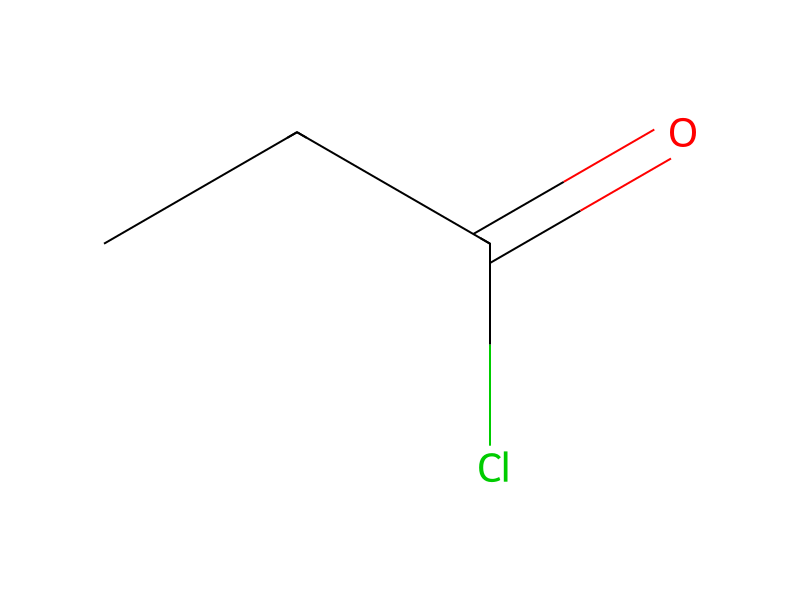
Propionyl chloride → N-(1,3,4,9-tetrahydro-2H-carbazol-2-yl)propanamide
Reaction equation

[CH2:1]1[C:13]2[NH:12][C:11]3[C:6](=[CH:7][CH:8]=[CH:9][CH:10]=3)[C:5]=2[CH2:4][CH2:3][CH:2]1[NH2:14].[C:15](Cl)(=[O:18])[CH2:16][CH3:17]>C(Cl)(Cl)Cl.C([O-])(O)=O.[Na+]>[CH2:1]1[C:13]2[NH:12][C:11]3[C:6](=[CH:7][CH:8]=[CH:9][CH:10]=3)[C:5]=2[CH2:4][CH2:3][CH:2]1[NH:14][C:15](=[O:18])[CH2:16][CH3:17]Participants
5




Procedure
A solution of 0.05 mol of 2,3,4,9-tetrahydro-1H-carbazol-2-amine in 450 ml of CHCl3 and 185 ml of saturated aqueous NaHCO3 was stirred vigorously at room temperature and treated dropwise during 30 min with a solution of 0.15 mol of propanoyl chloride in an equal volume of CHCl3. After stirring vigorously for 5 hr, the CHCl3 layer was separated, washed in succession with 10% aqueous K2CO3, H2O, 0.1 N hydrochloric acid, H2O, and dried over anhydrous Na2SO4. The residue remaining after evaporation of the CHCl3 was recrystallized from ethyl acetate to give the title compound, mp 169°-170°.
Workup
- customthe CHCl3 layer was separated
- washwashed in succession with 10% aqueous K2CO3, H2O, 0.1 N hydrochloric acid, H2O
- dry with materialdried over anhydrous Na2SO4
- customafter evaporation of the CHCl3
- customwas recrystallized from ethyl acetate
Sources & evidence
- ORD record
- ord-dcc0fc477a9d46738c9532c5da7cc09f
- Source dataset
- uspto-grants-1982_08
- Patent number
- US04343812
Reaction notes
Loading…