Phenol → 4-Isopropylphenol
Reaction equation

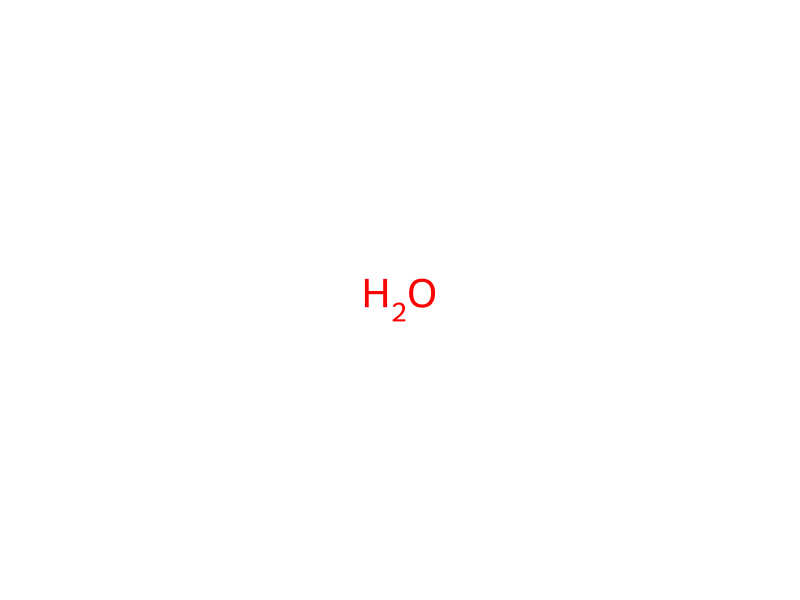
[C:1]1([OH:7])[CH:6]=[CH:5][CH:4]=[CH:3][CH:2]=1.[CH:8]([C:11]1[CH:16]=[CH:15][CH:14]=[CH:13][C:12]=1O)([CH3:10])[CH3:9]>P([O-])([O-])([O-])=O.[Ni+2].[Ca+2].O>[C:8]([C:4]1[CH:5]=[CH:6][C:1]([OH:7])=[CH:2][CH:3]=1)([CH3:10])=[CH2:9].[CH:8]([C:11]1[CH:16]=[CH:15][C:14]([OH:7])=[CH:13][CH:12]=1)([CH3:10])[CH3:9]Participants
Reactant 2

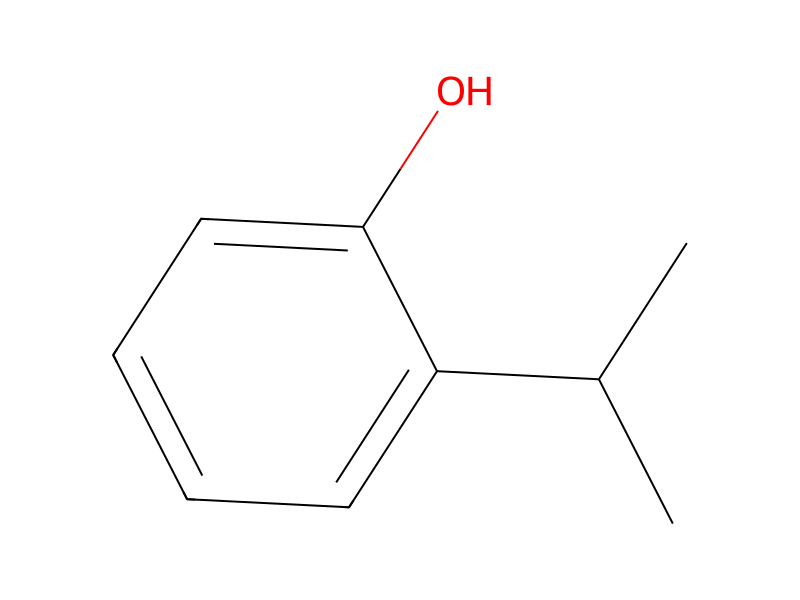
Product 2


Reagents, catalysts & solvents 2

Procedure
A quartz tube 40 cm×16 mm, inside diameter, with Vigreux indentations 1" above the top of the bottom joint was packed with 3 cm of quartz rings, 28 cm (equivalent to 44.16 grams) of the calcium-nickel phosphate catalyst of formula I, which had previously been calcined at about 800° for a period of about 17 hours and then filled with additional quartz rings (for heat transfer). Thermocouples were placed on the side of the tube and the tube placed in a vertical furnace. At the top of the tube was placed a manifold from which the air and liquid feeds were added. At the bottom of the tube were placed in series three three-necked flasks, the first two being immersed in ice/water baths. The catalyst bed was heated to a temperature between 300°-500° with an air flow of 0.15 ft3 /hr. Then the liquid feed composed of phenol, water, and isopropylphenol in the molar ratio of 2.8:2.0:1.0 was introduced to provide an addition rate of 0.15 ml/min. After specified volumes of feed had been introduced, the products (phenol, water, the propylphenol and propenylphenol) were collected from the receiver and analyzed for para-isopropenylphenol content by NHMR spectroscopy (proton nuclear magnetic resonance). Table I shows the results of para-isopropenylphenol formation as a function of the moles of para-isopropylphenol used.
Workup
- additionfilled with additional quartz rings (for heat transfer)
- additionfeeds were added
- temperatureThe catalyst bed was heated to a temperature between 300°-500° with an air flow of 0.15 ft3 /hr
- additionwas introduced
- customto provide an addition rate of 0.15 ml/min
- additionhad been introduced
- customthe products (phenol, water, the propylphenol and propenylphenol) were collected from the receiver
Sources & evidence
- ORD record
- ord-198fddb556a14b19994b429f4aa81760
- Source dataset
- uspto-grants-1982_08
- Patent number
- US04346249
Reaction notes
Loading…