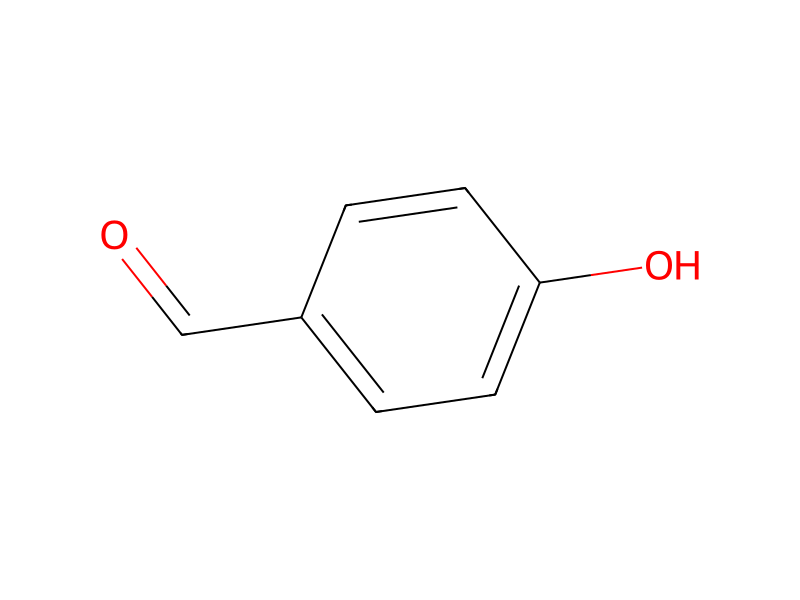
4-Hydroxybenzaldehyde → HCID 58234644, compound
Reaction equation

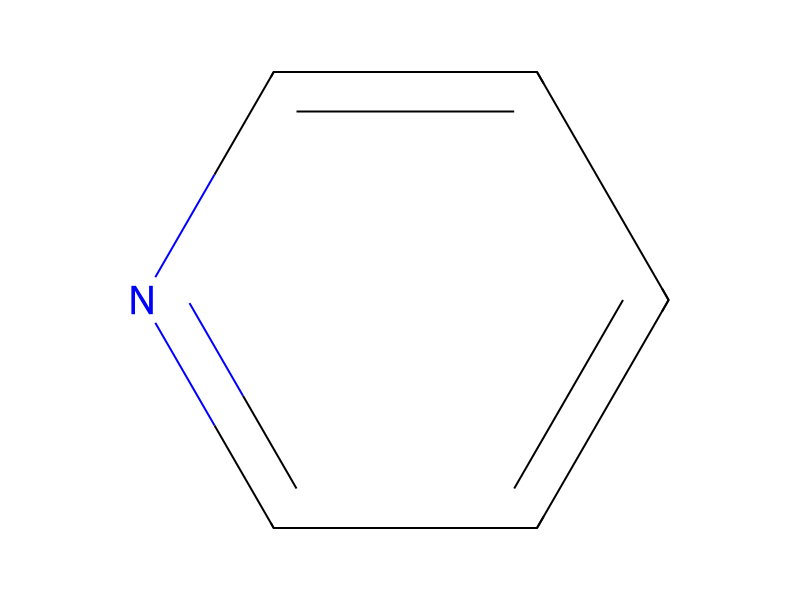
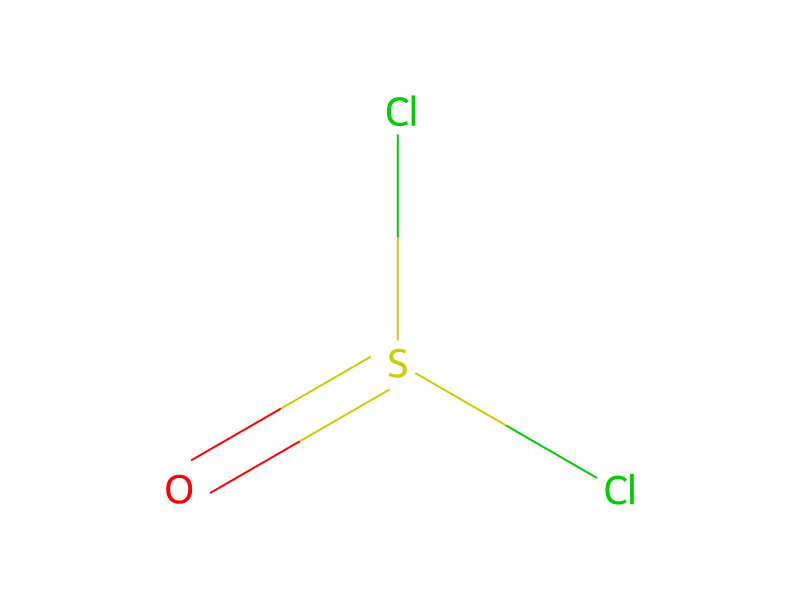
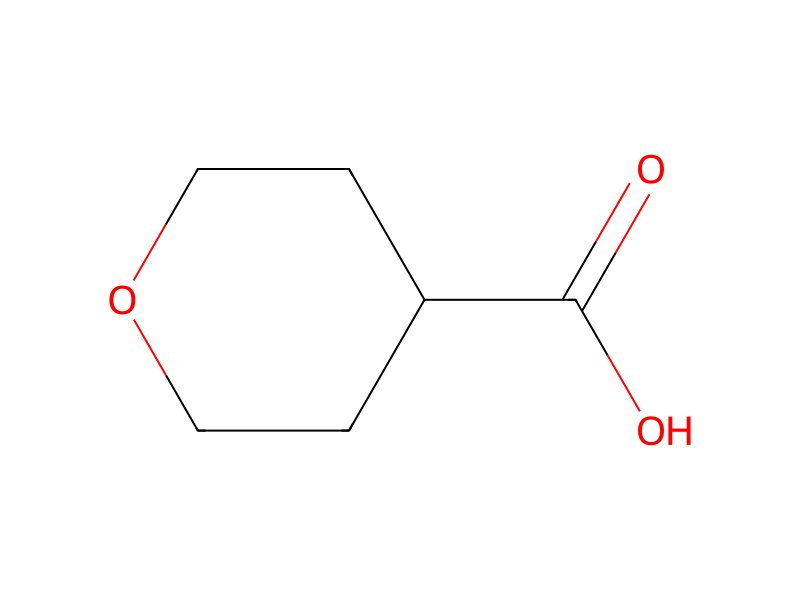
[O:1]1[CH2:6][CH2:5][CH:4]([C:7]([OH:9])=[O:8])[CH2:3][CH2:2]1.S(Cl)(Cl)=O.N1C=CC=CC=1.O[C:21]1[CH:28]=[CH:27][C:24]([CH:25]=[O:26])=[CH:23][CH:22]=1>C(Cl)Cl.O>[O:1]1[CH2:6][CH2:5][CH:4]([C:7]([O:9][C:21]2[CH:28]=[CH:27][C:24]([CH:25]=[O:26])=[CH:23][CH:22]=2)=[O:8])[CH2:3][CH2:2]1Participants
Reactant 4
Product 1

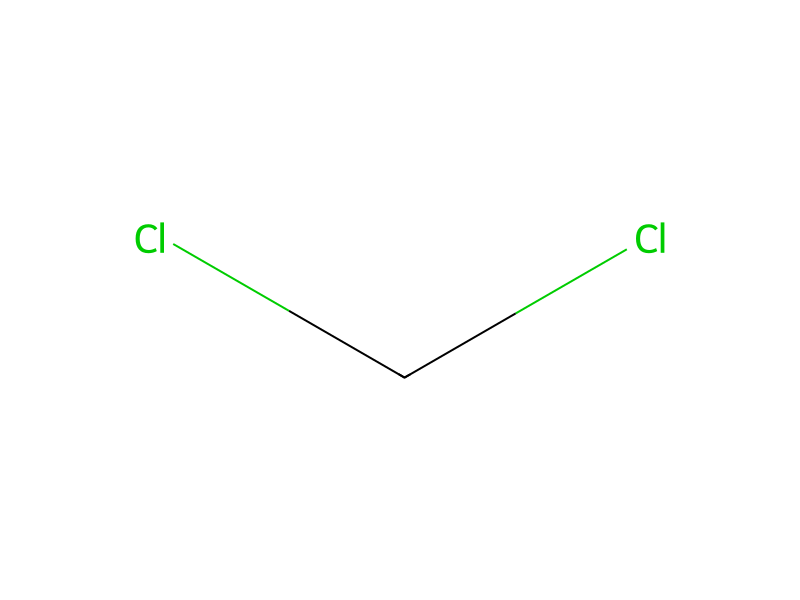
Reagents, catalysts & solvents 2
Conditions
- Temperature
- 0 °C
Procedure
To a 100 mL dry round bottom flask were added tetrahydro-pyran-4-carboxylic acid (2.8 g, 21.5 mmol), thionyl chloride (2.8 mL, 34.4 mmol). The mixture was refluxed for 45 minutes, then all the volatile materials were rotary-evaporated. To the residue, anhydrous CH2Cl2 (10 mL) was added. The resulting solution was cooled to 0° C., and pyridine (2.63 g, 21.5 mmol) was added, followed by a solution of 4-hydroxybenzaldehyde (2.04 g, 25.8 mmol) in anhydrous CH2Cl2 (30 mL). The reaction mixture was stirred and warmed from 0° C. to room temperature slowly, then at room temperature overnight. To the reaction mixture, water (60 mL) was added and the CH2Cl2 layer was separated. The aqueous layer was extracted continually with CH2Cl2 (50 mL×3). The combined CH2Cl2 solution was washed with a cold aqueous solution of saturated NaHCO3 (80 mL). After drying and removal of the solvent, the residue was purified with a silica gel chromatography (heptane/ethyl acetate, gradient eluting) to give 4-formylphenyl tetrahydro-2H-pyran-4-carboxylate (4.40 g) as colorless oil. Yield: 87%. 1H NMR (CDCl3, 300 MHz): δ=9.97 (s, 1H), 7.91 (d, J=8.7 Hz, 2H), 7.27 (d, J=8.4 Hz, 2H), 4.06-4.00 (m, 2H), 3.55-3.47 (m, 2H), 2.88-2.81 (m, 1H), 2.03-1.88 (m, 4H). 13C NMR (CDCl3, 75.5 MHz): δ=190.9, 172.2, 155.3, 133.9, 131.1, 122.2, 115.9, 66.8, 40.1, 28.4.
Workup
- customTo a 100 mL dry round bottom flask
- temperatureThe mixture was refluxed for 45 minutes
- customall the volatile materials were rotary-evaporated
- additionTo the residue, anhydrous CH2Cl2 (10 mL) was added
- temperaturewarmed from 0° C. to room temperature slowly
- customat room temperature
- customovernight
- customthe CH2Cl2 layer was separated
- extractionThe aqueous layer was extracted continually with CH2Cl2 (50 mL×3)
- washThe combined CH2Cl2 solution was washed with a cold aqueous solution of saturated NaHCO3 (80 mL)
- customAfter drying
- customremoval of the solvent
- customthe residue was purified with a silica gel chromatography (heptane/ethyl acetate, gradient eluting)
Sources & evidence
- ORD record
- ord-af40a5ac66b04eec9d3bdf5e8590f422
- Source dataset
- uspto-grants-2014_09
- Patent number
- US08822435B2
Reaction notes
Loading…