Dicyclohexylcarbodiimide → HCID 178442538, compound
Reaction equation

[C:1]([C:3]1([CH2:16][CH2:17][CH2:18][CH2:19][CH2:20][CH2:21][CH3:22])[CH2:8][CH2:7][CH:6]([CH:9]2[CH2:14][CH2:13][CH:12]([OH:15])[CH2:11][CH2:10]2)[CH2:5][CH2:4]1)#[N:2].O1C2(CCC(C3CCC(=O)CC3)CC2)OCC1.S(C[N+]#[C-])(C1C=CC(C)=CC=1)(=O)=O.[Li+].CC([N-]C(C)C)C.C(Br)CCCCCC.[BH4-].[Na+].[CH2:71]([C@H:76]1[CH2:81][CH2:80][C@H:79]([C:82](O)=[O:83])[CH2:78][CH2:77]1)[CH2:72][CH2:73][CH2:74][CH3:75].C1(N=C=NC2CCCCC2)CCCCC1>CN(C)C1C=CN=CC=1.C(Cl)Cl>[C:1]([C:3]1([CH2:16][CH2:17][CH2:18][CH2:19][CH2:20][CH2:21][CH3:22])[CH2:8][CH2:7][CH:6]([CH:9]2[CH2:14][CH2:13][CH:12]([O:15][C:82]([C@H:79]3[CH2:80][CH2:81][C@H:76]([CH2:71][CH2:72][CH2:73][CH2:74][CH3:75])[CH2:77][CH2:78]3)=[O:83])[CH2:11][CH2:10]2)[CH2:5][CH2:4]1)#[N:2]Participants
Reactant 8
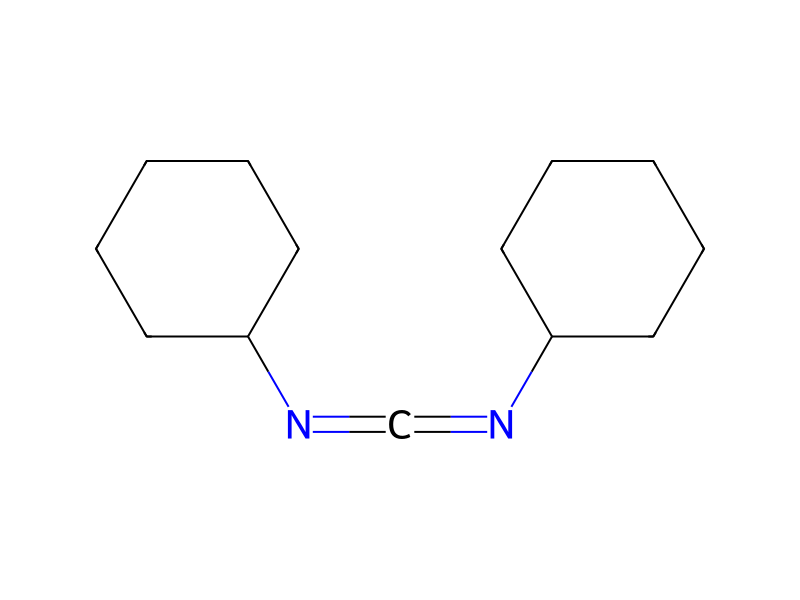 HCID 10868Dicyclohexylcarbodiimide
 HCID 123691-Bromoheptane
 HCID 161915Tosylmethyl isocyanide
 HCID 8109134-(1,4-Dioxa-spiro(4.5)dec-8-yl)-cyclohexanone
 HCID 2724682Lithium diisopropylamide
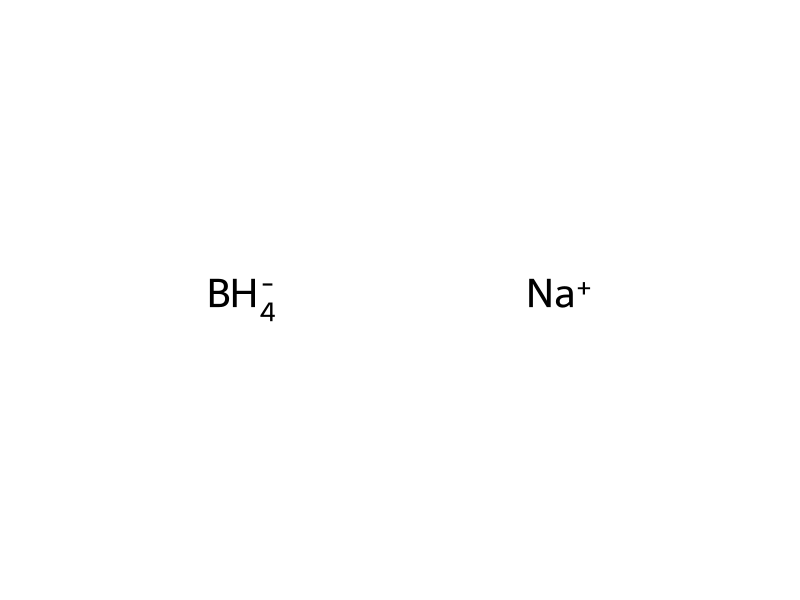 HCID 4311764Sodium borohydride
 HCID 200761544-Cyano-4-heptyl-4'-hydroxybicyclohexane
 HCID 178444557HCID 178444557, compound
Product 1

Reagents, catalysts & solvents 2
Procedure
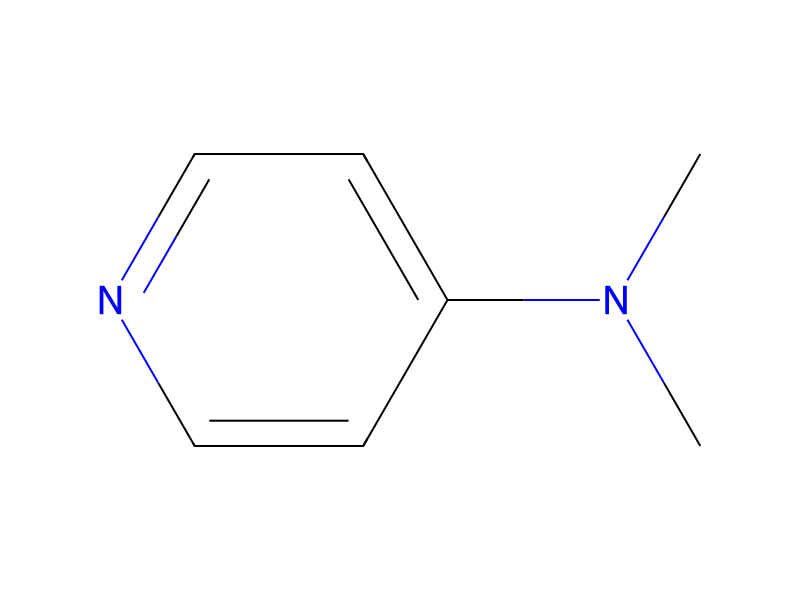
1 g of 4-dimethylaminopyridine and 30.3 g (0.1 mole) of 4-cyano-4-heptyl-4'-hydroxybicyclohexane (obtainable from 4-(1,4-dioxaspiro[4,5]dec-8-yl)-cyclohexanone by introduction of the nitrile group with tosylmethyl isocyanide (TOSMIC), alkylation with LDA (diisopropylamine/butyl-lithium) and heptyl bromide, detachment of the keto-protective group, reduction of the ketone with NaBH4 to the alcohol and separation of the isomers) are added to 19.8 g (0.1 mole) of trans-4-pentylcyclohexanecarboxylic acid in 75 ml of CH2Cl2, with stirring. A solution of 27.7 g (0.105 mole) of dicyclo-hexylcarbodiimide in 50 ml of methylene chloride is added dropwise at 0°, while controlling the temperature, and the mixture is then stirred at room temperature for a further hour. The urea precipitated is separated off and the methylene chloride phase is washed with dilute HCl and saturated NaHCO3 solution and dried. The product is then purified by filtration over a short silica gel column and by crystallisation. 4-Cyano-4-heptyl-4'-(trans-4-pentylcyclohexylcarbonyloxy)-bicyclohexane is obtained.
Workup
- stirringthe mixture is then stirred at room temperature for a further hour
- customThe urea precipitated
- customis separated off
- washthe methylene chloride phase is washed with dilute HCl and saturated NaHCO3 solution
- customdried
- filtrationThe product is then purified by filtration over a short silica gel column and by crystallisation
Sources & evidence
- ORD record
- ord-13dc750527bf44dbada3076a853a38b0
- Source dataset
- uspto-grants-1991_01
- Patent number
- US04985583
Reaction notes
Loading…