N,N'-Dimethylethylenediamine → N-(3-chloro-1-(pyridin-3-yl)-1H-pyrazol-4-yl)acetamide
Reaction equation

[Cl:1][C:2]1[C:6]([NH:7][C:8](=[O:10])[CH3:9])=[CH:5][NH:4][N:3]=1.Br[C:12]1[CH:13]=[N:14][CH:15]=[CH:16][CH:17]=1.IC1C=NC=CC=1.P([O-])([O-])([O-])=O.[K+].[K+].[K+].CNCCNC>[Cu]>[Cl:1][C:2]1[C:6]([NH:7][C:8](=[O:10])[CH3:9])=[CH:5][N:4]([C:12]2[CH:13]=[N:14][CH:15]=[CH:16][CH:17]=2)[N:3]=1Participants
Reactant 5

Product 1

Reagents, catalysts & solvents 1
Procedure
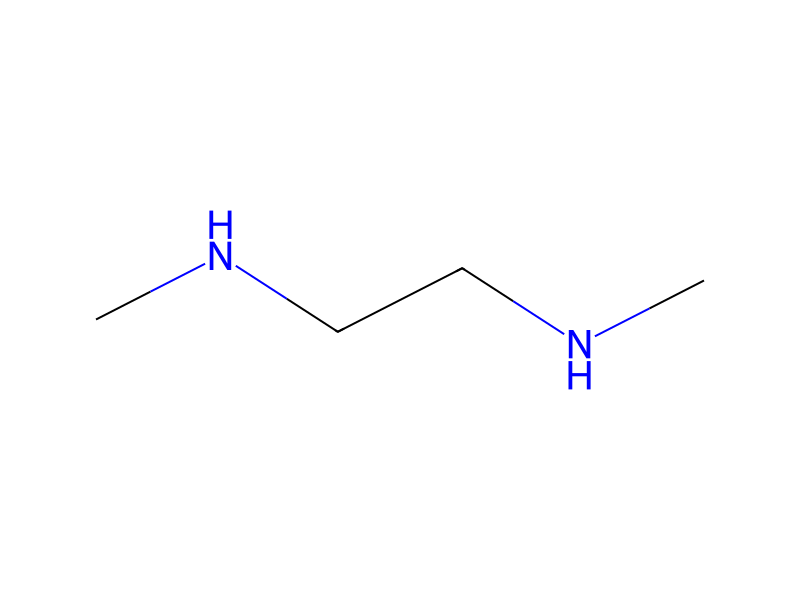
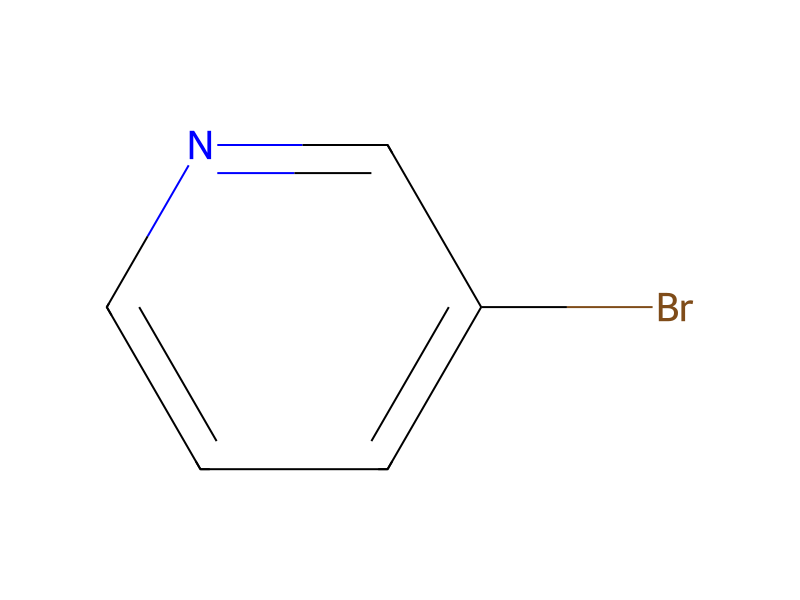
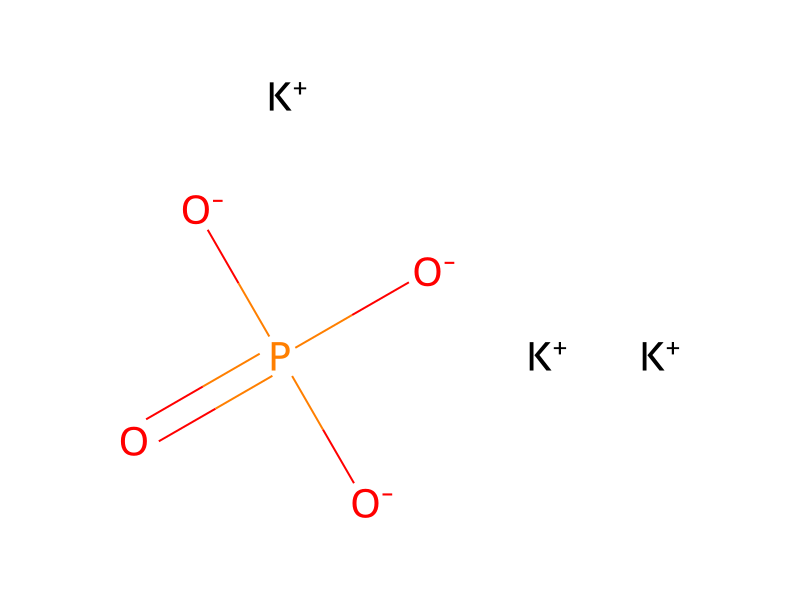
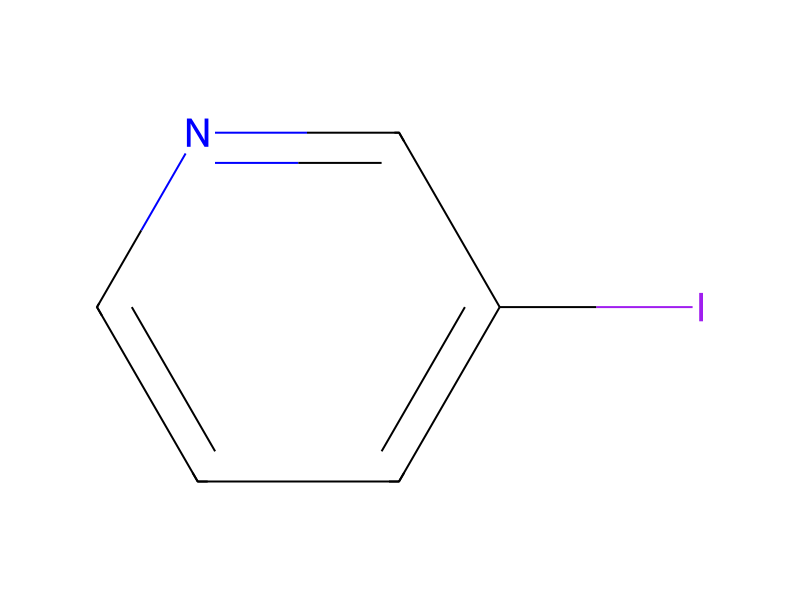
In step c of Scheme 1, N-(3-chloro-1H-pyrazol-4-yl)acetamide (1b) is reacted with a halopyridine such as 3-bromopyridine or 3-iodopyridine in the presence of a copper salt (such as copper(I) chloride (CuCl), copper(II) chloride (CuCl2), or copper(I) iodide (CuI)), potassium phosphate (K3PO4), and N,N′-dimethylethane-1,2-diamine to yield N-(3-chloro-1-(pyridin-3-yl)-1H-pyrazol-4-yl)acetamide (1c). It has been discovered that when copper(I) iodide is used that the yield of the reaction is greatly affected by the quality of the copper(I) iodide. The process may be conducted in a polar solvent, such as, acetonitrile (MeCN), dioxane, or N,N-dimethylformamide at a temperature between about 50° C. and about 110° C. It was surprisingly discovered that the addition of water during the work-up of this step maximizes the yield. Further, this synthetic method is simpler and reduces the costs of starting materials over known heteroarylation methods.
Sources & evidence
- ORD record
- ord-9a5e215d9d4740979c063d9f1c47c95b
- Source dataset
- uspto-grants-2015_11
- Patent number
- US09174962B2
Reaction notes
Loading…