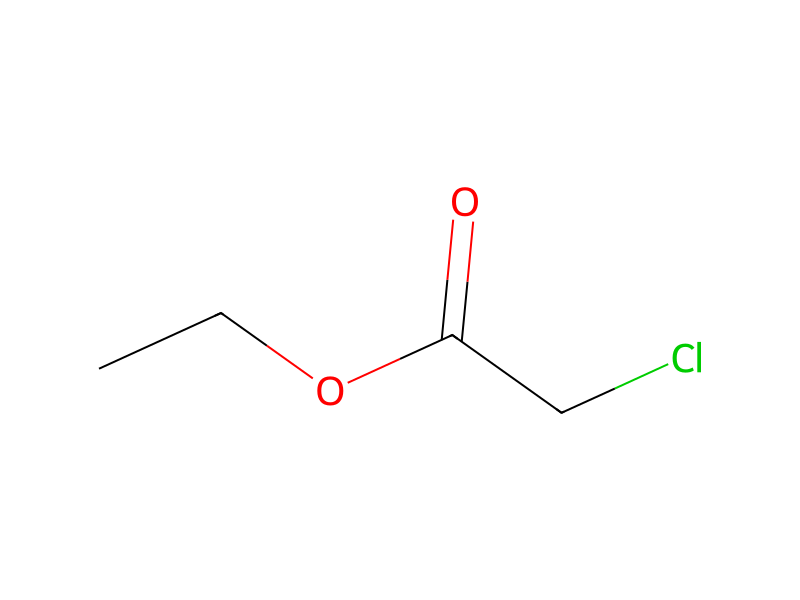
Ethyl chloroacetate → Ethyl [3-(5-chloro-2-thienyl)-4-(2-methoxyethyl)-5-oxo-4,5-dihydro-1H-1,2,4-triazol-1-yl]acetate
Reaction equation

[Cl:1][C:2]1[S:6][C:5]([C:7]2[N:8]([CH2:13][CH2:14][O:15][CH3:16])[C:9](=[O:12])[NH:10][N:11]=2)=[CH:4][CH:3]=1.C(=O)([O-])[O-].[K+].[K+].Cl[CH2:24][C:25]([O:27][CH2:28][CH3:29])=[O:26]>C(#N)C>[Cl:1][C:2]1[S:6][C:5]([C:7]2[N:8]([CH2:13][CH2:14][O:15][CH3:16])[C:9](=[O:12])[N:10]([CH2:24][C:25]([O:27][CH2:28][CH3:29])=[O:26])[N:11]=2)=[CH:4][CH:3]=1Participants
5
Reactant 3


Product 1

Reagents, catalysts & solvents 1

Conditions
- Temperature
- 80 °C
Procedure
2.4 g (9.24 mmol) of the compound of Example 50A and 2.55 g (18.48 mmol) of potassium carbonate were suspended in 48 ml of acetonitrile. 1.08 ml (10.17 mmol) of ethyl chloroacetate were then added, and the mixture was heated under reflux at 80° C. for 4.5 h. Another 113 mg (0.92 mmol) of ethyl chloroacetate were then added, and the mixture was stirred at 80° C. for a further 2 h. The suspension was then filtered through a layer of silica gel and washed with ethyl acetate, the filtrate was evaporated on a rotary evaporator and the residue was dried under high vacuum. This gave 3.24 g (100% of theory) of the title compound.
Workup
- temperaturethe mixture was heated
- filtrationThe suspension was then filtered through a layer of silica gel
- washwashed with ethyl acetate
- customthe filtrate was evaporated on a rotary evaporator
- customthe residue was dried under high vacuum
Sources & evidence
- ORD record
- ord-1a7531c9f9ab444ba3f747bc78d14a09
- Source dataset
- uspto-grants-2015_11
- Patent number
- US09180120B2
Reaction notes
Loading…