2,4-Dihydroxybenzaldehyde → 5-chloro-2,4-dihydroxybenzaldehyde
Reaction equation

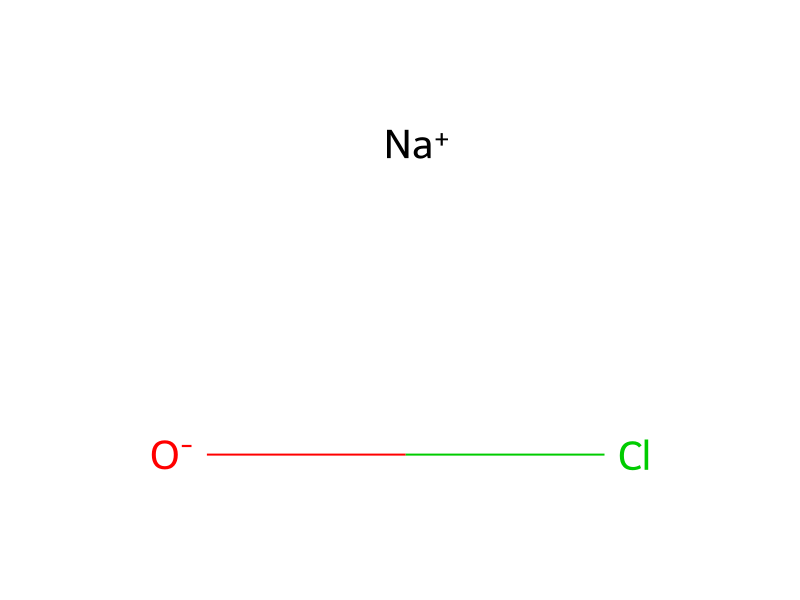
[Cl:1][O-].[Na+].N1CCCCC1.[OH:10][C:11]1[CH:18]=[C:17]([OH:19])[CH:16]=[CH:15][C:12]=1[CH:13]=[O:14]>S(=O)(=O)(O)O>[Cl:1][C:16]1[C:17]([OH:19])=[CH:18][C:11]([OH:10])=[C:12]([CH:15]=1)[CH:13]=[O:14]Participants
5
Reactant 3


Product 1

Reagents, catalysts & solvents 1

Conditions
- Temperature
- 0 °C
Procedure
Sodium hypochlorite (75 mL, 0.055 mol) and piperidine (4.68 g, 0.055 mol) were cooled to 0° C., combined cautiously and added dropwise over 2 h to a solution of 2,4,-dihydroxybenzaldehyde (6.91 g, 0.05 mol) in 50% aqueous sulfuric acid (150 mL) while cooling to 0° C. After three additional hours, the precipitate was collected via filtration in quantitative yield. 1H NMR indicates that it is about 65% 5-chloro-2,4-dihdroxybenzaldehyde, with the balance being 3-chloro-2,4-dihdroxybenzaldehyde. The product can be purified via column chromatography and/or repeated recrystallizations from toluene. However, the 3-chloro-2,4-dihdroxybenzaldehyde does not react in the next reaction, so the product was used without further purification.
Workup
- filtrationAfter three additional hours, the precipitate was collected via filtration in quantitative yield
- customThe product can be purified via column chromatography
- customrecrystallizations from toluene
- customHowever, the 3-chloro-2,4-dihdroxybenzaldehyde does not react in the next reaction, so the product
- customwas used without further purification
Sources & evidence
- ORD record
- ord-8842f5f4b7f74785b2d94f2e6fec100e
- Source dataset
- uspto-grants-2015_11
- Patent number
- US09180196B2
Reaction notes
Loading…