Isopropylamine → N-[3-(1,3-thiazol-2-yl)benzyl]propan-2-amine
Reaction equation

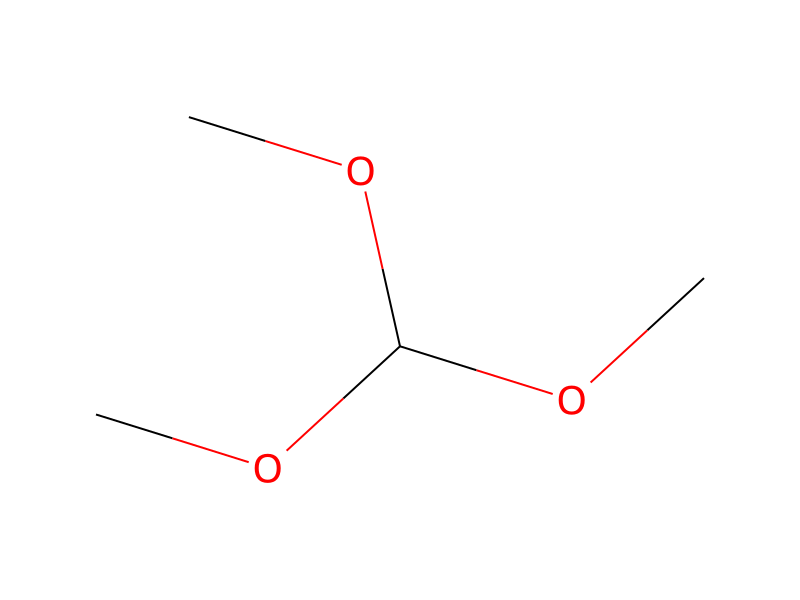
[S:1]1[CH:5]=[CH:4][N:3]=[C:2]1[C:6]1[CH:7]=[C:8]([CH:11]=[CH:12][CH:13]=1)[CH:9]=O.C(OC)(OC)OC.[CH:21]([NH2:24])([CH3:23])[CH3:22].[BH4-].[Na+]>C1COCC1>[S:1]1[CH:5]=[CH:4][N:3]=[C:2]1[C:6]1[CH:7]=[C:8]([CH:11]=[CH:12][CH:13]=1)[CH2:9][NH:24][CH:21]([CH3:23])[CH3:22]Participants





Conditions
- Temperature
- 23 °C
Procedure
To a solution of 3-(1,3-thiazol-2-yl)benzaldehyde (15 g, 81 mmol, 1.0 eq) in THF (100 mL) was added trimethyl orthoformate (9.0 mL, 8.6 g, 81 mmol, 1.0 eq) followed by isopropyl amine (11 mL, 7.3 g, 120 mmol, 1.5 eq) and the resulting reaction was stirred at 23° C. for 16 hours. The reaction mixture was concentrated under reduced pressure and the resulting residue was dissolved in methanol (100 mL). Sodium borohydride (6.1 g, 160 mmol, 2.0 eq) was added portionwise over 30 minutes and after addition was complete the reaction was stirred for an additional 30 minutes at 23° C. The reaction mixture was concentrated under reduced pressure and the resulting residue was partitioned between ethyl acetate (200 mL) and 1M aqueous potassium carbonate solution. The aqueous layer was separated and extracted with ethyl acetate (50 mL×2) and the combined organic layers were dried over sodium sulfate and concentrated under reduced pressure to yield N-[3-(1,3-thiazol-2-yl)benzyl]propan-2-amine (15 g, 80%) as a white solid. 1H NMR (400 MHz, DMSO): δ 7.91-7.86 (m, 2 H); 7.77-7.72 (m, 2 H); 7.39 (d, J=5.4 Hz, 2 H); 3.72 (s, 2 H); 2.73-2.63 (m, 1 H); 0.98 (d, J=6.2 Hz, 6 H). LRMS m/z (M+H) 233.2 found, 233.1 required.
Workup
- customthe resulting reaction
- concentrationThe reaction mixture was concentrated under reduced pressure
- dissolutionthe resulting residue was dissolved in methanol (100 mL)
- additionafter addition
- stirringwas stirred for an additional 30 minutes at 23° C
- concentrationThe reaction mixture was concentrated under reduced pressure
- customthe resulting residue was partitioned between ethyl acetate (200 mL) and 1M aqueous potassium carbonate solution
- customThe aqueous layer was separated
- extractionextracted with ethyl acetate (50 mL×2)
- dry with materialthe combined organic layers were dried over sodium sulfate
- concentrationconcentrated under reduced pressure
Sources & evidence
- ORD record
- ord-68043a0f29694195b819780a06ff54c7
- Source dataset
- uspto-grants-2015_11
- Patent number
- US09181261B2
Reaction notes
Loading…