HCID 117667637, compound → HCID 117667667, compound
Reaction equation

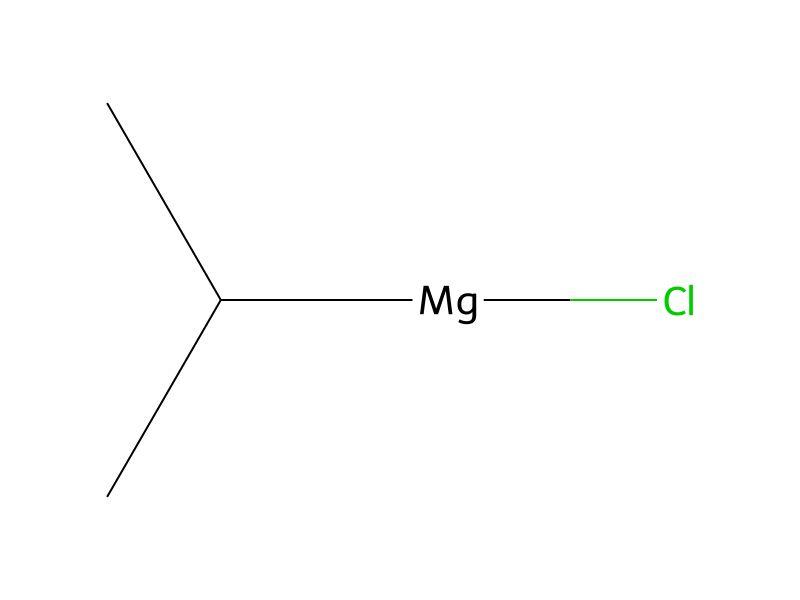
C(OC([N:8]1[C:17]2[C:12](=[CH:13][C:14]([C:18]3[CH:19]=[N:20][CH:21]=[C:22]([C:24](=[O:26])[CH3:25])[CH:23]=3)=[CH:15][N:16]=2)[CH2:11][CH2:10][CH2:9]1)=O)(C)(C)C.[CH:27]([Mg]Cl)([CH3:29])[CH3:28]>C1COCC1>[CH3:28][CH:27]([CH3:29])[C:24]([C:22]1[CH:21]=[N:20][CH:19]=[C:18]([C:14]2[CH:15]=[N:16][C:17]3[NH:8][CH2:9][CH2:10][CH2:11][C:12]=3[CH:13]=2)[CH:23]=1)([OH:26])[CH3:25]Participants
Reactant 2

Product 1

Reagents, catalysts & solvents 1

Procedure
To a cooled (0° C.) suspension of 6-(5-acetyl-pyridin-3-yl)-3,4-dihydro-2H-[1,8]naphthyridine-1-carboxylic acid tert-butyl ester (125 mg, 0.35 mmol) in THF (2 mL) is added a solution of isopropylmagnesium chloride in THF (1.3M, 816 μL, 1.1 mmol). The resultant mixture is stirred warming to room temperature for 1 h. The reaction is quenched with saturated aqueous ammonium chloride solution and is extracted with EtOAc. The combined organic extracts are washed with water and brine, dried (Na2SO4) and concentrated under reduced pressure. The residue is taken up in MeOH (3 mL) and 4N HCl in 1,4-dioxane (3 mL) is added. The reaction is stirred at room temperature for 16 h and is concentrated to provide 3-methyl-2-[5-(5,6,7,8-tetrahydro-[1,8]naphthyridin-3-yl)-pyridin-3-yl]-butan-2-ol (131 mg) as the dihydrochloride salt.
Workup
- temperatureTo a cooled
- customThe reaction is quenched with saturated aqueous ammonium chloride solution
- extractionis extracted with EtOAc
- washThe combined organic extracts are washed with water and brine
- dry with materialdried (Na2SO4)
- concentrationconcentrated under reduced pressure
- addition4N HCl in 1,4-dioxane (3 mL) is added
- concentrationis concentrated
Sources & evidence
- ORD record
- ord-4d679feaa7a445dfb08c8c14631697f9
- Source dataset
- uspto-grants-2015_11
- Patent number
- US09181272B2
Reaction notes
Loading…