Ammonia → 2-Bromo-1,10-phenanthroline
Reaction equation

C[N:2]1[C:15]2[C:6](=[CH:7][CH:8]=[C:9]3[C:14]=2[N:13]=[CH:12][CH:11]=[CH:10]3)[CH:5]=[CH:4][C:3]1=O.P(Br)(Br)(Br)(Br)[Br:18].P(Br)(Br)(Br)=O.N>>[Br:18][C:3]1[CH:4]=[CH:5][C:6]2[C:15](=[C:14]3[C:9](=[CH:8][CH:7]=2)[CH:10]=[CH:11][CH:12]=[N:13]3)[N:2]=1Participants

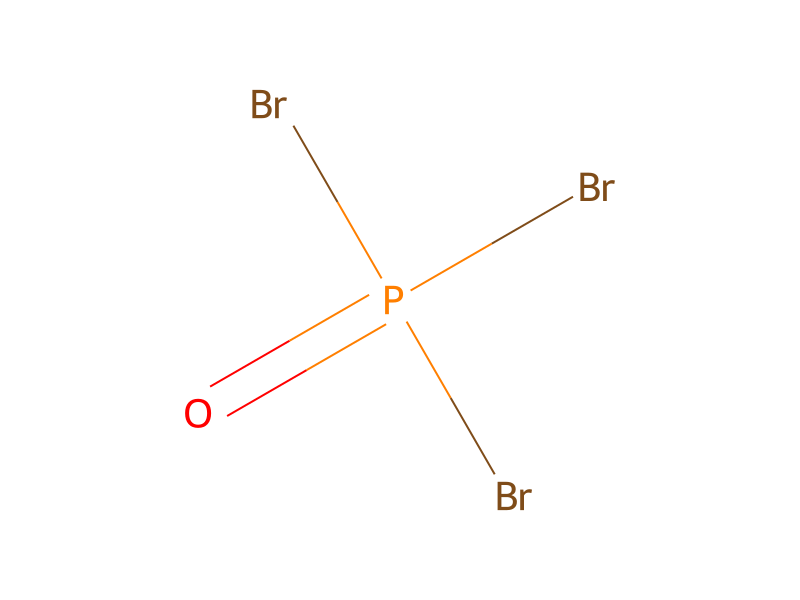


Conditions
- Temperature
- 80 °C
Procedure
Under a stream of argon, to compound (2) (10 g; 47.6 mmol), phosphorus pentabromide (28 g; 65 mmol) and phosphorus oxybromide (50 g; 174 mmol) were added at room temperature. The reaction temperature was raised to 80° C. and the reaction mixture was stirred for 6 hours. The reaction mixture was cooled in an ice bath, and then poured into ice water. Concentrated aqueous ammonia was added thereto and the resulting mixture was made alkaline. The reaction mixture was extracted with chloroform, and the organic layer thus obtained was washed with water, dried over sodium sulfate, and then evaporated under reduced pressure. The resulting residue was separated and purified by silica gel column chromatography (Si02, 250 g) (toluene/ethyl acetate=5/1 to 3/1 to 1/1 to ethyl acetate), to give 6.9 g (yield: 94%) of the title compound (7).
Workup
- temperatureThe reaction mixture was cooled in an ice bath
- extractionThe reaction mixture was extracted with chloroform
- customthe organic layer thus obtained
- washwas washed with water
- dry with materialdried over sodium sulfate
- customevaporated under reduced pressure
- customThe resulting residue was separated
- custompurified by silica gel column chromatography (Si02, 250 g) (toluene/ethyl acetate=5/1 to 3/1 to 1/1 to ethyl acetate)
Sources & evidence
- ORD record
- ord-cdc3fb9115ca4a39877736a18f2cf1f4
- Source dataset
- uspto-grants-2015_11
- Patent number
- US09187690B2
Reaction notes
Loading…