p-Fluoronitrobenzene → 5-[(4-Nitrophenyl)oxy]-1,3-dihydro-2-benzofuran
Reaction equation

[CH2:1]1[C:5]2[CH:6]=[CH:7][C:8]([OH:10])=[CH:9][C:4]=2[CH2:3][O:2]1.F[C:12]1[CH:17]=[CH:16][C:15]([N+:18]([O-:20])=[O:19])=[CH:14][CH:13]=1.C(=O)([O-])[O-].[K+].[K+]>C(#N)C>[N+:18]([C:15]1[CH:16]=[CH:17][C:12]([O:10][C:8]2[CH:7]=[CH:6][C:5]3[CH2:1][O:2][CH2:3][C:4]=3[CH:9]=2)=[CH:13][CH:14]=1)([O-:20])=[O:19]Participants
5
Reactant 3
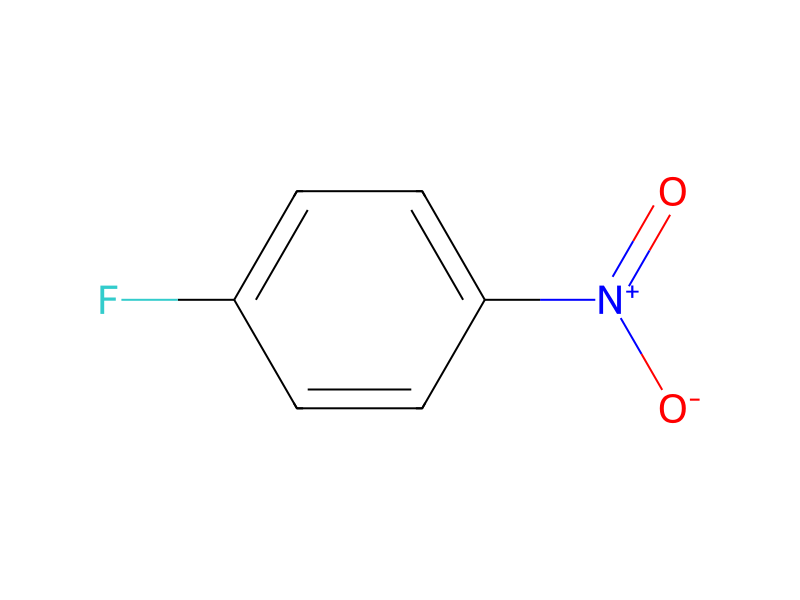


Product 1

Reagents, catalysts & solvents 1

Procedure
A solution of 1,3-dihydro-2-benzofuran-5-ol (Intermediate 73, 100 mg, 0.734 mmol), 1-fluoro-4-nitrobenzene (109 mg, 0.771 mmol) and potassium carbonate (508 mg, 3.67 mmol) in acetonitrile (10 ml) was stirred under argon at 100° C. in a closed vial for 2 hours. The solid was filtered and washed with dichloromethane. The organic phase was concentrated under vacuum to afford title compound (184 mg, 96% yield)
Workup
- filtrationThe solid was filtered
- washwashed with dichloromethane
- concentrationThe organic phase was concentrated under vacuum
Sources & evidence
- ORD record
- ord-db6b7c0a22c94455922008a6d826e0e4
- Source dataset
- uspto-grants-2015_11
- Patent number
- US09193704B2
Reaction notes
Loading…