Aniline → 4-Fluorobenzanilide
Reaction equation

[NH2:1][C:2]1[CH:7]=[CH:6][CH:5]=[CH:4][CH:3]=1.C(N(CC)CC)C.[F:15][C:16]1[CH:24]=[CH:23][C:19]([C:20](Cl)=[O:21])=[CH:18][CH:17]=1>ClCCl>[F:15][C:16]1[CH:24]=[CH:23][C:19]([C:20]([NH:1][C:2]2[CH:7]=[CH:6][CH:5]=[CH:4][CH:3]=2)=[O:21])=[CH:18][CH:17]=1Participants
5
Reactant 3


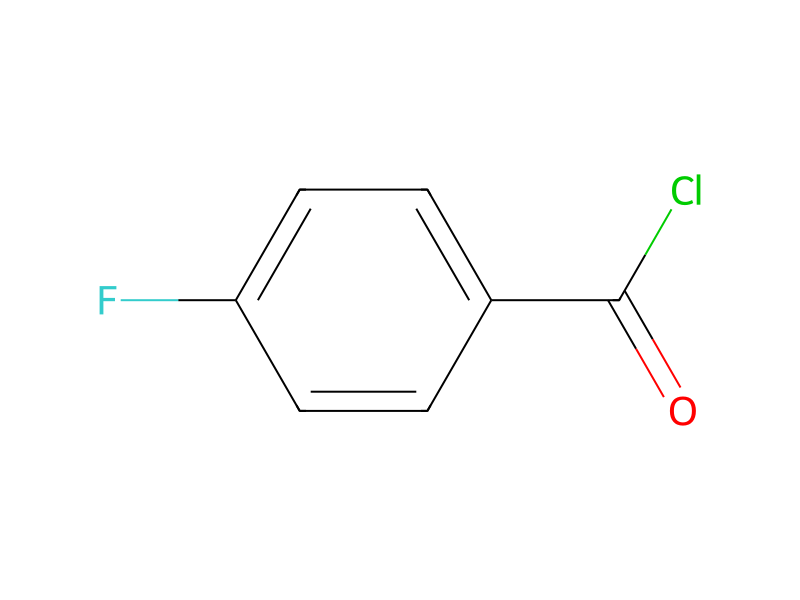
Product 1

Reagents, catalysts & solvents 1

Conditions
- Temperature
- 0 °C
Procedure
Into a 5000-mL 4-necked round-bottom flask, was placed aniline (93 g, 1.0 mol, 1.0 equiv.), triethylamine (202 g, 2.0 mol, 2.0 equiv.) and dichloromethane (2,000 mL). This was followed by the addition of 4-fluorobenzoyl chloride (174 g, 1.1 mol, 1.1 equiv.) dropwise with stirring at 0° C. The mixture was stirred at room temperature for 3 hours. The resulting solution was concentrated under vacuum. The solid was filtered out. The filter cake was washed with 1×200 mL of dichloromethane and 3×500 mL of water. This resulted in 200 g (93%) of 4-fluoro-N-phenylbenzamide as white solid. MS (ESI) m/z 216 ([M+H]+).
Workup
- customInto a 5000-mL 4-necked round-bottom flask, was placed
- stirringThe mixture was stirred at room temperature for 3 hours
- concentrationThe resulting solution was concentrated under vacuum
- filtrationThe solid was filtered out
- washThe filter cake was washed with 1×200 mL of dichloromethane and 3×500 mL of water
- customThis resulted in 200 g (93%) of 4-fluoro-N-phenylbenzamide as white solid
Sources & evidence
- ORD record
- ord-c8919ada4d51457dae611e429e9079e6
- Source dataset
- uspto-grants-2015_11
- Patent number
- US09193707B2
Reaction notes
Loading…