Cesium carbonate → 1-Piperazinecarboxylic acid, 4-[6-[[7-cyclopentyl-6-[(dimethylamino)carbonyl]-7H-pyrrolo[2,3-d]pyrimidin-2-yl]amino]-3-pyridinyl]-, 1,1-dimethylethyl ester
Reaction equation

Cl[C:2]1[N:3]=[CH:4][C:5]2[CH:10]=[C:9]([C:11]([N:13]([CH3:15])[CH3:14])=[O:12])[N:8]([CH:16]3[CH2:20][CH2:19][CH2:18][CH2:17]3)[C:6]=2[N:7]=1.[NH2:21][C:22]1[N:27]=[CH:26][C:25]([N:28]2[CH2:33][CH2:32][N:31]([C:34]([O:36][C:37]([CH3:40])([CH3:39])[CH3:38])=[O:35])[CH2:30][CH2:29]2)=[CH:24][CH:23]=1.C1C=CC(P(C2C(C3C(P(C4C=CC=CC=4)C4C=CC=CC=4)=CC=C4C=3C=CC=C4)=C3C(C=CC=C3)=CC=2)C2C=CC=CC=2)=CC=1.C(=O)([O-])[O-].[Cs+].[Cs+]>C([O-])(=O)C.[Pd+2].C([O-])(=O)C.C1(P(C2C=CC=CC=2)C2C=CC3C(=CC=CC=3)C=2C2C3C(=CC=CC=3)C=CC=2P(C2C=CC=CC=2)C2C=CC=CC=2)C=CC=CC=1.CCCCCCC.O.CC(C)CC(=O)C>[CH:16]1([N:8]2[C:6]3[N:7]=[C:2]([NH:21][C:22]4[N:27]=[CH:26][C:25]([N:28]5[CH2:33][CH2:32][N:31]([C:34]([O:36][C:37]([CH3:40])([CH3:39])[CH3:38])=[O:35])[CH2:30][CH2:29]5)=[CH:24][CH:23]=4)[N:3]=[CH:4][C:5]=3[CH:10]=[C:9]2[C:11](=[O:12])[N:13]([CH3:15])[CH3:14])[CH2:20][CH2:19][CH2:18][CH2:17]1Participants
Reactant 4



Product 1

Reagents, catalysts & solvents 5




Conditions
- Temperature
- 40 °C
Procedure
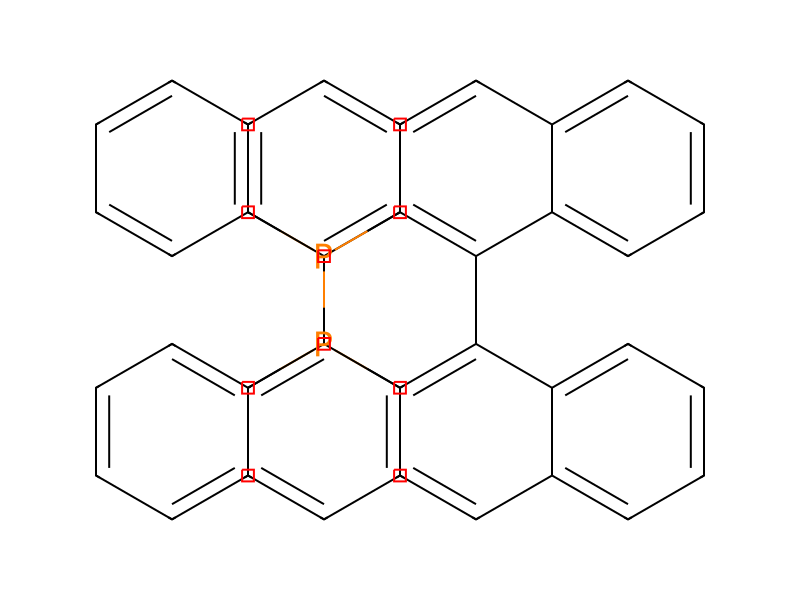
A nitrogen-flushed, 3 L, Argonaut reactor system is charged with 43.9 g (0.15 mol. 1.0 eq) of 2-chloro-7-cyclopentyl-N,N-dimethyl-7H-pyrrolo[2,3-d]pyrimidine-6-carboxamide, (crude A1, from Step 1.4 above), 45.9 g (0.165 mol, 1.1 eq.) of tert-butyl 4-(6-aminopyridin-3-yl)piperazine-1-carboxylate (A2), 0.67 g (3.0 mmol, 0.02 eq) of palladium (II) acetate, 3.73 g (6.0 mmol, 0.04 eq) of (±) 2,2′-bis(diphenylphosphino)-1,1′-binaphthalene, ±BINAP (2,2′-bis(diphenylphosphino)-1,1′-binaphthyl) and 275 g (344 mL) of 4-methyl-2-pentanone. The resulting suspension is stirred and heated to 40±3° C. 73.3 g (0.225 mol, 1.5 eq) of cesium carbonate is added in 5 to 10 g portions over 15 min. The resulting suspension is stirred and heated to 100±3° C. This temperature is maintained for 3 h or until the remaining starting material, A1, is ≦2% (area normalization) as determined by HPLC analysis. The progress of the reaction is checked using the Process Steering Control. The sample is cooled to 70±3° C. and 344 g (344 mL) of water is added over 5 min. The sample is cooled to 50±3° C. and held at this temperature for 30 min. 353 g (516 mL) of heptane is added over 30 minutes and the sample is stirred for 2 h. The mixture is then cooled to 22±3° C. and held at least 4 h (hold point). The solids are filtered through a polypropylene filter pad. The filter cake is washed with a cold (4° C.) mixture of 24 g (30 mL) of 4-methyl-2-pentanone and 41 g (60 mL) of heptane. The solids are dried at 60° C. until HSGC PSC shows organic solvents to be 1%, to afford 72.6 g of A3 as a tan solid mp 215-217° C. (dec.).
Workup
- customA nitrogen-flushed
- stirringThe resulting suspension is stirred
- temperatureheated to 100±3° C
- temperatureThis temperature is maintained for 3 h
- temperatureThe sample is cooled to 70±3° C.
- temperatureThe sample is cooled to 50±3° C.
- stirringthe sample is stirred for 2 h
- temperatureThe mixture is then cooled to 22±3° C.
- waitheld at least 4 h
- filtrationThe solids are filtered through a polypropylene
- filtrationfilter pad
- washThe filter cake is washed with a cold (4° C.) mixture of 24 g (30 mL) of 4-methyl-2-pentanone and 41 g (60 mL) of heptane
- customThe solids are dried at 60° C. until HSGC PSC
Sources & evidence
- ORD record
- ord-335a2714a37040f8b4a366c7b373b962
- Source dataset
- uspto-grants-2015_11
- Patent number
- US09193732B2
Reaction notes
Loading…