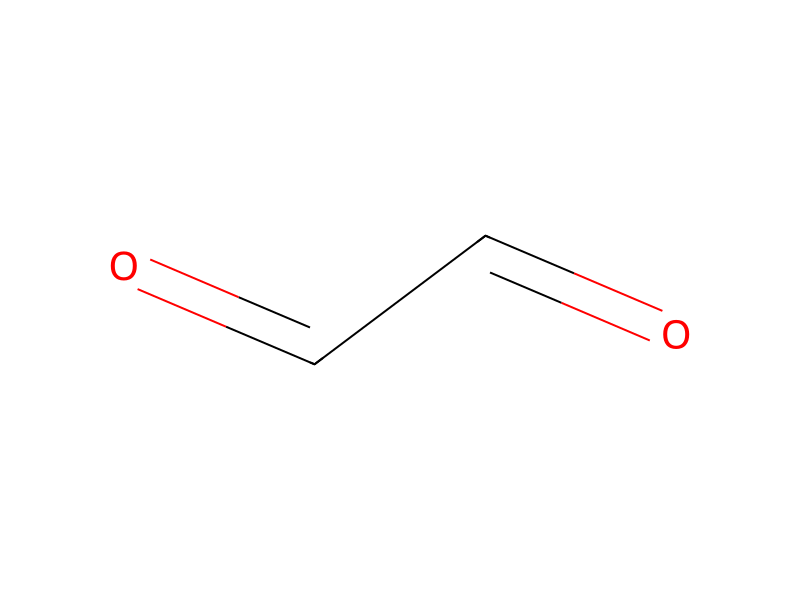
Glyoxal → HCID 21875489, compound
Reaction equation

[NH2:1][C:2]1[C:9]([NH2:10])=[C:8]([N+:11]([O-:13])=[O:12])[CH:7]=[CH:6][C:3]=1[C:4]#[N:5].[CH:14]([CH:16]=O)=O.[OH-].[NH4+]>O.C(O)(=O)C>[N+:11]([C:8]1[C:9]2[N:10]=[CH:16][CH:14]=[N:1][C:2]=2[C:3]([C:4]#[N:5])=[CH:6][CH:7]=1)([O-:13])=[O:12]Participants
6
Reactant 3


Product 1

Reagents, catalysts & solvents 2


Conditions
- Temperature
- 0 °C
Procedure
2,3-Diamino-4-nitro-benzonitrile (0.050 g, 0.28 mmol, as prepared in WO98/32439) was added to solution of glyoxal (40% in water, 0.032 m]L, 0.28 mmol) in acetic acid (0.75 mL) and stirred at 22° C. for 3 h. The reaction was cooled to 0° C. and water (2.0 mL) was added and the pH was adjusted to 9.0 by addition of ammonium hydroxide which caused the product to precipitate. The mixture was then filtered and rinsed with cold water. Drying in vacuo gave 0.039 g (70%) of compound 468A as an orange solid. HPLC: 100% at 2.037 min (retention time) (YMC S5 ODS column, 4.6×50 mm, eluting with 10–90% aqueous methanol over 4 min containing 0.2% phosphoric acid, 4 mL/min, monitoring at 220 nm).
Workup
- customto precipitate
- filtrationThe mixture was then filtered
- washrinsed with cold water
- customDrying in vacuo
Sources & evidence
- ORD record
- ord-002d54f67d4544759bb7221be4e2ee6e
- Source dataset
- uspto-grants-2006_11
- Patent number
- US07141578B2
Reaction notes
Loading…