Methyl p-toluenesulfonate → 5,6-Dichloro-1,3-dimethyl-2-(methylthio)benzimidazolium p-toluenesulfonate
Reaction equation

[Cl:1][C:2]1[C:13]([Cl:14])=[CH:12][C:5]2[N:6]=[C:7]([S:10][CH3:11])[N:8]([CH3:9])[C:4]=2[CH:3]=1.[C:15]1([CH3:26])[CH:20]=[CH:19][C:18]([S:21]([O:24]C)(=[O:23])=[O:22])=[CH:17][CH:16]=1>CC(C)=O>[C:15]1([CH3:26])[CH:16]=[CH:17][C:18]([S:21]([O-:24])(=[O:22])=[O:23])=[CH:19][CH:20]=1.[Cl:14][C:13]1[C:2]([Cl:1])=[CH:3][C:4]2[N+:8]([CH3:9])=[C:7]([S:10][CH3:11])[N:6]([CH3:15])[C:5]=2[CH:12]=1Participants
4
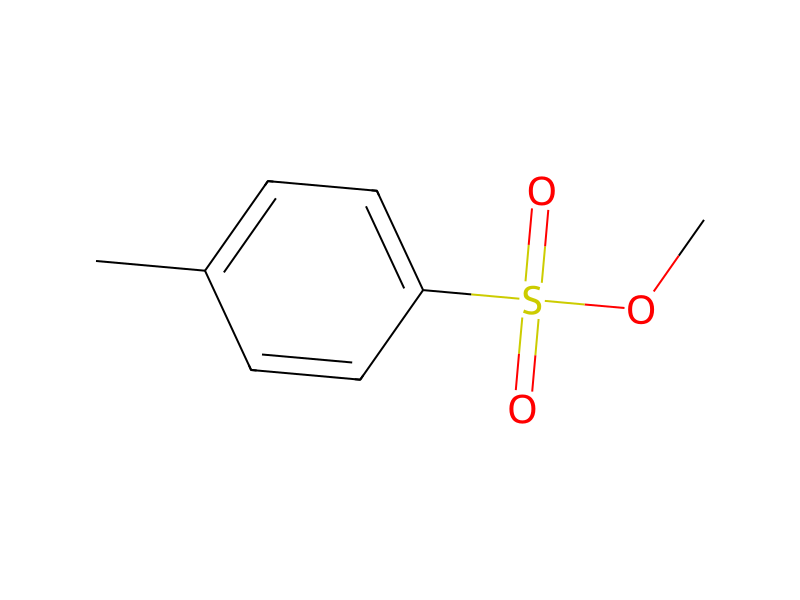



Conditions
- Temperature
- 60 °C
Procedure
5,6-Dichloro-3-methyl-2-(methylthio)benzimidazole (Int-k) (5.58 g, 0.022 mol) and 4.22 g methyl p-toluenesulfonate were mixed with 10 ml xylenes and heated to 124°-136° C. for 5 hrs. Upon cooling to 60° C., acetone was added to cover and slurry. The product was collected by filtration and reslurried in acetone. Filtration and drying yielded 3.14 g, mp 152°-156° C. The product was again slurried with acetone overnight to give 2.38 g, mp 152°-155° C., which NMR indicated was contaminated with some unreacted starting material.
Workup
- temperatureheated to 124°-136° C. for 5 hrs
- filtrationThe product was collected by filtration
- filtrationFiltration
- customdrying
- customyielded 3.14 g, mp 152°-156° C
- customto give 2.38 g, mp 152°-155° C., which NMR
Sources & evidence
- ORD record
- ord-b29df3f704a9426b841fc58e3dfcca6b
- Source dataset
- uspto-grants-1998_01
- Patent number
- US05707794
Reaction notes
Loading…